Ball-and-socket mount specs that damp spin bike vibration for filming

Learn how to choose ball-and-socket mounts that absorb spin bike vibration, keeping your phone stable during filming.
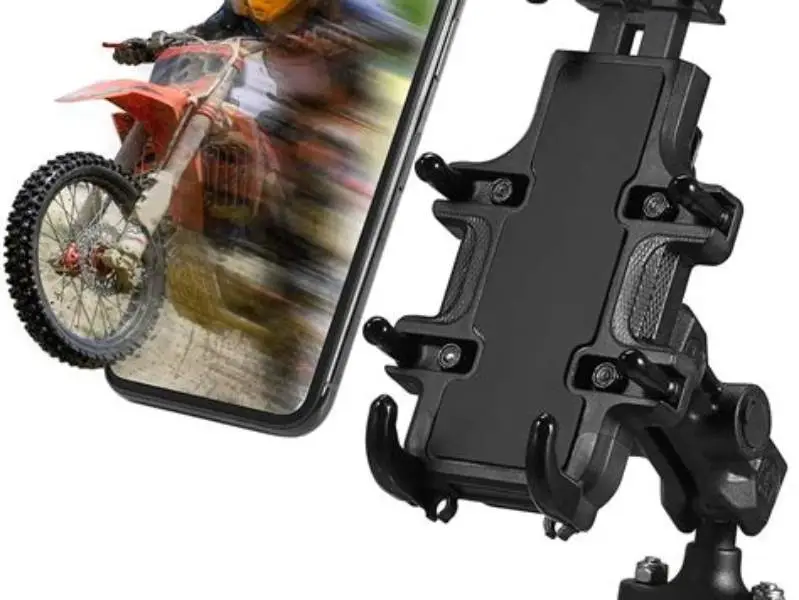
Choose a ball-and-socket mount that includes compliant (elastomer or rubber) damping around the joint or clamp and that is specified or tested to reduce the peak accelerations your setup produces. Typical indoor spin-bike vibrations most users observe fall within a few tens of Hz and produce peak accelerations you should measure on your own bike; see the Measurement section below for practical steps and tools.
On this page (9 sections)
- Key takeaways
- How vibration affects filming on spin bikes
- What features in ball-and-socket mounts reduce vibration
- How to measure and test vibration damping in practice
- How to match mount specs to spin bike motion
- Common failure modes without damping
- Recommended ball-and-socket mounts and examples
- Who this recommendation is wrong for
- Questions people still ask
Part of our guide on mount for 230 g phone on treadmill
| Vibration frequency | Typically in the low-to-mid tens of Hz (measure your setup to be sure) |
|---|---|
| Peak vibration | Varies by bike, rider and floor; measure with an accelerometer app or external sensor |
| Mount material | Elastomer/rubber damping recommended |
| Clamp strength | Firm, cushioned grip with adjustable tension |
| Common failure | Phone dropping from insufficient clamping or fatigue of non-damped joints |
Key takeaways
- Spin-bike vibrations commonly occupy the low-to-mid tens of hertz; measure your own setup rather than relying on a single quoted number.
- Effective damping comes from elastomer/rubber elements around the ball joint and in the clamp liners; look for mounts that either publish damping tests or let you verify performance with an accelerometer.
- Ball-and-socket designs permit flexible phone positioning while enabling isolation if the joint includes compliant materials.
- Clamp design (adjustable tension, soft liners) is critical to prevent slips while keeping the phone secure.
- Test any mount on your bike with an accelerometer or by recording video to confirm it meets your needs before using it in important shoots.
How vibration affects filming on spin bikes
Indoor spin bikes commonly produce vibrations in the low-to-mid tens of hertz; the exact dominant frequency and amplitude depend on bike design, rider cadence/power, and what the bike is resting on (hard floor, mat, carpet). Rather than rely on a single universally true number, measure your own bike so you can match a mount’s performance to your conditions. (See Measurement below.)
If those vibrations reach levels that exceed what the mount or the phone’s stabilization can compensate for, you’ll see motion blur, shakiness, or autofocus hunting in video. Over time, vibration can also loosen fasteners or wear mount parts, increasing the risk of the phone slipping or falling.
Vibration can interact with a phone’s built-in stabilization; some systems compensate for small motions but will not fully correct sustained or high-amplitude vibration transmitted through a rigid mount. Physical isolation at the mounting point reduces the load on the phone’s stabilization systems and helps preserve steady framing.
Because conditions vary, running a simple test (described below) is the reliable way to decide whether a mount provides adequate isolation for your phone and filming style. People in this spot often ask about selecting glue for bike mounts as well.
What features in ball-and-socket mounts reduce vibration
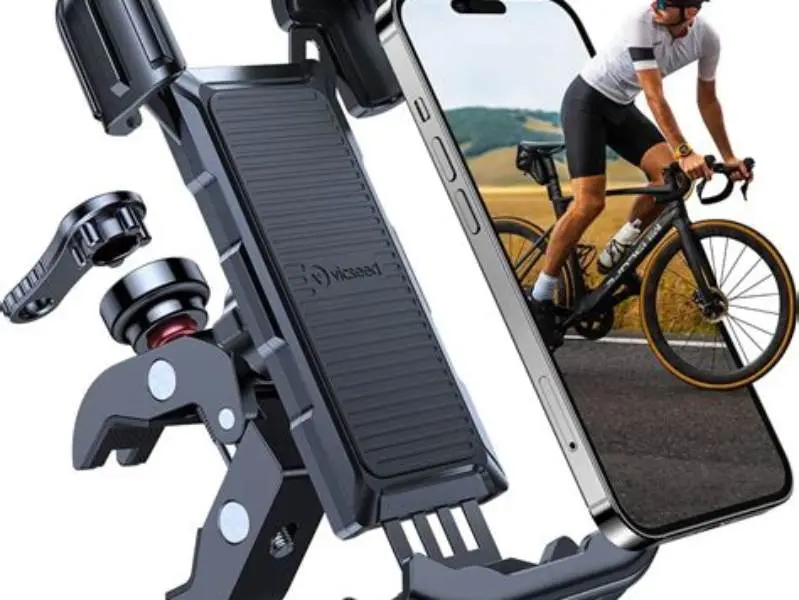
Mounts that reduce transmitted vibration combine three elements: a compliant interface at the ball joint (soft elastomer or similar), cushioned clamp liners that decouple the phone from hard metal contact points, and secure clamp tension that resists loosening under vibration.
A spherical (ball) joint gives multi-axis freedom so the phone isn’t rigidly coupled to the bike frame. When that joint is surrounded by a compliant material it can absorb and dissipate some vibrational energy before it reaches the phone.
Clamp liners (silicone, thermoplastic rubber) raise friction and provide a local damping layer that reduces high-frequency spikes and prevents slipping. Adjustable tension or locking screws let you set the right clamp force for your phone and case. The other half of this decision is phone holder for rugged case on spin bike.
Some higher-end mounts use layered elastomer constructions: a softer inner layer to absorb vibration and a firmer outer layer to hold the joint position. This design aims to balance isolation with positional stability. Treat any quoted performance for specific frequency bands as manufacturer data that you should verify in your own setup.
Elastomer properties change with temperature and age; materials can soften in heat and stiffen in cold, which affects damping behavior. Confirm material ratings from the manufacturer and test mounts under your typical riding conditions.
- Compliant ball joints and elastomer surrounds reduce transmitted vibration compared with rigid plastic/metal joints.
- Cushioned clamps help keep phones secure and also provide local damping.
- Adjustable tension and locking features prevent gradual loosening from repeated vibration.
How to measure and test vibration damping in practice
Because vibration frequency and amplitude vary by bike and setup, measure your own system before selecting a mount. Two practical approaches work well for most users: People in this spot often ask about fork crown mount for phone stability as well.
1) Smartphone apps: Use an accelerometer app to log acceleration while you ride. Good, free options include Phyphox (multi-platform) and Physics Toolbox Sensor Suite (Android) or SensorLog (iOS). These let you record time-series acceleration data in g (or m/s²). Phyphox: https://phyphox.org
2) Dedicated IMU or data-logger: If you want higher accuracy, use an external IMU (inertial measurement unit) or data logger such as the Shimmer3 or a low-cost MEMS breakout with a small microcontroller. These devices provide better sampling rates and lower sensor noise than phone sensors.
Measurement method (basic): For the detail, see our notes on preventing mount shear on highway.
a) Mount the sensor or phone at the location where your mount would hold the phone (on the clamp or directly to a test plate). Record while you ride at typical intensity (warm-up, steady-state, sprints).
b) Examine the recorded data for peak acceleration and the dominant frequency components (use the app’s FFT function or export the data for analysis in a spreadsheet or audio tool like Audacity). Note both peak g values and the frequency band where most energy appears.
c) Repeat the test by attaching the sensor to a candidate mount (sensor on the phone clamp or attached to a phone in the mount) and compare transmitted acceleration to the baseline (rigid attachment). The ratio of transmitted-to-input peak or the reduction in peak RMS gives a practical measure of how well the mount isolates vibration.
Interpreting results: there is no universal 'safe' single number; a commonly useful metric is percent reduction in transmitted vibration at the dominant frequencies you observed. For example, halving the peak acceleration or reducing the RMS in the dominant band substantially improves video stability, but the acceptable amount depends on your phone’s stabilization and the video quality you need.
Publication and standards references: for background on vibration measurement methods and human exposure, see ISO 2631 and instrumentation guides such as manufacturer app documentation (Phyphox) and IMU vendor pages. ISO 2631 provides standard methods for vibration measurement; review relevant sections for guidance on metrics and instrumentation.
- Tools: Phyphox (https://phyphox.org), Physics Toolbox Sensor Suite (Android), SensorLog (iOS); external IMUs such as Shimmer3.
- Metrics to record: peak g, RMS in the dominant frequency band, and FFT to identify dominant frequencies.
- Simple acceptance test: mount reduces transmitted peak/RMS by a noticeable percentage at the frequencies you care about when compared to a rigid mount.
How to match mount specs to spin bike motion
Rather than rely on an absolute numeric spec you find in an article, match a mount to the actual motion of your bike. Use the measurement steps above to establish the dominant frequency band and peak acceleration your setup generates during the kind of riding you will film.
Look for mounts that either publish vibration-isolation test results at relevant frequencies or use damping materials (silicone, thermoplastic rubber) in the ball joint and clamp. Where manufacturers provide data, prefer mounts tested under sinusoidal or real-use inputs similar to your measured conditions.
Joint compliance should be enough to reduce transmitted vibration at the frequencies you observed but not so loose that framing drifts. Many practical mounts have small multi-axis compliance (a few degrees of movement) and an elastomer layer; consider these as trade-offs between isolation and positional control.
Clamps should have adjustable tension and soft liners; this allows you to set a secure grip without over-compressing the phone or case.
If the manufacturer gives a shock or damping rating, treat it as a starting point and verify it with the simple tests described above. If no rating is provided, the presence of quality elastomer surrounds and a documented test procedure is a good sign.
| Specification | Recommended Value or Action | Reason/Effect |
|---|---|---|
| Dominant frequency (measured) | Determine with accelerometer app (often low-to-mid tens of Hz) | Targets the frequency band you want the mount to damp |
| Observed peak acceleration (measured) | Record peak g during representative rides | Sets a reference for required damping effectiveness |
| Damping material | Silicone or thermoplastic rubber (manufacturer-specified) | Materials with measurable compliance and weather stability |
| Clamp grip | Adjustable with soft liner | Prevents phone drops without damage |
Common failure modes without damping
Rigid mounts transmit the bike’s motion directly to the phone; that produces shakier video and increases wear on mount fasteners. Over repeated use, bolts and clamps can loosen and the phone may fall.
Ball joints that are entirely hard-plastic or metal can rattle or move under vibration, causing loss of framing and possible drop events.
Clamps without liners or with insufficient grip are at risk, especially if sweat or dust reduces friction.
- Loose ball joints: cause wobbling and unstable video.
- Hard clamps: slip under vibration or moisture.
- Direct frame coupling: transfers full shock to the phone.
Recommended ball-and-socket mounts and examples
The market changes fast. Below are examples of mounts that (as of 2026) either advertise vibration-resistant designs or use elastomer damping and have public product pages you can review. Treat these as starting points: check the current product pages for measured damping data and confirm compatibility with your phone and mounting location.
Examples (verify latest model specs and test them on your setup):
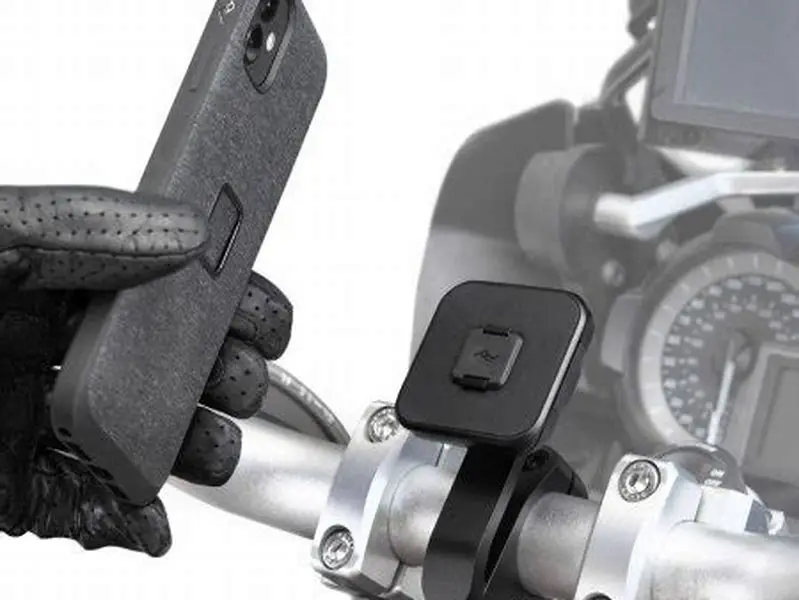
- Quad Lock Out Front Mount (Quad Lock): Quad Lock’s mounts are widely used by cyclists and the company documents secure locking under vibration; users commonly report good real-world stability. Verify model compatibility and any optional isolation accessories. https://www.quadlockcase.com/products/out-front-mount
- Rokform Pro Series Phone Mount (Rokform): Rokform markets mounts with shock-absorbing features and reinforced dampers on some models; check the specific model’s claims and testing notes. https://www.rokform.com/collections/phone-mounts
- SP Connect Bike Mount (SP Connect): SP Connect offers mounts with anti-rotation and some models include compliant liners or adapters; review product details and user vibration tests. https://www.sp-connect.com
- K-Edge (phone mount adapters / bike accessory makers): K-Edge produces mounts and adapters for bike devices—some products use rubber isolators. K-Edge’s product pages and specification sheets show construction details to help you decide. https://k-edge.com
- Aftermarket vibration isolator kits or third-party dampers: Some vendors sell elastomer dampers or isolation adapters designed to be used with existing phone mounts; these can be a cost-effective way to add damping if a mount lacks it.
Who this recommendation is wrong for
If you ride in extremely rough outdoor conditions with very large impacts (e.g., mountain biking on rocky trails), phone-specific ball-and-socket mounts designed for filming on a trainer may not provide sufficient protection; specialist rugged housings or mounts built for extreme impacts are appropriate instead.
If your phone has no case and you require a very high clamp force, cushioned liners may not provide the protection you want; use a case-rated for clamp compression or select a different mounting strategy.
If you want a perfectly rigid mount for non-filming tasks (e.g., using the phone as a fixed GPS without motion-blur concerns), a zero-play rigid mount may be preferable to any damped ball joint that introduces slight compliance.
Select a ball-and-socket mount that uses elastomer damping around the joint and cushioned clamp liners, verify its performance on your bike with an accelerometer or by trial video, and prefer models that publish material details or test data.
Questions people still ask
How do I measure if my mount is damped enough for my spin bike?
Record acceleration at the phone location with a smartphone accelerometer app (Phyphox, Physics Toolbox, SensorLog) during representative rides. Then attach the same sensor to the phone in the candidate mount and compare peak and RMS acceleration and the FFT of the dominant frequencies. A useful indicator is a significant reduction in peak/RMS at the frequencies you observed in the baseline test.
Can I use a magnetic mount with vibration damping for spin bikes?
Some magnetic mounts include elastomer surrounds or ride on vibration-damping adapters; pure magnets alone do not provide mechanical damping. If considering a magnetic mount, ensure it also has compliant elements and verify its transmitted vibration in a real test.
What materials work best to damp spin bike vibration in mounts?
Common practical choices are silicone and thermoplastic rubber (TPR). These materials provide compliant behavior across the low-to-mid tens of hertz and are widely used in mounts. Manufacturers sometimes specify material grades—check those and, when possible, test behavior at your riding temperatures.
Will a mount with too much damping make filming harder?
Excessive compliance can allow the phone’s framing to drift or respond sluggishly when you reposition it. Look for a balance: enough compliance to reduce transmitted vibration without so much play that the phone moves under small loads.
Do vibration-damped mounts affect phone charging or MagSafe connections?
They can if the design interferes with charging surfaces or magnetic attachments. Confirm physical compatibility and keep an eye on vendor notes about wireless charging or MagSafe compatibility.