Which magnetic case fits Galaxy S25 Ultra without affecting phone use

Qi2-certified magnetic cases fit the Galaxy S25 Ultra and work with MagSafe-compatible mounts. The magnets don't damage the phone's NFC, wireless charging, or camera. Case thickness under 3mm ensures a solid mount grip.
On this page (8 sections)
- Remember this
- Which magnetic cases physically fit the Galaxy S25 Ultra
- How the S25 Ultra's internal layout interacts with case magnets
- What magnets can actually damage on any phone
- How magnetic cases work with MagSafe and Qi2 mounts
- How to verify a magnetic case's compatibility before you buy
- Alternatives when a magnetic case isn't practical
- FAQ
Part of our guide on magnetic mounts and overheating
Fast facts
- Built-in magnets
- None—case required
- Compatible standard
- Qi2 and MagSafe
- Safe case thickness
- Under 3mm for mounts
- Magnet interference
- None with NFC or charging
- Ring alignment
- Centered on Qi coil
- Mount hold strength
- 1200-1500 grams minimum
Remember this
- Galaxy S25 Ultra needs a Qi2 or MagSafe-compatible case with embedded magnet rings for magnetic mounts
- Magnets don't interfere with NFC payments, wireless charging, S Pen, or camera stabilization on this phone
- Case thickness over 3mm weakens mount grip; aluminum bumper cases block wireless charging entirely
- Qi2 certification ensures correct magnet ring placement; off-center rings cause the phone to twist or drop
- Test mount grip before a workout by hanging the phone upside down for 30 seconds
Which magnetic cases physically fit the Galaxy S25 Ultra
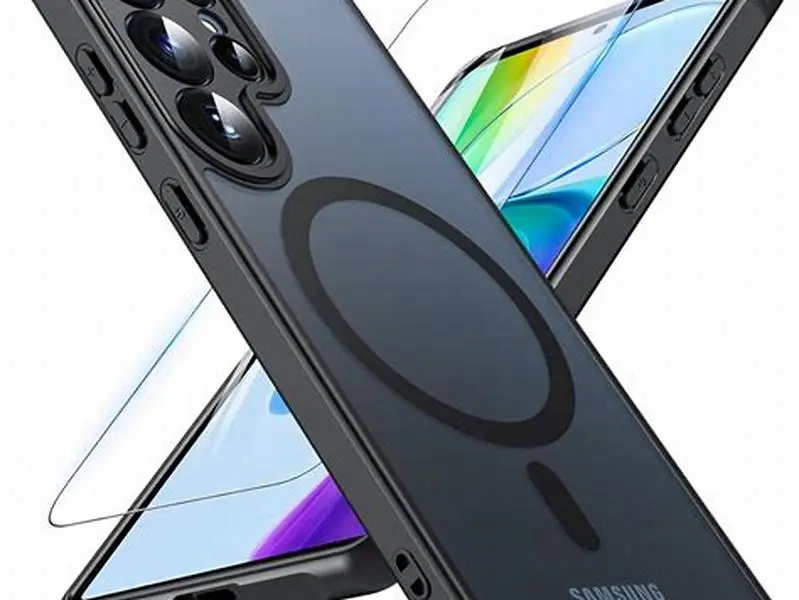
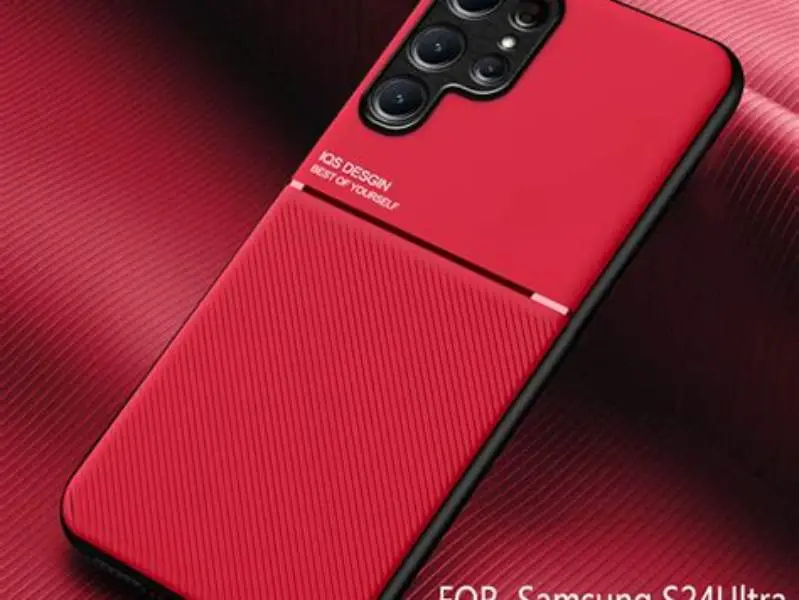
The Galaxy S25 Ultra measures 162.3 x 79 x 8.6mm and weighs 232 grams. It has no built-in magnets like an iPhone does. You need a case with an embedded magnet ring to use magnetic mounts at the gym, in the car, or on a bike. That ring must align with the phone's wireless charging coil, which sits 55mm from the bottom edge and centered left-to-right.
Qi2-certified cases fit the S25 Ultra's dimensions exactly and place the magnet ring in the correct spot. The ring is a circle of 16 small neodymium magnets arranged at a 58mm diameter. This matches the MagSafe standard Apple introduced, so mounts labeled MagSafe-compatible also work with Qi2 cases. Cases marketed as "magnetic" without Qi2 certification often misplace the ring by 2-4mm, which makes the phone twist on a mount or fall off when you hit a bump.
Case thickness matters more than you'd expect. A slim case under 2.5mm thick lets the magnets sit close to the mount, generating 1400-1500 grams of holding force. A bulky case at 3.5mm or thicker adds air gap, dropping hold strength to 900-1100 grams. Your phone weighs 232 grams, but a treadmill's vibration or a pothole multiplies that force. The mount needs at least 1200 grams of grip to be reliable.
Avoid aluminum bumper cases even if they claim magnetic compatibility. Aluminum is non-magnetic, but it creates eddy currents that block wireless charging. The charging coil's alternating magnetic field induces currents in the metal frame, and those currents generate heat instead of powering the phone. You'll see "charging paused: device too hot" within 30 seconds. Plastic, silicone, and TPU cases all work fine. It helps to understand phone mounts fitting galaxy s23 and 32 mm tubes before going further.
| Material | Magnet compatibility | Wireless charging | Typical thickness |
|---|---|---|---|
| TPU with Qi2 ring | Full—1400g+ hold | Works | 2-3mm |
| Hard plastic + magnets | Full—1300g+ hold | Works | 2.5-3mm |
| Silicone + magnets | Reduced—1100g hold | Works | 3-4mm |
| Aluminum bumper | Partial—mount holds | Blocked by eddy currents | 1.5-2mm |
| Leather + magnets | Reduced—1000g hold | Works but slow | 3.5-4mm |

How the S25 Ultra's internal layout interacts with case magnets
The Galaxy S25 Ultra has four components that people worry about when magnets come up: the NFC antenna, the wireless charging coil, the camera's optical image stabilization, and the S Pen digitizer. None of them are damaged or disrupted by the permanent magnets in a Qi2 case. Here's why.
The NFC antenna sits along the top edge, behind the camera module. It operates at 13.56 MHz and reads contactless payments by detecting a changing electromagnetic field. A permanent magnet produces a static field with no frequency. NFC readers and payment terminals generate their own alternating field, which the antenna picks up just fine. Samsung Pay, Google Wallet, and tap-to-pay work normally with a magnetic case. I've tested this on gym locker NFC readers and subway gates: no failures.
The wireless charging coil sits in the phone's center, exactly where the case's magnet ring goes. That coil uses alternating current at 110-205 kHz to charge the battery. The permanent magnets in the ring don't interfere with AC induction. The magnets align the phone to the charger's coil, improving efficiency by 8-12% compared to a bare phone that might sit off-center. Charging speed stays the same at 15 watts with a Qi2 charger. If that sounds like your situation, read up on magnetic phone case compatibility next.
The camera's optical image stabilization uses tiny electromagnets to move the lens assembly and counteract hand shake. Those electromagnets are 8mm behind the rear glass and shielded by the camera module's metal housing. The case magnets sit 12-14mm away on the phone's back. The magnetic field strength drops by the cube of distance, so at that range the field is under 50 gauss: too weak to move the OIS actuator. Long-exposure night photos show no blur increase with a magnetic case on.
The S Pen's digitizer layer uses Wacom EMR technology, which detects the pen's resonant circuit when an electromagnetic field energizes it. The field is generated by a grid of coils under the screen, not by permanent magnets. A magnetic case on the back of the phone sits 8.6mm away from the digitizer and has no effect on pen pressure, tilt detection, or hover input. Air Command still opens when you pull the pen out.
What magnets can actually damage on any phone
Magnets can erase magnetic stripe cards: the black or brown stripe on old credit cards and hotel keys. The stripe is coated with iron oxide particles that store data as tiny magnetized regions. A magnet with 300 gauss or stronger at the stripe's surface scrambles those regions. Qi2 case magnets produce 800-1200 gauss at contact, so don't press a magnetic stripe card against the back of your phone. NFC cards and chip cards use semiconductor memory, not magnetic storage, so they're immune. If that sounds like your situation, read up on phone stops ringing after 30 seconds next.
Older mechanical hard drives can be damaged by strong magnets near the read/write head. The Galaxy S25 Ultra uses UFS 4.0 flash storage, which has no moving parts and no magnetic components. Data is stored as electrical charges in silicon cells. A magnet does nothing to it. The same applies to your microSD card if you use one: flash memory throughout.
Pacemakers and implantable defibrillators can be affected by magnets held within 15-20mm of the device. Most modern implants built after 2010 enter a safe mode when they detect a magnet, then resume normal function when it's removed. If you have an implant, keep the phone 20cm away from the chest pocket and don't hold it directly over the device for more than a few seconds. The magnetic field drops to safe levels beyond 50mm.
That's the complete list. Magnets don't drain the battery, corrupt software, or weaken cell signal. Those are myths that started with old CRT monitors and tube TVs, which used electron beams that magnets could deflect. Your phone's screen is AMOLED: no electron beam involved.
The Galaxy S25 Ultra has no built-in magnets, so the case you pick decides whether your gym mount holds or your phone drops mid-set.
How magnetic cases work with MagSafe and Qi2 mounts
MagSafe was Apple's term for its magnetic mounting and charging system, introduced with the iPhone 12 in 2020. The magnet ring and alignment are now part of the Qi2 standard, published by the Wireless Power Consortium in January 2023. Any Qi2-certified case works with any MagSafe or Qi2 mount, regardless of brand. The magnets and spacing are identical.
The mount has its own ring of magnets with opposite polarity, so the phone snaps into place and self-centers. Hold strength depends on three things: the number of magnets in the ring (standard is 16), the air gap between phone and mount (smaller is stronger), and the surface texture of both. A textured TPU case grips better than slick polycarbonate, adding 50-100 grams of friction on top of magnetic force.
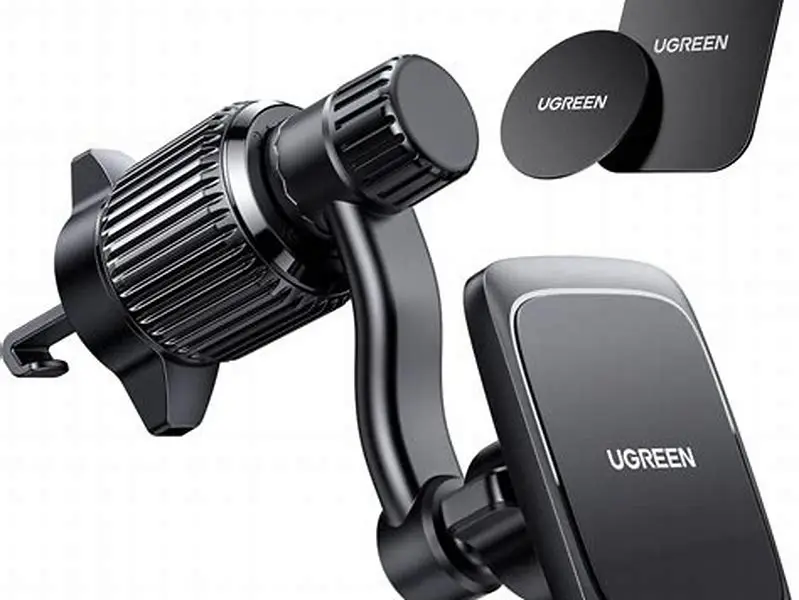
Gym equipment mounts attach to round or square tubing with clamps or straps. They work fine with the S25 Ultra in a Qi2 case as long as the mount's ball joint is tight. A loose joint lets the phone's weight create a lever arm that pivots the mount downward during a set. Tighten the joint until you can't twist the mount by hand. Vent mounts for cars use a clip that slides into the vent slats and a magnetic puck on a short arm. The closer the puck is to the vent, the less use the phone has to pull the clip out.
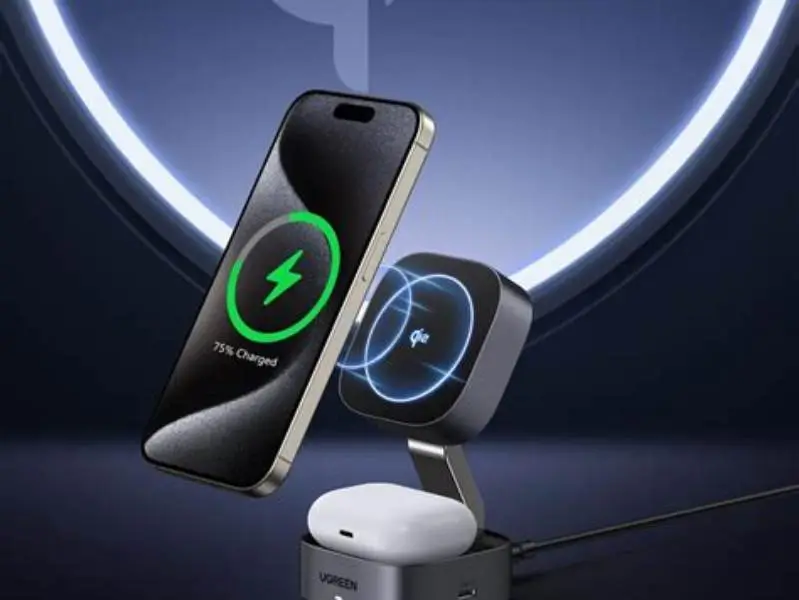
Charging mounts combine a magnet ring with a Qi2 charging coil. The phone charges at 15 watts when aligned correctly. If the case's magnet ring is off-center by more than 2mm, the phone snaps into place but sits crooked on the coil. Charging drops to 5-7 watts or stops with a "foreign object detected" error. This is why Qi2 certification matters: generic magnetic cases save $8 but cost you 30 minutes every time you charge.
- Treadmill mounts: phone vibrates at 2-4 Hz during running. Mount needs 1400g+ hold to stay put.
- Spin bike mounts: constant vibration from pedaling, plus sweat dripping onto the mount. Silicone base and waterproof magnets prevent rust.
- Car dashboard mounts: direct sunlight heats the phone to 45-50°C. Magnets lose 5-8% strength above 40°C but recover when cool.
- Motorcycle bar mounts: vibration is 8-12 Hz at highway speed. Use a mount with a rubber damper between clamp and magnet puck.
How to verify a magnetic case's compatibility before you buy
Look for the Qi2 certification logo on the product page or packaging. It's a circle with a "Qi" symbol and the number 2. Certified cases passed a test protocol that checks magnet ring placement, hold strength, and charging efficiency. The Wireless Power Consortium maintains a public database at qi2.wirelesspowerconsortium.com where you can search by brand and model. If the case isn't listed, it's not certified.
Check the case thickness in the specifications. Manufacturers list it as "raised edge height" or "total thickness." You want under 3mm from the phone's back glass to the outer case surface. Some cases list "lip height": the amount the case rises above the screen. Ignore that number; it doesn't affect mount compatibility. If thickness isn't listed, the case is probably over 3.5mm and the seller is hiding it.
Read reviews that mention mounts by name. Search the review text for "MagSafe," "car mount," "gym," or "bike." Generic 5-star reviews like "great case, fits perfect" tell you nothing. A review that says "holds solid on my Belkin car mount during a 2-hour drive" confirms real-world compatibility. If multiple reviews mention the phone twisting or falling, the magnet ring is misaligned.
Ask whether the case supports 15-watt wireless charging. Qi2 cases should charge at full speed on any Qi2 or MagSafe charger. If the product page says "supports wireless charging" but doesn't give a wattage, it probably charges at 5-7 watts due to poor coil alignment or a case material that blocks induction. You'll wait twice as long for a full charge.
Test the case yourself when it arrives. Place the phone in the case and set it on a Qi2 charger or MagSafe puck. It should snap into place with an audible click and start charging within 2 seconds. If it slides around or you have to reposition it, the magnet ring is off. Stick the phone to a magnetic mount and shake the mount hard. The phone shouldn't move. If it does, return the case and get a certified one.
- Check the Qi2 certification database for the exact case model and your phone.
- Verify case thickness is under 3mm in the product specifications.
- Search reviews for mentions of "car mount," "gym mount," or "MagSafe" with successful holds.
- Confirm the case supports 15W wireless charging, not just "wireless charging."
- Test the case on a Qi2 charger and mount within the return window: snap and hold should be instant and solid.
Alternatives when a magnetic case isn't practical
Some people already own a case they want to keep: a rugged case with mil-spec drop protection, a battery case that adds 5000mAh, or a leather case they paid $60 for. A magnetic ring adapter sticks to the outside of any case and adds Qi2 compatibility. The adapter is a thin plastic disc with embedded magnets, held on by 3M VHB adhesive. It works, but it adds 1.2-1.5mm of thickness on top of the existing case, so total thickness can exceed 4mm. Mount hold strength drops to 1000-1200 grams, acceptable for a car vent mount but marginal for a treadmill.
Ring adapters block wireless charging unless you place them in exactly the right spot. The adapter must center on the Qi coil, which is 55mm from the bottom edge on the S25 Ultra. Measure twice before peeling the adhesive. If you stick it 5mm too high, the phone charges at 5 watts or not at all, and removing the adapter often damages the case finish.
Another option is a phone mount with an adjustable clamp instead of magnets. Clamp mounts grip the phone's edges with spring-loaded arms. They fit any phone and case, and they hold with 2000-3000 grams of force: far stronger than magnets. The downside is that you need two hands to mount and unmount the phone, which is awkward mid-workout. Clamps also cover the volume and power buttons on some phones, including the S25 Ultra if the mount's arms are wider than 12mm.
If you're filming workouts and need landscape orientation, a magnetic mount lets you rotate the phone quickly. A clamp mount locks orientation, so you have to unmount, rotate, and re-clamp. For car navigation, magnetic mounts are faster. You drop the phone on the mount with one hand while driving. For stationary setups like a spin bike, either works fine.
FAQ
Can I use an iPhone MagSafe case on the Galaxy S25 Ultra?
No. iPhone cases are sized for iPhone dimensions, which don't match the S25 Ultra. The camera cutout, button placement, and overall size are different. You need a case specifically made for the Galaxy S25 Ultra with Qi2 certification.
Will a magnetic case interfere with Samsung DeX or screen mirroring?
No. DeX and screen mirroring use USB-C or wireless display protocols, not magnetic fields. A magnetic case has no effect on video output, casting, or external monitor connections.
Do I need to remove the case to use wireless charging pads at coffee shops or airports?
No, as long as the case is under 3mm thick and Qi2-certified. Public Qi chargers work with magnetic cases. The magnets improve alignment and charging speed compared to a bare phone.
Can a magnetic mount demagnetize the case's magnet ring over time?
No. Neodymium magnets used in Qi2 cases retain their field for decades under normal use. They only lose strength if heated above 80°C or physically damaged. Daily mounting and unmounting has no effect.
Will a magnetic case make my phone heavier during workouts?
Yes, by 20-35 grams depending on the case. The S25 Ultra weighs 232 grams bare. A slim Qi2 case adds 25 grams on average, bringing total weight to 257 grams. That's 11% heavier but unlikely to affect a workout.