Will a magnetic phone mount hold through a v-twin's shake?

A well-made magnetic mount can hold a phone on a Road Glide, but magnets alone are the weak link. Pair a strong N52 or Qi2 magnet array with a mechanical back-up - a corner grip, strap or cradle - and mount it at the 1-inch clamp area, not on the fairing shell.
On this page (8 sections)
- Remember this
- Choosing a Harley-Davidson Road Glide phone holder that actually fits
- Mounting points beyond the bars: fairing bolts and clamp areas
- What v-twin vibration does to a phone, especially the camera
- Can MagSafe magnets survive highway shake alone?
- Where a phone can sit with a frame-mounted fairing
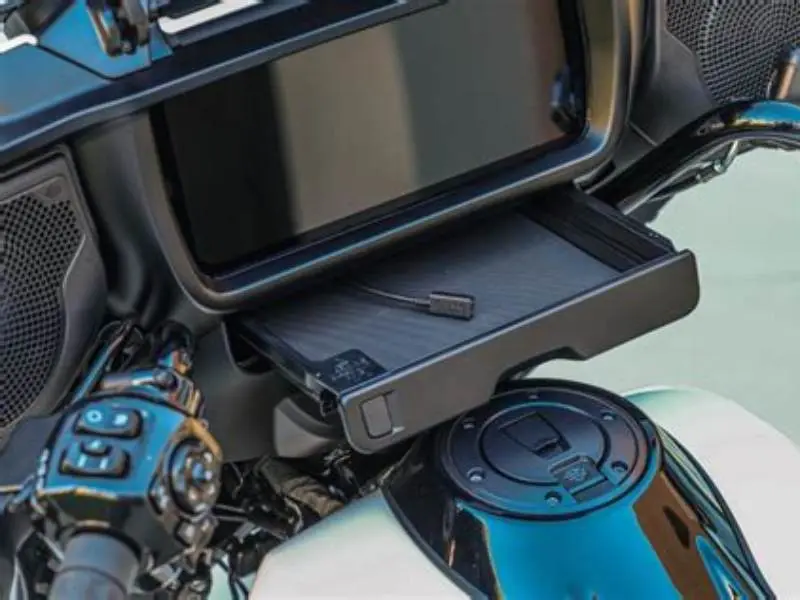
- Charging on the bike: pairing a mount with the 12V outlet
- FAQ
Part of the guide: Treadmill phone mount that won't drop a 230 g phone mid-run
Fast facts
- Bar clamp diameter
- about 1 inch / 25.4 mm
- Grip diameter
- often 1-1/4 inch / 32 mm
- Fairing bolt size
- typically 1/4-20 accessory base
- MagSafe hold
- pull strength yes, vibration no
- Camera risk
- OIS damage from vibration
- Power source
- 12V accessory outlet, SAE or USB
Remember this
- Road Glide bars measure about 1 inch (25.4 mm) at the riser clamp; buy a mount specified for 1-inch bars or with shims for 1-1/4 inch.
- Two inner fairing bolts behind the windshield accept accessory bases; they carry a small plate fine, nothing heavy.
- V-twin vibration ruins phone camera stabilisation before it drops a phone - a damped mount is the fix.
- MagSafe magnets resist straight pulls, not the constant side-to-side buzzing of a big twin; add a mechanical grip or strap.
- Frame-mounted fairing means the phone mounts to the bike, not the steering; place it low and off the sight line.
Choosing a Harley-Davidson Road Glide phone holder that actually fits
Most Road Glide owners who lose a phone lose it to a fitment mistake, not to a weak magnet. The stock bars clamp at roughly 1 inch (25.4 mm) across the riser area, while the grip ends often run fatter, close to 1-1/4 inch. A holder sold as "fits Harley bars" without stating a diameter is guessing, and guessing is what rattles loose on a bump. Measure the clamp area with calipers or a tape wrapped around the tube before you order anything.
The specification you want printed on the listing is a clamp range that includes 25.4 mm, ideally down to something like 22 mm and up past 32 mm so it also grips the grip section if you relocate it. Ball-stud bases, RAM-style 1-inch balls and fork-clamp bases all come in fixed sizes; a range beats a fixed number because Milwaukee-Eight and Twin Cam bars differ by year and aftermarket swap.
One more fitment trap: the Road Glide's fairing is frame-mounted, so a mount clamped to the bars does not steer with the front wheel in the same way a fairing-mounted accessory does. Whatever you buy, tighten it to the specified torque, use a thread-safe compound on the clamp bolt, and re-check after the first few hundred miles. Clamps walk loose under vibration long before magnets fail.
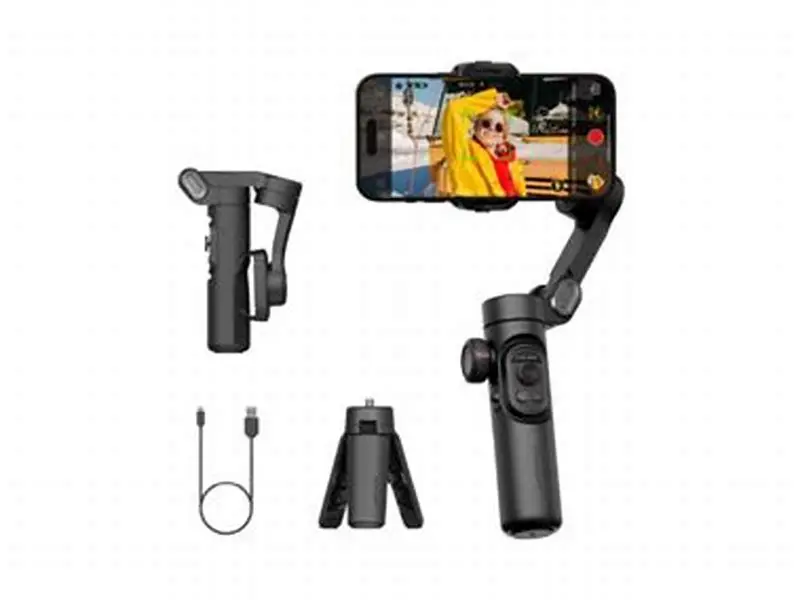
This is the point where the right purchase matters: a damped motorcycle phone mount rated for 1-inch bars with a clamp range covering 22-32 mm solves fitment and vibration in one part. Skip anything listing only "universal fit". For the detail, see our notes on bar‑mounted gimbal for smartphone filming on bike.
| Point on the bike | Typical measurement | Mount spec needed |
|---|---|---|
| Riser clamp area | ~25.4 mm (1 inch) | clamp range including 25.4 mm |
| Grip end | ~32 mm (1-1/4 inch) | clamp range up to 32 mm+ |
| Mirror stem | 10 mm thread | 10 mm mirror-thread base |
- 1-inch clamp bases are widely available
- measuring takes two minutes
- aftermarket bars may change the diameter
- some mounts need shims

MOGGAM Motorcycle Phone Holder Mount Anti Vibration Handlebar Mirror
Clamps your Road Glide's 1 in bar or M8/M10 mirror stem with a dual silicone dampener that soaks up engine and road buzz before it reaches your phone's camera.
Mounting points beyond the bars: fairing bolts and clamp areas
The bars are not the only anchor. Behind the Road Glide's windshield, the inner fairing carries bolts that accessory bases are made for - many aftermarket plates bolt straight onto those points using standard 1/4-20-style threads or dedicated Harley accessory bases. They hold a light plate or ball stud without issue, and because the fairing is frame-mounted, whatever hangs there stays steady relative to the rider even as the front wheel is turned.
The clutch and brake clamp area is the other useful spot. Perch clamps often have an M8 accessory hole on the underside, sold as a mirror or accessory mount point. That hole is engineered for light loads - a mirror, a small ball base - and a phone mount arm is right at its limit. It works, but it is the first place to look if you notice the perch walking or the lever position drifting.
What each point can carry differs, and it matters more than most listings admit. A short, stiff arm from a fairing bolt point puts far less leverage into the joint than a long arm from the perch. Long arms multiply vibration into torque, and torque is what loosens bolts and cracks plastic fairings over time.
As a rule: heavy cradle plus charging head goes on the fairing bolt base or the bar clamp; only a compact magnetic puck belongs on the perch accessory hole. Keep the load short-armed and close to the bolt and every one of these points holds for years.
- Inner fairing bolts: best load capacity, ideal for a ball base with charging
- Perch accessory hole (M8): light loads only, short arm essential
- Bar clamp: easiest fit, vibrates with the bars, needs damping
| Point | Load it carries | Steers with wheel? | Best use |
|---|---|---|---|
| Inner fairing bolts | plate, ball base, charging mount | no | permanent GPS-style setup |
| Perch accessory hole | light puck or short arm | yes | minimal magnetic puck |
| Bar clamp | full cradle | yes | damped cradle with charger |
What v-twin vibration does to a phone, especially the camera
A big twin does not shake the way an inline-four does. It pulses - a heavy, low-frequency thump at idle and a constant buzz at cruising revs - and that pulse is precisely the frequency range that phone cameras hate. Apple and Google both warn users that sustained high-amplitude vibration, the kind motorcycles and powerful dirt bikes produce, can degrade the optical image stabilisation (OIS) and autofocus systems, because tiny suspended elements inside the lens are being shaken against their travel limits thousands of times a minute.
The failure is gradual and expensive. First you notice slightly soft photos, then a faint rattle when you shake the phone, then the camera app refuses to open or produces visibly wobbly video. None of this is a mount problem; it is a vibration-exposure problem, and it happens on phones that never drop once.
A damped mount changes the picture. Good motorcycle holders put a vibration-isolating ball or elastomer link between the phone and the bike, tuned to absorb the low-frequency pulse a twin produces. RAM's X-Grip with the damper, Quad Lock's vibration dampener and similar designs cut the energy reaching the phone dramatically. They are not perfect, but on a big v-twin the difference between damped and undamped is the difference between a camera that lasts and one that does not.
This is the second thing worth buying on purpose: a vibration dampener or a mount with built-in damping, fitted between the bike and the cradle. If the listing does not mention damping, assume there is none.
- damping protects OIS and autofocus
- also reduces arm fatigue on the mount
- adds a little height
- dampeners wear and need periodic replacement
Nobody on page one tells you the Road Glide's clamp measures one inch - or that v-twin pulse, not weak magnets, is what kills phones.
Can MagSafe magnets survive highway shake alone?
On paper, MagSafe is strong. An iPhone's magnet ring plus a quality puck resists a straight pull of well over a kilogram, and that straight-pull figure is what marketing quotes. Highway reality works differently: a v-twin delivers constant side-to-side and rotational buzzing, plus discrete bumps that convert into sharp twisting moments on a levered arm. Magnets resist shear and twist far worse than they resist a clean pull, and a big twin supplies shear and twist all day.
Riders report the same pattern. The phone survives smooth cruising for weeks, then one sharp expansion joint or a washboard corner throws it. Even when the magnet itself holds, the phone slowly rotates on the puck until it faces sideways or drops at a stop. MagSafe alone is therefore a fair-weather, short-trip solution at best on a Harley.
The fix is mechanical back-up, not bigger magnets. A Qi2-rated magnetic mount paired with a cradle that captures at least two corners, or a tether strap around the phone, gives you the snap-on convenience of magnets with a safety net that does not care about frequency or direction of shake. Sustained magnets plus an M8 or 1/4-20 bolted base means nothing is being held by friction or adhesive either - those are the two silent failure modes on hot fairings and rough roads.
If you want the magnet-only look, position the puck so the phone's weight presses into the mount rather than hanging off a horizontal arm, keep the arm short, and accept that a long gravel section is a calculated risk. Most riders decide the corner grips are worth it after the first near-miss.
| Condition | MagSafe alone | Magnet + corner grips or tether |
|---|---|---|
| Smooth highway cruise | usually holds | holds |
| Sharp bump or expansion joint | can release or spin | holds |
| Phone orientation over time | rotates off-centre | stays put |
| Camera vibration protection | none | yes, if damped |
- snap-on convenience
- no case change needed with a puck
- twist and shear weaken hold
- phone rotates over time
- bump release risk
Where a phone can sit with a frame-mounted fairing
The Road Glide's frame-mounted fairing changes the geometry in your favour. Because the shell is bolted to the frame rather than the forks, it does not shake with every steering input, and a mount fixed to the fairing or to the bar clamp sits in a stable, predictable position. The trade-off is that the fairing is large: anything mounted high sits right in the wind stream and in your sight line over the shark-nose.
The practical rule is low and to the side. A phone mounted at or just below the gauge line, offset toward one grip, stays out of the over-the-fairing view and catches less wind blast on your hands. Mount it high and central and you get three problems at once: buffeting on the phone, blocked view of the road edge, and more leverage working on the mount's bolts.
Wind matters more than it sounds. A phone standing proud of the fairing at 70 mph acts like a small sail; that constant pressure fatigues arms, ball joints and clamp bolts. A short arm tucked behind the windscreen line gets airflow mostly over the top, and it keeps the screen visible for navigation. Riders on taller aftermarket screens usually have more clean space behind the screen than stock setups do.
Check one thing before final mounting: sit on the bike and look where your eyes actually travel at speed. Thumb the starter through a few crank cycles and watch how the chosen spot moves. A position that is visible, sheltered and barely twitching at idle will behave the same way at speed.
- frame-mounted fairing gives a stable platform
- low mounts get wind shelter
- high central mounts block view and buffet
- fairing shell plastic limits loads
Charging on the bike: pairing a mount with the 12V outlet
Navigation with the screen at full brightness drinks battery faster than most riders expect, so charging is part of the mount decision, not an afterthought. Road Glides carry a 12V accessory outlet or a bare accessory connector under the fairing or near the tank, depending on year. A mount with an integrated charging head or a wireless puck needs power routed to wherever the phone sits - which is exactly why a mount with built-in wiring channels beats one that leaves cables flapping in the wind.
Match the hardware to the source. A USB-compatible adapter into the accessory socket, or a hardwired SAE-to-USB harness fused at the battery, both work; the difference is tidiness and whether the outlet stays live with the ignition off. Hardwired kits usually switch with the ignition; direct battery connections need their own switch or you will find a drained battery after a week parked. Fused connections are non-negotiable on either route.
Wireless charging through a vibrating bike is its own topic. Magnets and coils must stay precisely aligned, so a wireless head only charges well on a mount that holds the phone rigidly - which is one more reason a cradle with mechanical grips outperforms a loose magnetic puck. Wired charging through a short cable into a weatherproof USB port is the most reliable option on a bike that shakes this much, and it sidesteps coil alignment entirely.
Whatever you choose, keep the amperage honest: a phone at full brightness running navigation wants a solid 2-amp feed or better, or it will slowly lose charge on a long day. Anything less and you are managing decline, not charging.
- Locate the accessory outlet or connector and confirm whether it is switched with the ignition.
- Choose wired USB for reliability or a Qi2 wireless head only if the mount grips the phone firmly.
- Fuse any hardwired connection and mount the converter away from engine heat.
- Route the cable through the mount's channel and test charge at riding brightness before a long trip.
- integrated charging keeps cables tidy
- switched hardwire prevents battery drain
- wireless coils misalign under vibration
- unfused connections risk a dead battery

MOTOPOWER MP0609EA 3.1Amp Waterproof Motorcycle Dual USB Kit SAE to USB
Gives your mount a fused 3.1 A USB feed straight off the bike battery, with the fused SAE ring-terminal harness included in the box.
Magnetic hold works on a Road Glide only with damping and a mechanical back-up; bolted damped cradle plus Qi2 magnet is the setup that lasts.
FAQ
Will a magnetic mount hold an iPhone on a Road Glide without a case?
A bare phone on a quality puck resists a straight pull but not the twisting and shear a v-twin produces. It will typically survive smooth cruising and fail on one sharp bump. Add a tether or corner grips, or use a Qi2-rated magnetic case for more contact area.
Do I need a vibration dampener on a Milwaukee-Eight?
Strongly recommended. The low-frequency pulse of a big twin is exactly what damages phone camera stabilisation over time. A dampener between the mount and the bike dramatically reduces the energy reaching the phone and also keeps the mount itself from loosening.
Can I bolt a phone mount to the Road Glide fairing?
Yes, on the inner fairing's accessory bolt points, using a proper accessory base. The shell itself is plastic and should not be drilled or loaded with self-tapping screws. Keep the arm short so leverage stays low.
Is wireless charging worth it on a bike this buzzy?
Only if the mount grips the phone firmly, because the charging coil needs constant alignment. Wired charging into a weatherproof USB port is more dependable on a v-twin and usually cheaper.
What diameter are stock Road Glide handlebars?
The riser clamp area measures about 1 inch (25.4 mm) on most stock setups, with grip sections closer to 1-1/4 inch. Measure your specific bike, since aftermarket bars vary, and buy a mount whose stated clamp range covers what you measured.