How to use a magnetizer demagnetizer tool to magnetize or demagnetize metal

To magnetize a metal tool, slide it slowly through the magnetizer section 10-20 times in one direction. To demagnetize, insert it into the demagnetizer slot and slowly withdraw in one pass. The process depends on metal type and tool size.
On this page (8 sections)
- Remember this
- How to magnetize a metal tool using the tool
- How to demagnetize a metal tool or magnet using the tool
- What the tool does internally during magnetizing and demagnetizing
- Safety notes about magnets and phones in this context
- How to use magnetize demagnetize tool
- Will a magnetic mount or wallet damage my phone
- FAQ
Part of our guide on magnetic mounts and overheating
Fast facts
- Magnetizing passes
- 10-20 times
- Demagnetizing passes
- 1 slow pass
- Magnet strength
- depends on tool
- Safe distance from phone
- 10 cm or more
Remember this
- Magnetize tools by sliding through magnetizer 10-20 times.
- Demagnetize with one slow pass through demagnetizer slot.
- Metal type and size affect magnetizing results.
- Keep magnets away from phones to prevent damage.
- Use a gauss meter to check magnetism level.
How to magnetize a metal tool using the tool
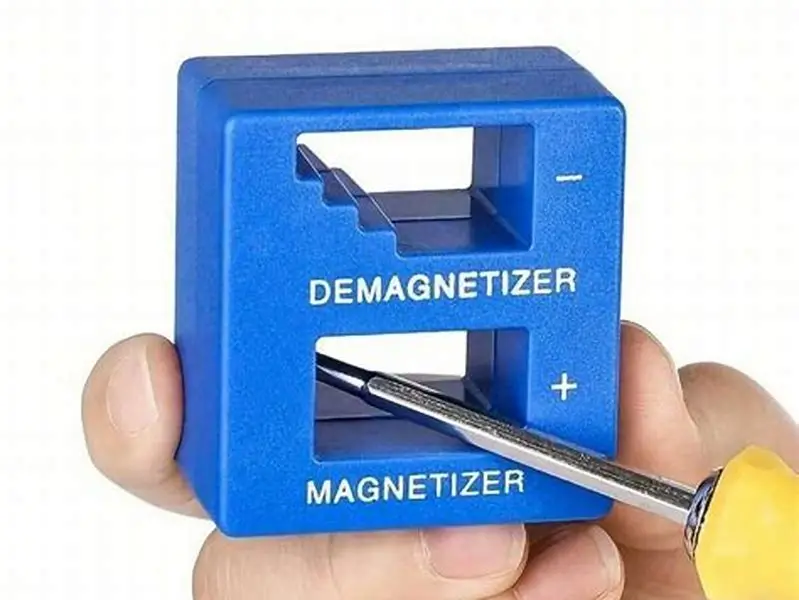
Place the metal tool, such as a screwdriver or nail, in the magnetizing slot of the tool. Slide it slowly and smoothly through the slot in one direction. Repeat this sliding motion between 10 and 20 times. The number depends on the tool's size and metal type. More passes increase magnetization but with diminishing returns.
Avoid sliding back and forth quickly; always move in the same direction to align magnetic domains inside the metal. This alignment creates a strong magnetic field at the tool’s tip. Larger, thicker tools may require more passes or a slower slide to magnetize effectively. Smaller tools magnetize faster.
Test the magnetism by picking up small screws or metal shavings after magnetizing. If the tool does not hold items, repeat the process. Over time, magnetization fades with use due to impacts or heat. Repeat magnetizing as needed to restore magnetic strength.
The magnetization effect depends on the metal's composition. For instance, high-carbon steel tools magnetize more slowly than soft iron ones. If you have a screwdriver with a hardened steel shaft, expect to slide it closer to 20 times. If a magnetized tool is very hot during use, heat can weaken magnetism quickly. Avoid heating magnetized tools above 150°C to keep their magnetic strength. It helps to understand impact of cable length on charging before going further.
If you want to check how strong the magnetism is, use a simple test. Try lifting a small steel screw with the tool. If it holds firmly, magnetism is good. If it only picks up light metal shavings or fails to hold screws, magnetize again. A gauss meter can measure magnetic strength, which for a well-magnetized screwdriver tip might be around 50 to 100 gauss. This helps compare before and after states.
- Insert metal tool fully into magnetizer slot.
- Slide it out slowly in one direction.
- Repeat 10-20 times steadily.
- Test magnetism by trying to pick metal bits.
- Repeat if magnetism is weak.
How to demagnetize a metal tool or magnet using the tool
Insert the metal tool fully into the demagnetizing slot. Slowly withdraw it in a single, smooth pass. Do not slide it back and forth. The demagnetizer applies an alternating magnetic field, randomizing the magnetic domains inside the tool’s metal. This removes the net magnetism.
For stronger magnets or larger tools, repeat the single slow pass once or twice. Excessive passes are unnecessary and do not improve demagnetization. The process is faster than magnetizing but requires a steady hand. For the detail, see our notes on vent clip for 12 mm slats.
After demagnetizing, test the tool by checking if it attracts small metal objects. If it still picks up bits, repeat the demagnetize step. Once fully demagnetized, the tool will not hold metal shavings or screws.
Demagnetizing larger or thicker tools can be tricky because residual magnetism can remain near the core. Sometimes, after demagnetizing, you may still notice slight attraction. This occurs because some magnetic domains resist randomization. In such cases, repeat the slow withdrawal through the demagnetizer slot two or three times, pausing briefly between passes to allow magnetic domains to settle.
If a tool is made from hardened steel, it holds magnetism more stubbornly. Heat treatment or specialized equipment like a degausser may be needed for full demagnetization. The magnetizer demagnetizer tool works best on soft iron or mild steel, commonly used in household tools. Check tool magnetism by attempting to pick up a small metal screw. If it no longer attracts, demagnetization is effective. The other half of this decision is protective tips for gym upright mounts.
- Insert the tool fully into the demagnetizer slot.
- Withdraw it slowly and steadily in one pass.
- Test tool magnetism with small metal objects.
- Repeat if tool remains magnetic.
What the tool does internally during magnetizing and demagnetizing
A magnetizer aligns the microscopic magnetic domains inside ferromagnetic metal. Sliding the tool through the magnetizing slot exposes it to a strong static magnetic field. This field forces domains to line up in the same direction, creating a net magnetic field in the tool.
Demagnetizing works differently. The tool’s demagnetizer generates an alternating magnetic field that fluctuates rapidly. This field continuously changes direction, causing magnetic domains to lose their alignment. The domains become randomized, canceling the net magnetism.
Metal type impacts the effectiveness. Soft iron magnetizes and demagnetizes easily. Hardened steel tools may hold residual magnetism after demagnetizing. Complete demagnetization may require heat treatment in those cases, which the tool cannot provide.
Permanent magnets in your phone or case contain materials like neodymium, which are not affected by this tool. You cannot demagnetize permanent magnets with it. Using the tool on magnets only affects small ferromagnetic metal parts.
Get exact steps to magnetize or demagnetize metal tools with a magnetizer demagnetizer tool and learn what happens inside.
Safety notes about magnets and phones in this context
Keep the magnetizer demagnetizer tool and any strong magnets at least 10 centimeters from your phone. Magnetic fields can confuse compass sensors and potentially damage magnetic strips or components in some phones, especially with older models.
MagSafe-compatible phones and cases have magnets designed for alignment, but external strong magnets risk interference or data loss if placed too close. Avoid leaving phones attached to strong gym magnets for extended periods.
If you use magnetic phone mounts or wallets, check manufacturer advice about magnet strength and minimum distance from sensitive phone parts. Use the magnetizer demagnetizer tool only on metal tools, never on your phone or its case.
Test phone functionality after magnet exposure. Compass errors, distorted readings, or touch screen glitches indicate magnetic interference. If issues arise, move the phone away from magnets and restart it.
How to use magnetize demagnetize tool
Identify whether you need to magnetize or demagnetize your metal tool. For magnetizing, pick the magnetizer slot. For demagnetizing, use the demagnetizer slot.
Hold the tool firmly and insert it fully into the chosen slot. For magnetizing, slide out slowly 10-20 times in the same direction. For demagnetizing, withdraw once slowly and steadily.
Test the metal tool’s magnetism after the process by trying to pick up small screws or metal shavings. Repeat the step if results are insufficient.
Store the tool away from electronic devices and magnetic media to prevent accidental damage. Follow safety notes about keeping magnets away from phones.
Use a gauss meter to measure the magnetic field on your tool if accuracy is needed.
Always hold the metal tool firmly to prevent slipping while sliding it through the magnetizer slot. A steady hand ensures consistent exposure to the magnetic field. For very thin or small tools, like pins or needles, fewer passes may be enough because their magnetic domains are easier to align.
Do not force the tool through the slots. If it feels stuck, remove it gently and check for debris or damage in the tool or the magnetizer. A jam can damage the tool or the magnetizer device. Clean the slots occasionally with a dry cloth to maintain smooth operation.
If you want to be precise, use a gauss meter before and after magnetizing or demagnetizing. This tool measures the magnetic field strength in gauss or tesla. For example, if a screwdriver tip measures 10 gauss before magnetizing and 80 gauss after, you have successfully magnetized it. This also helps track how magnetism fades over time.
| Action | Slot used | Number of passes | Sliding direction | Effect on metal |
|---|---|---|---|---|
| Magnetizing | Magnetizer slot | 10-20 times | One direction | Aligns magnetic domains, adds magnetism |
| Demagnetizing | Demagnetizer slot | 1 slow pass | One direction, out | Randomizes domains, removes magnetism |
Will a magnetic mount or wallet damage my phone
Magnetic mounts and wallets generally do not damage modern smartphones if used correctly. Most phones have shielding and components designed to tolerate moderate magnetic fields.
However, strong magnets placed too close to the phone’s compass or magnetic sensors can cause temporary malfunctions. This includes distorted GPS or compass readings during use. Effects usually disappear when the phone moves away from the magnet.
Old phones or devices with magnetic strips, like credit cards stored in magnetic wallets, are at higher risk of damage. Avoid placing credit cards against strong magnets in wallets or bags.
Check the strength of your magnetic mount. If it is too strong, it can interfere with phone sensors or data storage. Use mounts designed for your specific phone model and keep the magnet away from the screen and camera areas.
Using a magnetizer demagnetizer tool on your metal phone case or tools won’t affect your phone’s magnetics unless you touch the phone itself directly with strong magnets.
- Hands-free phone use
- Secure hold during workouts
- No clamps or clips needed
- Potential sensor interference
- Possible damage to magnetic cards
- Not all phones compatible
A magnetizer demagnetizer tool is the simplest way to control magnetism in your metal tools, but keep it away from your phone.
FAQ
Can I demagnetize my permanent magnets with this tool?
No. The tool works only on ferromagnetic metals by randomizing magnetic domains. Permanent magnets like neodymium maintain their magnetism despite this tool.
How do I know if my tool is fully magnetized or demagnetized?
Test by picking up small metal screws or shavings. Use a gauss meter for precise magnetic field measurement.
Is it safe to use a magnetic phone mount in the gym?
Generally yes, if the magnet is moderate strength and not placed directly over sensitive phone parts. Keep at least 10 cm distance from compass sensors.
Why does my tool lose magnetism over time?
Impacts, heat, and daily use disturb magnetic domain alignment, causing gradual loss of magnetism. Repeat magnetizing to restore it.
Can the magnetizer demagnetizer tool damage my phone?
Only if you bring the tool or magnets very close. Avoid direct contact with the phone or magnetic phone cases.