How water resistant is the iPhone 15 for workouts and daily use

The iPhone 15 is rated IP68, meaning it can handle submersion up to 6 meters deep for 30 minutes in fresh water under controlled conditions. That's splash-proof for workouts and rain, but not chlorine, salt water, or repeated exposure without maintenance.
On this page (8 sections)
- Remember this
- What the iPhone 15's official water resistance rating means
- Water resistant vs waterproof: the difference that matters
- How deep and how long the iPhone 15 handles water exposure
- What sweat, chlorine and impact do to water resistance over time
- Whether you need a waterproof case for gym or outdoor use
- Practical limits: where the rating holds and where it breaks down
- FAQ
Part of our guide on scratch-free magnetic gym pouch
Fast facts
- IP rating
- IP68
- Maximum depth
- 6 meters (19.7 feet)
- Maximum time
- 30 minutes
- Tested in
- Fresh water, static
- Warranty coverage
- None for liquid damage
- Seal lifespan
- Degrades with use and drops
Remember this
- IP68 covers fresh water up to 6 meters for 30 minutes, tested clean and still
- Sweat, chlorine and salt water corrode seals faster than fresh water
- Drops and wear degrade water resistance over time with no warning
- Rinse with fresh water after sweat or pool exposure to extend seal life
- A case adds impact protection that keeps seals intact longer
What the iPhone 15's official water resistance rating means
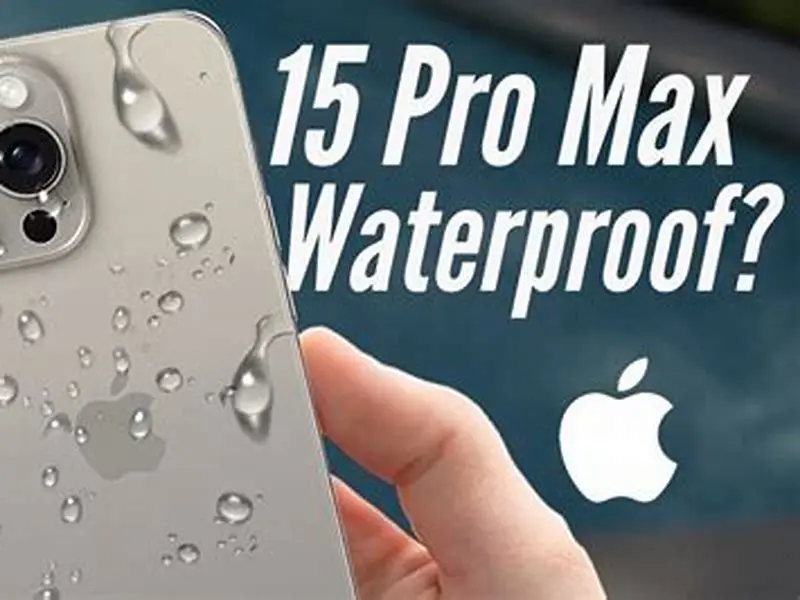
The iPhone 15 carries an IP68 rating under IEC standard 60529. The first digit, 6, means dust-tight. The second digit, 8, means it passed submersion testing at 6 meters for 30 minutes in a controlled lab. Apple tests in fresh water at room temperature with a new phone that hasn't been dropped, and the phone sits still during the test. No currents, no movement, no chemicals.
IP68 is the highest rating in the standard consumer range, but the number after IP68 varies by manufacturer. Samsung's Galaxy S24 claims the same IP68 but tests to 1.5 meters. Apple specifies 6 meters for the iPhone 15, matching the iPhone 14 and 13 Pro models. That's deeper than most people will take a phone, but depth isn't the only stress water puts on seals.
The rating guarantees performance when the phone is new and undamaged. It does not promise the seals stay perfect after six months of pocket wear, temperature swings, or a drop onto gym flooring. Apple's warranty excludes liquid damage entirely, even on a phone rated for submersion. That tells you how much confidence they have in long-term seal integrity.
IP68 proves the phone won't die if you drop it in a sink or get caught in rain. It does not mean the phone is waterproof in the sense of indefinite exposure or immunity to all liquids. Water resistance and waterproof are different promises. We cover how magnets affect training gear in its own article.
Water resistant vs waterproof: the difference that matters
Water resistant means the device resists water intrusion under specific conditions for a limited time. Waterproof would mean no water gets in, ever, under any condition. No consumer phone is waterproof. The iPhone 15 is water resistant, and that resistance has boundaries.
The IP68 test uses fresh water with no additives, no salt, no chlorine, no soap. Sweat contains salts and acids. Pool water contains chlorine. Ocean water contains salt and minerals. All of these corrode the adhesive seals around the screen, the charging port, and the SIM tray faster than pure water does. Apple's support documents warn against exposure to soap, detergent, perfume, solvents, and acids because they break down the seals.
Temperature matters too. The test happens at room temperature. A phone that heats up during a workout, then gets splashed with cold water, experiences thermal shock that stresses the seals. A phone left in a hot car, then taken into an air-conditioned gym, condenses moisture inside even without submersion. The rating doesn't account for rapid temperature changes. It helps to understand buy waterproof phone dry pouch problems before going further.
Impact breaks seals faster than water does. A phone dropped onto a weight plate or concrete may look fine but can have a cracked seal you can't see. Once a seal is compromised, the IP68 rating no longer applies. There's no warning light, no diagnostic test you can run. You find out when water gets in.

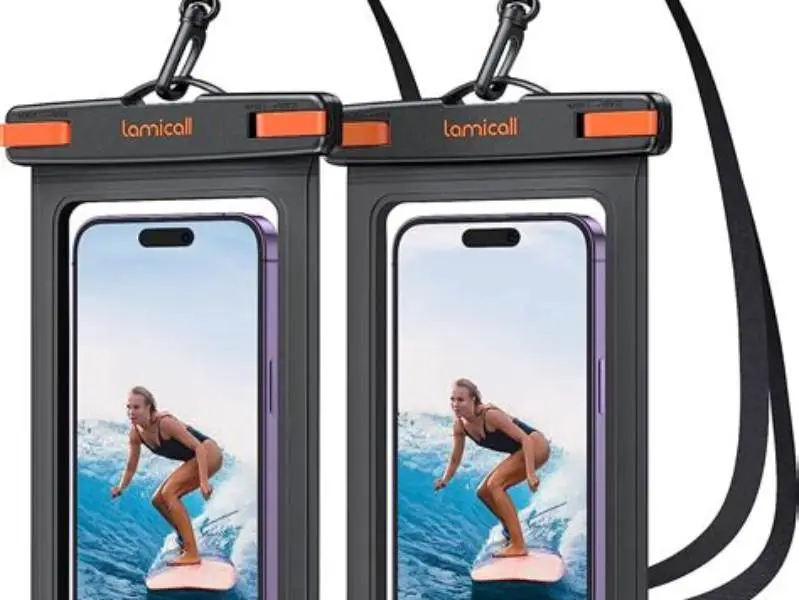
SPIDERCASE for iPhone 15 Case Waterproof,Black/Clear
Protects your iPhone 15 underwater up to 6.6ft/2m for 1 hour with IP68 waterproof rating
How deep and how long the iPhone 15 handles water exposure
Apple states the iPhone 15 can survive up to 6 meters deep for up to 30 minutes. That depth is far beyond what most people encounter. A typical pool is 1.2 to 2.4 meters at the deep end. A bathtub is 0.4 meters. Six meters is recreational diving depth, not daily life.
The 30-minute timer starts when the phone is submerged. If you dunk it, pull it out, then dunk it again an hour later, the rating still applies. But if you leave it submerged for 35 minutes, you've exceeded the test condition and Apple makes no promises. In practice, most phones pulled from a pool or lake after a few minutes survive fine if they were in good condition beforehand. If that sounds like your situation, read up on when did water bottle flipping start next.
Static submersion is easier on seals than moving water. A phone sitting at the bottom of a pool faces even pressure on all sides. A phone in a river current, a washing machine, or clipped to a kayak in whitewater faces dynamic pressure that forces water into gaps. The IP68 test doesn't simulate flow or pressure changes, so there's no rating for those conditions.
Repeated brief exposures add up. A phone splashed every day during a workout faces more cumulative stress than a phone dunked once and dried. The adhesive seals are not self-healing. Every exposure, even within the rated limits, wears them slightly. After a year of gym sessions, the seals are not as tight as they were out of the box.
| Scenario | Depth/duration | IP68 covers it | Real risk |
|---|---|---|---|
| Rain or splash during run | Surface moisture | Yes | Minimal if ports drain |
| Dropped in sink or toilet | Under 1 meter, under 1 minute | Yes | Low if retrieved fast |
| Gym sweat on screen and ports | No submersion | Yes | Moderate if not rinsed |
| Pool with chlorine, 5 minutes | 1-2 meters, 5 minutes | Depth yes, chemical no | Moderate, seals corrode faster |
| Ocean swim, 10 minutes | 1-2 meters, 10 minutes | Depth yes, salt no | High, salt accelerates seal damage |
| Shower with phone on ledge | Steam and spray, 10 minutes | Not tested for steam | Moderate, steam finds gaps |
The iPhone 15 survives a dunk in fresh water, but sweat and impact wear down the seals faster than Apple's lab tests suggest.
What sweat, chlorine and impact do to water resistance over time
Sweat is mildly acidic and salty. It sits in the seams around the screen and the charging port during a workout, then evaporates, leaving salt crystals behind. Those crystals abrade the adhesive every time you wipe the phone or plug in a cable. Over months, the seal loses its grip. You won't see it happen, but the phone becomes more vulnerable to the next splash.
Chlorine in pool water attacks rubber and adhesive. A phone exposed to pool water once a week will have weaker seals after six months than a phone that stayed dry. Apple's guidance says to rinse the phone with fresh water after chlorine or salt exposure, then dry it with a lint-free cloth. That removes the corrosive residue before it sits on the seals.
Drops matter more than water for long-term resistance. A phone that hits the floor from waist height can crack an internal seal or shift the screen slightly, creating a gap too small to see but large enough for water to enter. Cases with raised edges keep the screen and back glass from taking direct impact, which keeps the seals intact longer. A phone that's been dropped multiple times has compromised water resistance even if it looks fine.
Temperature cycling stresses the adhesive too. Seals expand when warm and contract when cool. A phone that goes from a hot car to a cold gym to a warm pocket several times a day experiences more expansion and contraction than a phone that stays at room temperature. That mechanical stress adds microfractures to the adhesive over time. After a year of this, the IP68 rating is more theoretical than real.
Whether you need a waterproof case for gym or outdoor use
A case doesn't make the iPhone more waterproof, but it does two things that preserve the water resistance the phone already has. It absorbs impact that would otherwise crack seals, and it keeps sweat and grit away from the seams. That extends the effective life of the IP68 rating beyond what a naked phone would maintain.
Most people at the gym don't need a fully sealed waterproof case. Those cases add bulk and muffle speakers and microphones. They're designed for underwater photography or whitewater sports, not treadmill runs. A fitted case with raised edges around the screen and camera, and a port cover or plug for the charging port, is enough to handle sweat and the occasional splash without adding weight.
If you run in heavy rain, cycle in wet conditions, or train outdoors where the phone might take sustained water exposure, a case with IP68-rated port covers is worth the tradeoff. Lifeproof, Catalyst, and OtterBox make cases that seal the charging port and keep the phone's own water resistance from being bypassed by water entering through the most vulnerable point. These cases let you keep the phone on your arm or in a jersey pocket without worrying about a downpour.
For gym use, the bigger threat is drops onto hard surfaces and prolonged sweat contact. A case with a TPU or silicone bumper and a screen lip keeps the phone's seals from taking impact damage, which matters more than adding another waterproof layer. After a drop, a case absorbs the shock. Without one, the phone absorbs it, and the seals pay the price.
- Impact protection: keeps drops from cracking internal seals that you can't inspect or repair
- Sweat barrier: prevents salt and acids from sitting directly on the screen and port seams between wipes
- Port covers: block the charging port, the weakest point in the phone's water resistance, during outdoor exposure
- Screen lip: raises the edges above the glass so a face-down drop doesn't put direct force on the screen seal
Practical limits: where the rating holds and where it breaks down
The iPhone 15's IP68 rating is real, but it describes a best-case scenario. A brand-new phone, never dropped, tested in clean still water at a controlled temperature, will survive 6 meters for 30 minutes. Real-world use adds variables the test doesn't cover. Knowing where those boundaries are helps you keep the phone safe without overthinking every splash.
Rain and sweat are fine. The phone handles them easily as long as you wipe it down and let the ports dry. A wet hand on the screen, a few drops on the back, or a phone sitting in light rain for ten minutes won't cause damage. Just don't plug in a cable while the port is wet, and don't let sweat sit in the seams for hours without rinsing.
Submersion in a pool or bath is risky after the first few months of ownership. If the phone is new and hasn't been dropped, it'll survive a quick dunk. If it's been in daily use for a year, dropped twice, and exposed to sweat and temperature swings, the seals are weaker. A dunk that would've been fine at three months might not be fine at twelve. You won't know until it's too late.
Shower steam, saunas, and hot tubs exceed the rating. Steam gets into gaps that liquid water can't reach because vapor molecules are smaller. Apple specifically warns against high-humidity environments. A phone left on a bathroom counter during a hot shower may fog up inside the camera lens. That's condensation forming behind the seal, which means the seal isn't tight anymore. If you see fogging, don't submerge the phone again until you've had the seals replaced or accepted that water resistance is gone.
- Rinse the phone with fresh water after sweat, chlorine, or salt exposure. Hold it under a gentle tap for 10 seconds.
- Dry the exterior with a lint-free cloth. Pay attention to the seams and the charging port.
- Leave the charging port open to air for at least 30 minutes. Don't plug in a cable, insert a SIM tool, or use compressed air.
- Check for camera fogging after any humid or wet exposure. If the lens looks cloudy from inside, the seal is compromised.
- Use a case with raised edges to absorb the next drop and keep the seals from taking impact damage.
FAQ
Can I take my iPhone 15 in the shower?
Apple advises against it. Shower steam can get past the seals because vapor penetrates gaps that liquid water can't. If you do it occasionally, the phone will likely survive, but repeated exposure to steam degrades the adhesive faster than splash exposure. Leave it outside the bathroom.
Does wireless charging affect water resistance?
No. Wireless charging doesn't require opening the charging port, so it doesn't introduce water or wear on that seal. If your phone got wet and you're waiting for the port to dry, wireless charging is the safer way to top up the battery.
How do I know if my iPhone's water resistance is compromised?
There's no built-in test. Signs include camera lens fogging after humid exposure, moisture under the screen, or a charging port that won't dry. If you've dropped the phone multiple times or exposed it to chlorine or salt water regularly without rinsing, assume the seals are weaker than when new.
Will Apple replace my iPhone 15 if it gets water damage?
Not under warranty. Liquid damage voids the warranty even though the phone is rated IP68. Apple can tell if water got inside by checking internal indicators. If you have AppleCare+, it may cover water damage as an incident with a deductible, usually around $99.
Can I swim with my iPhone 15 in a pool?
The depth and duration are within the IP68 rating, but chlorine corrodes the seals faster than fresh water. If you do it, rinse the phone thoroughly with tap water afterward and dry it completely. Don't make it a habit unless you're willing to replace the phone sooner.