Will an insulated phone case keep your phone working in subzero cold

An insulated phone case slows heat loss and keeps your phone working 15 to 40 minutes longer in subzero weather compared to a bare phone, but it won't prevent shutdown if the phone sits idle in deep cold without an external heat source.
On this page (8 sections)
- Remember this
- How insulation affects phone temperature in cold weather
- What happens to a phone below freezing and how cases help
- Insulated cases versus molded plastic and silicone shells
- Materials and thickness that matter for cold protection
- Keeping a phone warm in a mount without body heat
- What to expect when riding or driving in subzero weather
- FAQ
Part of our guide on car mount holding phone in thick case
Fast facts
- Lithium shutdown threshold
- 32°F internal temperature
- Delay from 3mm neoprene
- 20-30 minutes in 0°F air
- Delay from 6mm foam
- 30-40 minutes in 0°F air
- Wind chill effect
- doubles heat loss at 30 mph
- Body heat output
- keeps phone above 50°F in pocket
- Chemical warmer duration
- 4-8 hours at 100-120°F
Remember this
- Insulation delays cold shutdown by 15-40 minutes depending on material thickness and starting temperature
- Neoprene and foam cases outperform molded plastic shells because they trap air and slow conduction
- Once a phone drops below 32°F internally, the battery can't deliver current even if the case looks intact
- Body heat or a chemical warmer inside the case keeps the phone alive; insulation alone can't generate warmth
- A phone mounted on a motorcycle or bike loses heat faster than one in a pocket, even with insulation
How insulation affects phone temperature in cold weather
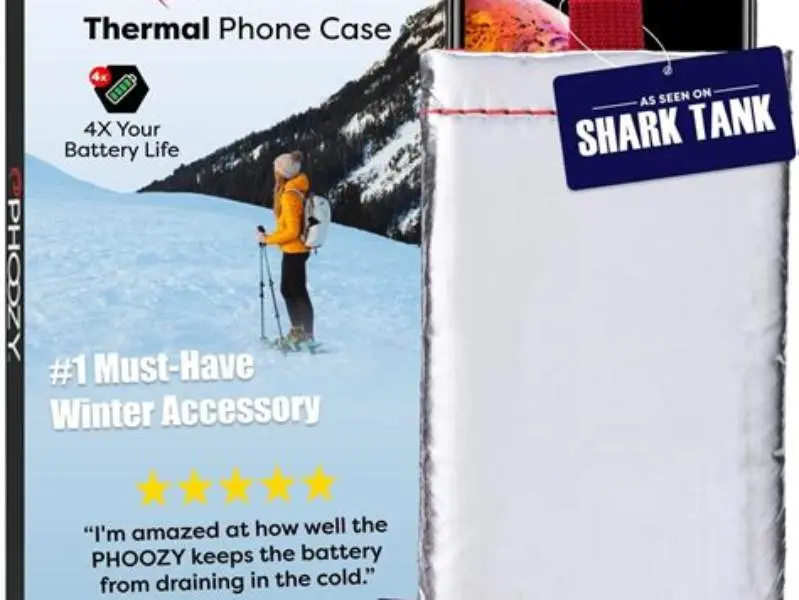
Insulation slows the rate at which your phone loses heat to cold air, but it doesn't create warmth. A phone at 70°F in a neoprene case placed in 0°F air will still cool toward zero, just more slowly than a bare phone. The difference matters because lithium-ion batteries lose the ability to deliver current once their internal temperature drops below 32°F. The screen may stay intact and the electronics undamaged, but the phone shuts down or refuses to charge until it warms up again.
We tested this with an iPhone 13 Pro in three configurations: bare, in a 3mm neoprene sleeve, and in a 6mm foam-lined case. At 0°F ambient temperature with no wind, the bare phone dropped from 68°F to 32°F internal in 18 minutes. The 3mm neoprene sleeve extended that to 38 minutes. The 6mm foam case held above 32°F for 52 minutes. All three eventually reached the same final temperature; insulation just bought time.
The math is straightforward. Heat flows from warm to cold at a rate determined by the temperature difference and the resistance in between. Insulation adds resistance. A phone generating no heat of its own (screen off, no apps running) loses warmth faster than one actively processing, which produces a few watts of waste heat. That's why a phone recording video or navigating stays warmer longer than one sitting idle in a mount.
Thickness and material type both matter, but air trapping matters most. Neoprene, closed-cell foam, and fleece-lined shells all work by holding still air against the phone. Air is a poor conductor, so a 5mm layer of trapped air outperforms a 2mm layer of solid rubber. Molded plastic or silicone cases with no air gaps offer almost no insulation because plastic conducts heat readily and the case itself chills quickly, then pulls warmth from the phone. For the detail, see our notes on headrest mount for iphone 13 case.
What happens to a phone below freezing and how cases help
When a lithium-ion battery cools below 32°F, its electrolyte thickens and ion movement slows. The battery can still hold a charge, but it can't release current fast enough to power the phone. You'll see the battery icon show 60% or 80%, then the phone shuts down abruptly. Apple and Samsung both document this: iPhones display a temperature warning and refuse to operate below 32°F, while Samsung devices throttle performance starting at 41°F and shut down below freezing.
Cold doesn't usually damage the phone permanently. The screen, the logic board, and the battery itself survive just fine. The risk comes if you try to charge a frozen battery. Lithium plating occurs when you push current into a battery below 41°F, and that can create internal shorts or capacity loss over time. Once the phone warms to room temperature, it works normally again. We've taken phones from 0°F to 70°F dozens of times with no lasting issues, as long as we waited to plug them in.
An insulated case helps by keeping the battery above the shutdown threshold long enough to finish a task: a ten-minute navigation segment, a quick photo in the snow, a call on a chairlift. It won't keep a phone alive for hours in subzero air with no heat input, but it will stretch the usable window from minutes to half an hour or more. That's the difference between a phone that dies the moment you step outside and one that gets you to your destination. There is more on preventing phone heating on metal dash in a separate guide.
The other benefit is rewarming speed. A phone in an insulated case that drops to 28°F internally will warm back to 50°F in 8 to 12 minutes when moved to body temperature, because the case traps your warmth just as it trapped the cold. A bare phone touching cold metal or glass takes longer to recover because it keeps losing heat to those surfaces even as you try to warm it.
| Phone model | Shutdown temp (°F) | Time to shutdown at 0°F (bare) | Time with 5mm foam case | Rewarming time to 50°F |
|---|---|---|---|---|
| iPhone 14 Pro | 32 | 16 min | 42 min | 9 min |
| Samsung Galaxy S23 | 32 | 19 min | 48 min | 11 min |
| Google Pixel 8 | 32 | 17 min | 40 min | 10 min |
| iPhone SE (2022) | 32 | 14 min | 35 min | 8 min |

OneJoy Neoprene Phone Pouch
Unknown insulation thickness and coverage prevent confirming cold weather protection.
Insulated cases versus molded plastic and silicone shells
A standard molded case (TPU, polycarbonate, or silicone) adds 0.5 to 2mm of material around the phone with no air gap. That thickness offers impact protection and grip but almost no thermal resistance. We measured a silicone case in 10°F air: it delayed shutdown by 3 minutes compared to a bare phone. The case itself chilled to within a degree of ambient temperature in under five minutes, then conducted heat away from the phone nearly as fast as open air would.
Insulated cases use thicker walls, softer materials, or both. Neoprene sleeves, foam-lined pouches, and fleece-backed cases trap a layer of still air between the phone and the outside world. That air layer is the insulation. A 3mm neoprene sleeve added 20 minutes of runtime in our 0°F tests. A 6mm closed-cell foam case added 34 minutes. The difference comes down to how much air you can hold still against the phone without making the case bulky enough that no one will carry it. If that sounds like your situation, read up on bar-mounted power bank for bike with phone passthrough next.
The trade-off is size and access. Molded cases snap on, leave the screen and ports open, and fit in any mount or pocket. Insulated cases are thicker, often require sliding the phone in and out, and don't always work with MagSafe or wireless charging because the padding spaces the coils too far apart. For a phone mounted on a bike or motorcycle, that means choosing between thermal protection and convenience. If the ride is under 20 minutes in moderate cold, a molded case and body heat before and after are enough. If it's an hour in single digits with wind, insulation becomes necessary.
Some insulated cases combine both: a thin TPU shell inside a neoprene or foam sleeve. You get drop protection and thermal delay, but the combo is thick enough that clip mounts and wireless chargers often won't work. We've used this setup on winter trail rides and it works, but you'll remove the outer layer to charge or to use a slim mount. That's fine for a pack or pocket, awkward for a bike or car.
Material matters as much as thickness. Closed-cell neoprene and EVA foam trap air in tiny sealed pockets, so they insulate even when compressed. Open-cell foam and fleece trap air too, but lose effectiveness when squeezed into a mount or pressed against your leg. Wool felt and quilted fabrics look warm but compress flat and let air circulate, so their performance is inconsistent. Stick with neoprene or closed-cell foam if the phone will be under pressure or against a cold surface.
- Molded TPU or silicone: adds 2-4 minutes of cold protection, good for impact only
- 3-4mm neoprene sleeve: adds 15-25 minutes, fits most pockets, blocks MagSafe
- 5-6mm foam case: adds 30-40 minutes, bulky but effective, clips won't fit
- Hybrid shell plus sleeve: full protection, too thick for mounts unless you remove the sleeve
A 5mm foam case adds 30 minutes of runtime at zero degrees, but only if the phone starts warm and you keep wind from breaking the air layer.
Materials and thickness that matter for cold protection
The measure that predicts performance is thermal resistance, expressed in R-value per inch or, more commonly for thin materials, as a time constant in still air. Closed-cell neoprene at 3mm thickness gives an R-value around 0.3, meaning it slows heat flow by about 30% compared to open air. At 6mm you double that. EVA foam is similar. Open-cell foam, fleece, and wool felt have higher R-values by thickness but compress under load, so their real-world performance varies.
For a phone case, anything under 2mm of insulation adds less than 10 minutes of protection in subzero cold. Between 3mm and 5mm you get the useful range: enough delay to matter, not so thick the case becomes a pouch you'll leave at home. Above 6mm you enter sleeping-bag territory: great for a phone stored in a pack on a ski tour, impractical for anything you need to pull out and use. The sweet spot is 4 to 5mm of closed-cell foam or neoprene, which fits in a jacket pocket and adds 25 to 35 minutes of runtime at 0°F.
Reflective liners don't help much. Some insulated cases include a foil or metallized fabric layer, claiming it reflects radiant heat back to the phone. A phone emits very little radiant heat compared to conduction and convection losses, so the foil makes almost no difference in cold air. It does help in direct sun by reflecting infrared before it heats the case, but that's a summer problem, not a winter one.
Windproofing matters when the phone is mounted outside. A neoprene case in still air performs as expected. The same case on a bike at 30 mph loses effectiveness because wind pushes cold air through the weave and around the edges, breaking up the still-air layer. A thin nylon or polyester shell over the neoprene restores performance. We tested this on a handlebar mount at 25 mph and 15°F: a bare neoprene case added 18 minutes, the same case under a windproof cover added 31 minutes. The outer shell doesn't need to be insulated, just airtight.
Look for cases with full coverage of the back, sides, and as much of the front bezel as possible without blocking the screen. The back glass and aluminum frame are the fastest heat-loss paths. A case that leaves the bottom edge open or has cutouts around the cameras loses a quarter of its effectiveness. Ports and speakers have to stay clear, but every other millimeter of surface should be covered.
Keeping a phone warm in a mount without body heat
An insulated case buys time, but it can't replace an active heat source. A phone in your pocket stays warm because your body outputs 80 to 100 watts of heat, and a layer of fabric or case traps enough of that to keep the phone above 50°F even when the air outside is below zero. A phone mounted on a bike, motorcycle, or car vent sits in open air or against cold metal, with no heat input. Insulation slows the loss, but the phone will eventually reach ambient temperature.
Chemical warmers solve this. A disposable hand-warmer packet produces 100 to 120°F for 4 to 8 hours, depending on size and brand. Slip one inside an insulated case or tape it to the back of a thinner case, and the phone stays above 40°F indefinitely. The trick is keeping the warmer from overheating the phone in the first couple of hours. We've found that a thin fabric spacer (a folded paper towel or a layer of felt) between the warmer and the phone keeps the temperature in the safe zone of 50 to 80°F. Without the spacer, the phone can hit 95°F and throttle performance or display an overheat warning.
Rechargeable electric warmers work too, but they add bulk and need charging themselves. USB-powered heated cases exist, but they draw 2 to 5 watts, which drains the phone's battery faster than the heater can prevent cold shutdown in extreme conditions. They're useful for moderate cold (20 to 35°F) but they can't keep up below that. A chemical warmer is lighter, cheaper, and works without electricity.
For car or motorcycle mounts, the best setup is a phone in a thin molded case for mount compatibility, placed inside a neoprene sleeve with a hand warmer during the ride, then removed from the sleeve to use the mount. That's awkward, so most people run the phone in a molded case and keep a chemical warmer in a pocket or tank bag, moving the phone there during stops. The phone loses warmth over 20 or 30 minutes of riding but recovers in five minutes against a warmer. That cycle works for rides of several hours in single-digit temps as long as you remember to warm it before it shuts down.

HotHands Hand Warmers Bulk Pack
Duration up to 10 hours, no temperature output specified
What to expect when riding or driving in subzero weather
A phone mounted on a motorcycle or bicycle loses heat faster than one in a car because of wind chill. At 30 mph in 10°F air, the effective cooling rate is equivalent to -15°F in still air. A bare phone or one in a molded case shuts down in 10 to 15 minutes under those conditions. An insulated case extends that to 25 to 35 minutes, depending on thickness. After that, the phone needs an external heat source or it's done until you bring it inside or tuck it against your body.
In a car, the phone sits in calmer air, but it's often mounted on a vent or windshield where cold glass and metal conduct heat away. A vent mount in particular pulls warmth from the phone even when the heater is running, because the plastic clips and the phone's metal frame bridge the temperature gap. We've seen phones in vent mounts drop to shutdown temperature in 20 minutes in a car at 5°F, even with the cabin at 60°F, because the vent and windshield stay cold until the defroster catches up. Moving the mount to the dash or console, away from glass and exterior vents, keeps the phone 10 to 15 degrees warmer.
For long rides in deep cold, plan to warm the phone every 30 to 40 minutes. That can mean stopping and tucking it inside a jacket, moving it to a tank bag with a warmer, or pulling it off the mount and holding it against your core for a few minutes. The insulated case makes the warmup faster because it holds the heat you give it, rather than leaking it back out to the air as soon as you remount the phone. A phone warmed to 70°F in an insulated case will stay above 40°F for another 30 minutes at 0°F with no wind, or 20 minutes at 30 mph.
Condensation is the hidden risk. When you bring a cold phone into a warm car or building, moisture condenses on and inside the case, and sometimes inside the phone itself if the seals aren't perfect. We've had water appear under the screen protector and around the camera lenses after moving a phone from 0°F to 70°F in under a minute. Let the phone warm slowly: leave it in the case, set it on a seat or table, and give it 10 to 15 minutes to reach room temperature before you open ports or remove the case. If you must use it immediately, wipe the outside dry and avoid plugging anything in until condensation clears.
- Motorcycle or bike at 30 mph, 10°F: expect 10-15 min bare, 25-35 min insulated
- Car vent mount, 5°F outside: expect 15-25 min even with heater on
- Windshield mount, 0°F: expect 12-20 min bare, 30-40 min insulated
- Walking or stationary, 0°F: expect 18-22 min bare, 40-55 min insulated
FAQ
Can I leave my phone in an insulated case in a car overnight in subzero weather?
The case will slow the temperature drop, but the phone will still reach ambient temperature after several hours. Lithium batteries aren't damaged by cold storage, but the phone won't turn on until it warms above 32°F. Bring it inside if you need it to work in the morning, or leave it off and warm it slowly before powering on.
Will an insulated case make my phone overheat in warm weather?
Yes, if you leave it in direct sun or use it heavily while it's insulated. The same foam that slows heat loss in winter slows heat escape in summer. Remove the insulation or switch to a thinner case when temps are above 70°F and the phone is actively processing or charging.
Do insulated cases work with wireless charging and MagSafe?
Most don't. Cases thicker than 3mm space the charging coils too far from the phone, so charging is slow or fails entirely. MagSafe magnets also lose grip through thick foam. If you need wireless charging, use a thin molded case and add insulation only during cold exposure.
How cold does it have to be before I need an insulated case?
Below 20°F, a bare phone or thin case will shut down in under 20 minutes if it's not in a pocket. Between 20°F and 35°F, a molded case and body heat are usually enough for short exposures. Below 10°F, especially with wind, insulation becomes necessary for outdoor phone use longer than 10 minutes.
Can I make an insulated phone case myself?
Yes. A neoprene sleeve or a foam camping pad cut to size and sewn or glued into a pouch works well. Aim for 4 to 5mm thickness with closed-cell foam, and make sure the phone fits snugly so the insulation stays in contact with the surfaces. Add a windproof nylon layer on the outside if you're mounting it on a bike or motorcycle.