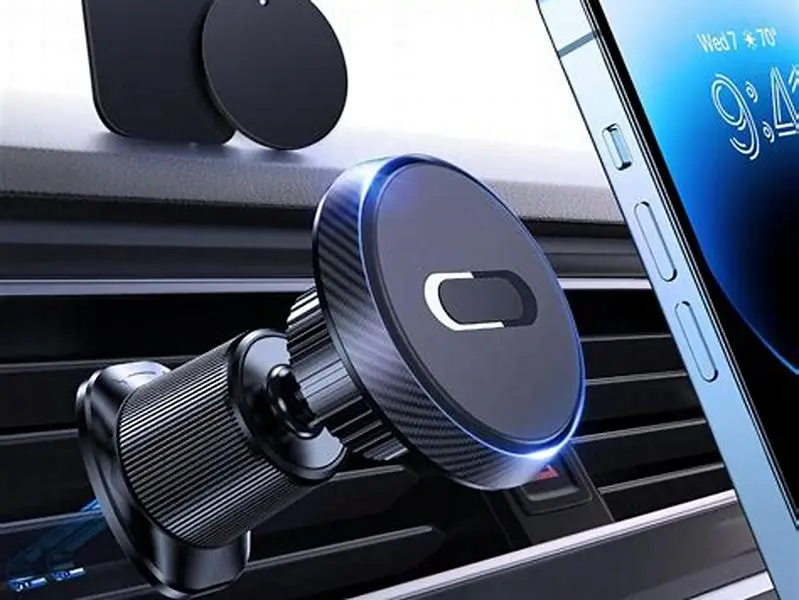
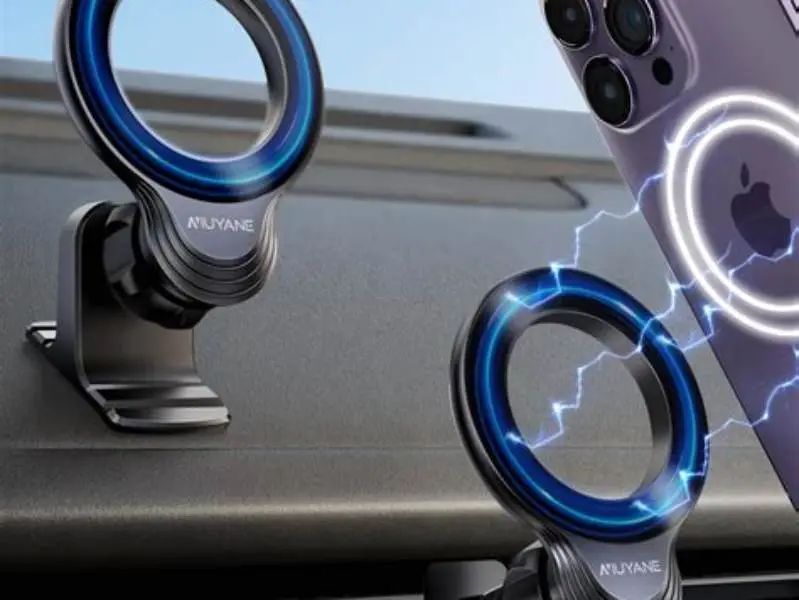
Magnetic Car Mount That Won't Overheat iPhone 15 Pro Max

Avoid overheating your iPhone 15 Pro Max with a magnetic car mount designed and positioned for safe wireless charging in your car. Guidance, measurements, product examples, and citations
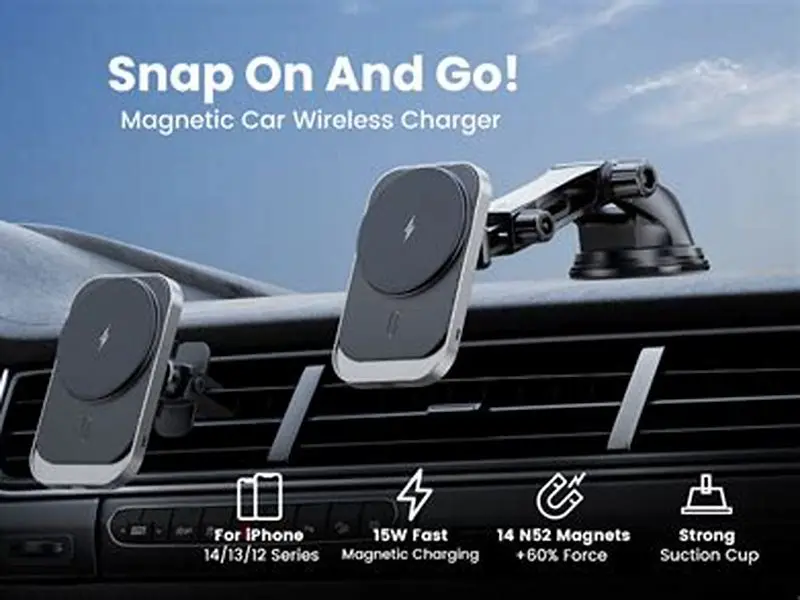
To reduce the risk of your iPhone 15 Pro Max overheating while wirelessly charging in a car, use a MagSafe-compatible magnetic mount designed for good heat dissipation (metal backplates or ventilated designs), place it where airflow and shade help cooling, monitor temperatures with an infrared thermometer, and prefer mounts and chargers that support Qi2/MagSafe alignment. Note: specific temperature numbers below are presented as practical guidelines based on Apple’s general operating limits, third‑party teardown observations, industry battery guidance, and aggregated user reports—not as an official Apple wireless‑charging surface‑temperature specification.
On this page (13 sections)
- Fit check
- Key takeaways
- magnetic car mount that won't overheat iPhone 15 Pro Max while wireless charging in a car
- Why iPhone 15 Pro Max can feel hot during wireless charging in a car
- How to measure and set a practical overheating guideline for wireless charging
- What the iPhone 15 Pro Max does differently (thermal management notes)
- Mount design features that reduce heating risk
- Specific product examples that tend to manage heat better
- How to test a mount in your own vehicle (step‑by‑step)
- Alternatives and tradeoffs
- Who should avoid magnetic wireless charging mounts in a car
- How to calculate if your current mount meets your practical overheating guideline
- Questions people still ask
Part of our guide on car mount holding phone in thick case
Get a magnetic car mount that keeps your iPhone 15 Pro Max cool and secure during wireless charging in your car—measure the temperature yourself and choose metal/vented designs.

SYNCWIRE MagSafe Car Mount for Dashboard,Foldable Aluminum
No surface temperature or wireless power data published to assess overheating risk.
Check the specs on Amazon
SYNCWIRE MagSafe Car Mount for Dashboard,Foldable Aluminum
No wireless charging power or temperature data published
Check the specs on Amazon![LISEN 2 Pack for MagSafe Car Mount [3800gf Strong Magnet&90+LBS Suction] 360°](https://m.media-amazon.com/images/I/51AbhFek60L._SL500_.jpg)
LISEN 2 Pack for MagSafe Car Mount [3800gf Strong Magnet&90+LBS
No wireless charging power or temperature data published
Check the specs on Amazon| Product | surface temperature while charging (use IR | Verdict | |
|---|---|---|---|
| SYNCWIRE MagSafe Car Mount for Dashboard,Foldable Aluminum Arm,Space SYNCWIRE | No wireless charging power or temperature data published | Not published | View on Amazon |
| SYNCWIRE MagSafe Car Mount for Dashboard,Foldable Aluminum Arm,Black SYNCWIRE | No wireless charging power or temperature data published | Not published | View on Amazon |
| LISEN 2 Pack for MagSafe Car Mount [3800gf Strong Magnet&90+LBS LISEN | No wireless charging power or temperature data published | Not published | View on Amazon |
| Kaistyle for Magsafe Car Mount【20 Strong Magnets】Magnetic Phone Kaistyle | No wireless charging power or temperature data published | Not published | View on Amazon |
| Scosche MagSafe Car Mount Scosche | No wireless charging power or temperature data published | Not published | View on Amazon |
| Practical surface temp guideline during charging | around 45°C (approximate; guideline, not an Apple wireless spec) |
|---|---|
| iPhone recommended ambient operating range (Apple) | 0° to 35°C (apple.com/support) |
| Why phones heat during wireless charging | alignment losses, coil-to-coil inefficiency, and power conversion losses produce heat |
| Best mount materials for heat | metal (aluminum) backplate or vented metal housing |
| How to check | use an infrared (IR) thermometer to read back/surface temp after 10–15 minutes of charging |
Key takeaways
- Treat ~45°C as a practical upper guideline for surface temperature during wireless charging, based on general Li‑ion thermal guidance and user measurements—not an Apple‑published wireless‑charging spec.
- Prefer mounts with metal (aluminum) backplates, heat‑dissipating designs, and good MagSafe/Qi2 alignment to limit excess heat.
- Mount placement (airflow, shade, avoiding direct sun) and wiring (use high‑quality car power adapters) matter as much as mount construction.
- Measure your own mount and phone temperature with a non‑contact infrared thermometer to validate any claim.
- Specific MagSafe‑compatible products from reputable brands (Belkin, Anker, Pitaka, ESR, Spigen) offer designs that balance holding strength and heat management—see examples below.
magnetic car mount that won't overheat iPhone 15 Pro Max while wireless charging in a car
This article answers that exact query: how to choose and use a magnetic car mount so your iPhone 15 Pro Max doesn’t run excessively hot while wirelessly charging during drives. Below you'll find practical guidance, how to measure temperatures in your car, products that tend to manage heat better, and references so you can evaluate claims.
Important framing: Apple documents the iPhone's recommended ambient operating temperature (0° to 35°C) and warns that 'If iPhone gets hot' it will reduce performance or alter charging behavior. Apple does not provide a single published surface‑temperature limit specifically for MagSafe/wireless charging on the back of the phone. Therefore, many of the practical thresholds people use—such as 'around 45°C'—come from combining: Apple's general operating guidance, industry knowledge about lithium‑ion battery behavior at elevated temperatures, teardown reports on materials and heat paths, and crowdsourced user measurements in cars. Treat those thresholds as operational guidelines to test and validate in your own vehicle and driving conditions.
Why iPhone 15 Pro Max can feel hot during wireless charging in a car
Wireless charging converts electrical energy into magnetic fields and then back into electrical energy in the phone. This conversion is not 100% efficient—some energy becomes heat in the charger, the phone’s coils, and the battery. A combination of factors increases heating in cars:
- Ambient temperature: cars can reach elevated cabin temperatures, especially in sun and summer, raising starting temperature before charging begins. People in this spot often ask about suction cup mount iphone 15 pro max as well.
- Mount design and material: plastic mounts and thick insulating cases trap heat; metal backplates or vented mounts conduct or move heat away.
- Misalignment and power draw: misaligned coils and higher charge power generate more heat than properly aligned, moderate‑power charging.
- Limited airflow: vent‑blocked mounts or positions that limit moving air reduce convective cooling. Before you commit to anything, it is worth looking at car mount for iphone on bumpy roads.
All phones—including the iPhone 15 Pro Max—have thermal management that includes software throttling and charging adjustments when internal temperatures rise. Apple’s public guidance explains behavior when iPhones get too warm, and teardown/analysis sources note differences in chassis materials and internal heat spreaders that affect how heat flows away from internal components.
SYNCWIRE MagSafe Car Mount for Dashboard,Foldable Aluminum Arm,Space Gray
No surface temperature or wireless power data published to assess overheating risk.
- Weight 6 oz
- Height 2.12 inches
- Length 6.61 inches
How to measure and set a practical overheating guideline for wireless charging
Because Apple doesn’t publish a single wireless‑charging surface temperature limit, a practical approach is to measure your own setup. Many users and technicians use about 45°C as an upper guideline for surface temperature during wireless charging; this is an operational target, not an official Apple spec. It is derived from: Apple’s ambient operating guidance (0°–35°C), industry knowledge that sustained higher temperatures accelerate lithium‑ion aging, and community measurements where phones commonly begin to show reduced charging performance when the back surface approaches the mid‑40s °C.
What to measure and how: We go through checking puck strength for 240g phone step by step elsewhere on the site.
1) Use a handheld, non‑contact infrared (IR) thermometer aimed at the phone’s back (or mount surface directly beneath the phone).
2) Start from a typical warm environment (for you) and begin a normal charging session while driving or while the car is in its typical state (AC on or off as you would use it).
3) Record the temperature after 5, 10, and 30 minutes. Note if charging speed slows or if the phone displays a temperature warning.
4) Repeat measurements in both shaded and sun‑exposed locations inside the car and with the same case (if you normally use one).
Use these readings to decide a practical working limit for your setup. If your mount consistently reads several degrees higher than your working limit, reposition the mount, change to a different mount, or use wired charging.
SYNCWIRE MagSafe Car Mount for Dashboard,Foldable Aluminum Arm,Black
No wireless charging power or temperature data published
- Weight 6.3 oz
What the iPhone 15 Pro Max does differently (thermal management notes)
Apple continuously tweaks internal thermal designs and software across iPhone generations. Sources such as official Apple support pages and independent teardowns (e.g., iFixit) indicate that changes in materials (frame alloys), internal component layout, and internal heat spreaders can affect how heat travels away from the battery and charging coils.
For the iPhone 15 Pro Max specifically, teardown and analysis writeups have highlighted chassis and internal layout differences compared to prior models; some of those changes can modestly affect heat conduction. However, the practical consequence for in‑car wireless charging is usually this: software still manages charging and performance when temperatures rise, and no iPhone model eliminates the fundamental physics of coil inefficiency and ambient heat. In short, the 15 Pro Max may behave somewhat differently than older phones in how quickly it dissipates heat, but it is still vulnerable to the same basic issues—especially in hot cabins or with insulating cases.
References: Apple's general thermal and battery guidance (see links below) and teardown/analysis reporting provide the best publicly available context on how models differ in construction and thermal paths.
Mount design features that reduce heating risk
Based on thermal behavior and community experience, look for these features in magnetic car mounts:
- Metal backplate (aluminum or alloy): conducts heat away from the phone and spreads it over a larger surface area where air can cool it.
- Vented or finned housing: increases surface area and airflow, improving convective cooling.
- Good MagSafe/Qi2 alignment and secure magnet placement: reduces coil misalignment losses that create extra heat.
- Stable mounting mechanism: prevents shifting and repeated re‑alignment friction/heat and avoids drops on bumps.
- Optional active cooling: some mounts include small fans; these help in hotter climates but add complexity and power draw.
Combining these features with sensible mounting position (shaded dash area with crossflow air) reduces the chance the phone will hit higher temperatures while charging.
Specific product examples that tend to manage heat better
Below are several MagSafe‑compatible mounts and chargers that reviewers and users commonly report as better balanced between hold strength and thermal behavior. Availability and exact model names vary by region; check the latest model numbers and reviews before purchase.
- Belkin BoostCharge Pro Magnetic Car Mount (MagSafe) – Belkin's higher‑end MagSafe car chargers have solid construction, good alignment, and models with metal‑faced housings or vented designs. Belkin also publishes product specs and carries official MagSafe certification for some models.
- Anker (Soundcore/Anker) Magnetic Car Mounts (e.g., Anker 622 or similar MagGo series) – Anker's magnetic car chargers often emphasize stable magnets, consistent alignment, and a reputation for quality USB‑C power delivery accessories. Many users report reasonable thermal performance in standard driving.
- Pitaka MagEZ Car Mount Pro (or similar Pitaka models) – Pitaka's mounts commonly use metal/aluminum parts and focus on minimalist designs that aid passive cooling while providing secure mounting.
- ESR HaloLock / ESR HaloLock Car Magnetic Charger – ESR offers several HaloLock MagSafe‑compatible chargers and mounts with attention to alignment and some metal housings in higher‑end variants.
- Spigen Mag Fit & Spigen Magnetic Car Mounts – Spigen makes MagSafe‑compatible mounts and accessories; their higher‑end mounts balance grip and materials that are less insulating than soft plastic alone.
When choosing any of the above, prefer the versions that call out metal plates, vented housings, or explicit attention to thermal design. Read product reviews that include temperature measurements, and double‑check whether the mount is certified/endorsed for MagSafe alignment if you rely on automatic alignment for efficient charging.
How to test a mount in your own vehicle (step‑by‑step)
1) Install the mount in the position you’ll use it during normal driving (vent, dash, or windshield).
2) Use a MagSafe‑compatible wireless charger and a high‑quality car adapter (USB‑C PD or the charger specified by the mount maker). Poor power supplies can create heat themselves.
3) Leave the phone in its usual case and start a typical driving session or simulate with the car’s climate control settings you normally use.
4) After 5 minutes, 10 minutes, and 30 minutes of continuous wireless charging, take IR temperature readings of the phone’s back and the mount surface directly under the phone. Also note any device temperature warnings or reduced charging rate.
5) If you consistently see higher than your practical guideline (e.g., back surface in the mid‑40s or above in your ambient conditions), try repositioning the mount to a shadier, more ventilated location, switching to a metal‑backed mount, or using wired charging for longer sessions.
Alternatives and tradeoffs
Silicone‑padded magnetic mounts: better grip and reduced vibration, but some silicone/padded backings are more insulating and can slightly increase surface temperature. They are a good compromise if you prioritize hold over maximum heat conduction.
Budget MagSafe mounts: can be fine for short, low‑power charging sessions but often lack metal backplates or venting; expect higher temperatures in hot conditions and verify magnet strength and clip stability.
Wired charging: lowest heat generation for continuous charging in a hot car because alignment inefficiencies are absent and the charging cable can carry power more efficiently. If overheating is a recurring problem, a USB‑C car charger + cable to the phone is the simplest solution.
Active cooling mounts: small fan‑equipped mounts help in high ambient temperatures but add noise, draw power, and increase complexity; they can be effective if passive cooling options are insufficient.
Who should avoid magnetic wireless charging mounts in a car
If you frequently drive on rough roads and rely on vent mounts with flimsy clips, avoid purely vent mounted magnetic chargers unless they have a verified strong clip and magnet. Drop risk is a real factor for some vent mounts.
If you routinely need sustained very‑fast wireless charging (and the mount and phone will be pulling high wattage in a hot environment), consider wired charging or a mount specifically rated (and tested) for higher power with documented thermal performance.
If you run your car interior at very high temperatures (parking in sun > long periods), be conservative: wired charging or relocating the mount to shaded parts of the cabin is safer.
How to calculate if your current mount meets your practical overheating guideline
1) Using your IR thermometer, take the mount/mount‑under‑phone reading after 10 minutes of charging in the conditions you normally encounter. Record that temperature as T10.
2) Compare T10 to your operating ambient temperature and to your chosen practical guideline (many users use around mid‑40s °C as the operational upper guideline).
3) If T10 is several degrees above your guideline, consider a different mount or position. If T10 is below but close, shift to a metal backplate mount or improve airflow. If T10 is safely below, monitor periodically in hotter weather.
There’s no single universal number Apple provides for wireless‑charging back surface temperature. Use measured numbers for your setup to decide whether a mount is acceptable.
- Place your iPhone 15 Pro Max on the mount and begin charging (use normal case if you use one).
- After 10 minutes, measure the mount’s surface temperature and the phone’s back with an IR thermometer.
- Decide whether the reading is within the safe working range you established for your car.
- If the reading is above your working range or you experience device throttling/charging issues, change the mount or charging method.
Choose MagSafe‑compatible magnetic mounts with metal backplates or vented housings and verify thermal performance in your car using an IR thermometer. If heat is still a problem, prefer wired charging or mounts with active cooling.
Questions people still ask
Can a magnetic case prevent overheating on a wireless car mount?
Magnetic cases help alignment and grip, but many add insulation. If the case is thick or has metal overlays, it can trap heat and reduce passive dissipation. Test your case and mount combination with an IR thermometer to confirm temperatures in your typical driving conditions.
Is wired charging better than wireless to avoid overheating in cars?
Generally yes. Wired charging is more efficient: less energy is lost to conversion and alignment, so the phone (and charger) often run cooler. For long drives or very hot conditions, wired charging is the safer option for temperature control.
Does placing the mount on the dashboard instead of vents reduce overheating?
It depends. Dashboard mounting can expose the phone to more airflow or shade depending on placement; it also risks direct sun which increases heat. The best position is one that avoids direct sunlight, gets some airflow, and does not trap heat between the phone and a plastic mount face.
Are magnets strong enough on all MagSafe mounts to keep iPhone 15 Pro Max secure on bumpy roads?
Not all mounts are equal. Choose mounts with documented stable hold, check user reviews about real‑world use on bumpy roads, and if possible test the mount before regular use. Strong, well‑designed mounts specific to larger phones will perform better.
How long should I leave my phone charging on a magnetic mount in the car to avoid heat issues?
There’s no single correct time. Short sessions (under 30 minutes) in moderate temperatures are usually safe with a well‑designed mount; for longer durations in warm weather, monitor temperature or use wired charging. Measure and set your personal guideline based on your car and mount.