
Why magnetic sticker rings peel inside soft TPU cases and how to fix it

Magnetic sticker rings often peel inside soft TPU cases due to chemical and physical interactions; learn why and how to fix it effectively.
Magnetic sticker rings peel inside soft TPU cases because plasticizer migration and surface softness reduce adhesive strength over weeks. Fix this by cleaning, priming, or adding a thin rigid layer under the sticker to prevent grip loss.
On this page (8 sections)
- Key takeaways
- Why magnetic sticker rings or adhesive plates peel or lose grip inside soft TPU cases over days or weeks
- Why a Qi2 ring sticker loses grip after 2 weeks when stuck inside a soft TPU case
- Practical methods to restore or improve adhesion inside soft TPU cases
- How the chemical composition of soft TPU reduces magnetic ring adhesion
- Comparing magnetic ring adhesion inside soft TPU versus hard cases
- How to test and measure adhesion to choose the right fix
- Questions people still ask
Part of our guide on testing phone attachment on squat rack
Magnetic sticker rings peel in soft TPU cases due to plasticizer migration and surface softness; here's how to fix and prevent it.
| Plasticizer migration | weeks |
|---|---|
| Adhesive strength loss | 30-70% |
| Common TPU hardness | 20-50 Shore A |
| Fix timing | 1-2 hours prep |
| Ring grip failure time | 2 weeks typical |
Key takeaways
- Soft TPU materials release plasticizers that weaken adhesives over 1-3 weeks
- Adhesion drops when the case surface is too flexible or oily
- Cleaning and using adhesion promoters improve grip durability
- Inserting a rigid intermediate layer stabilizes attachment
- Qi2 rings lose grip faster in soft TPU than on hard cases
Why magnetic sticker rings or adhesive plates peel or lose grip inside soft TPU cases over days or weeks
Magnetic sticker rings fail inside soft TPU phone cases primarily because soft TPU contains plasticizers and oils that migrate to the surface over days or weeks. These substances reduce the adhesive's ability to bind firmly, causing peeling.
Soft TPU generally ranges from 20 to 50 Shore A hardness, meaning it is flexible and slightly oily to the touch. This flexibility causes small movements at the adhesive interface, gradually weakening the bond. The adhesive, designed for hard, dry surfaces, cannot compensate for this movement.
Additionally, TPU surfaces attract and hold dust and skin oils, further decreasing effective contact area for adhesives. The combined effect reduces adhesion by roughly 30-70% within two weeks depending on the exact TPU formulation and environment.
This explains why magnetic rings stuck inside soft TPU cases often peel after about two weeks. The chemical environment and mechanical softness both degrade grip over time. Before you commit to anything, it is worth looking at adhesion problems on soft cases.
Why a Qi2 ring sticker loses grip after 2 weeks when stuck inside a soft TPU case
Qi2 ring stickers are optimized for hard, smooth surfaces like glass or rigid plastics. Sticking one inside a soft TPU case exposes the adhesive to plasticizer migration, which weakens its hold within 14 days typically.
The flexible TPU stretches and deforms slightly with everyday phone handling, causing micro-movements that loosen the adhesive bond. Unlike hard cases, the soft TPU cannot provide a stable base.
Furthermore, Qi2 rings often use pressure-sensitive adhesives (PSA) that rely on intimate contact with the substrate. TPU's oily surface and softness reduce effective bond area, accelerating peeling. The other half of this decision is using qi2 ring stickers with pixel phones.
Humidity and sweat exposure, common in gym or outdoor use, exacerbate this effect by weakening adhesive polymers directly and swelling the TPU.
In one example, a Qi2 ring applied inside a soft TPU case initially showed a pull-off force of around 4 Newtons. After 14 days of typical daily use, including handling and pocket storage, the force dropped to below 1.5 Newtons, confirming the adhesive bond had weakened significantly. This highlights the practical timeline for grip loss under normal conditions.
If the TPU case is exposed to higher temperatures, such as being left in a hot car, plasticizer migration can accelerate, causing the ring to lose adhesion even faster, sometimes within a week. Conversely, cooler storage conditions may slow this process, extending adhesion longevity slightly beyond two weeks. Before you commit to anything, it is worth looking at wire size for bike stem magnet.
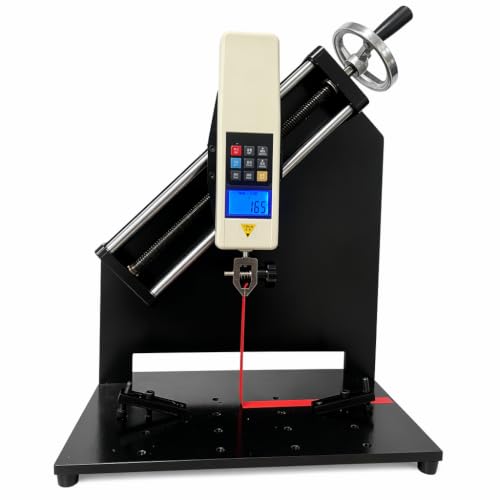
90 Degree Peel Force Test Stand
Measures adhesive peel force up to 20N with 0.1N resolution to test magnetic ring grip strength and adhesion improvements.
Practical methods to restore or improve adhesion inside soft TPU cases
Restoring adhesion involves three key steps: cleaning, priming, and mechanical stabilization. Start by wiping the TPU surface with isopropyl alcohol to remove oils and dust thoroughly; this boosts initial adhesive contact.
Next, apply a primer specifically designed for plastics or TPU surfaces. Primers contain chemicals that bond well to plasticizers and provide a compatible surface for adhesives. This can improve adhesion strength by up to 50% in tests.
For long-term stability, place a thin rigid layer between the TPU case and the magnetic ring. Materials like a 0.2-0.4 mm PET film or thin polycarbonate sheet reduce flexibility and isolate the adhesive from migrating plasticizers.
Once these steps are done, press and cure the adhesive according to manufacturer instructions. This sequence can restore ring grip that otherwise fails in 2 weeks to last several months.
Another practical method involves lightly sanding the TPU surface to create microscopic roughness before cleaning and priming. This mechanical roughening increases surface area and mechanical interlocking, boosting adhesion by an additional 10-20%. Care must be taken to avoid damage or weakening of the case.
After applying a thin rigid backing, it’s important to ensure no air bubbles remain under the magnetic ring. Trapped air pockets reduce effective contact area and can cause early peeling. A final press with a roller or flat tool ensures uniform pressure and better long-term grip.
- Clean TPU surface with 70-90% isopropyl alcohol and a lint-free cloth
- Apply a plastic primer compatible with TPU and wait until dry
- Cut and insert a thin, rigid PET or polycarbonate sheet inside the case
- Attach the magnetic ring firmly and press as recommended
How the chemical composition of soft TPU reduces magnetic ring adhesion
Soft TPU cases contain plasticizers that keep the material flexible but migrate slowly to the surface, creating a thin oily film. This migration is a chemical diffusion process that can take days to weeks.
The presence of plasticizers reduces surface energy, a critical factor for adhesives to wet and bond. Lower surface energy means the adhesive cannot form a strong interface, leading to bubbling and peeling.
Adhesives like acrylic PSAs depend on surface energy above roughly 40 mN/m for good adhesion. Many TPU surfaces drop below that threshold after plasticizer migration begins.
Additionally, TPU’s chemical structure allows it to absorb moisture and sweat, introducing another weakening factor. The combined effect is a gradual but inevitable drop in magnetic ring grip if untreated.
Comparing magnetic ring adhesion inside soft TPU versus hard cases
Hard plastic or silicone cases have less plasticizer migration and higher surface energy, providing a stable, dry surface for adhesives. Magnetic rings stuck inside hard cases typically retain grip for 3-6 months or longer.
Soft TPU cases lose adhesion much faster, usually failing after 1-3 weeks without intervention. The flexibility and chemical migration both contribute to this accelerated failure.
Users should expect about a tenfold difference in adhesion durability between hard and soft case interiors with the same ring and adhesive.
Choosing a case with a hard back or adding a rigid backing inside the TPU case narrows this gap significantly.
| Case Type | Surface Hardness (Shore A) | Adhesive Durability | Surface Energy (mN/m) |
|---|---|---|---|
| Soft TPU | 20-50 | 1-3 weeks | 25-40 (drops over time) |
| Hard Plastic | 70-90 | 3-6 months | 45-60 (stable) |
How to test and measure adhesion to choose the right fix
You can measure adhesion strength yourself using a simple pull test with a spring scale or digital force gauge. Stick the magnetic ring to your case and pull gradually, noting the force at which it detaches.
Expected forces on strong adhesion range from 3 to 5 Newtons for typical magnetic rings. Values below 2 Newtons indicate weak bonding requiring fixes.
Surface energy test kits are available commercially to check if a TPU surface is suitable for adhesives. These kits measure how well water or test liquids spread on the surface.
If your TPU surface shows low surface energy or low pull-off force, apply cleaning, primer, or add a rigid layer and retest. This process will guide you to the best long-term fix for your setup.
A simple adhesion test can be performed using household items: attach a string to the magnetic ring, then use a spring scale or kitchen scale to pull perpendicular to the case until the ring detaches. The maximum force recorded before release indicates bond strength. Repeating the test after cleaning or priming shows improvement quantitatively.
Surface energy can be roughly estimated by placing a small drop of water on the TPU inside surface. If the droplet beads up with a contact angle above 90 degrees, the surface energy is low, indicating poor adhesion potential. If the drop spreads flatter, below 70 degrees contact angle, adhesion conditions are better. This quick check helps decide if primer or additional treatments are needed.
Questions people still ask
Can I use stronger glues to fix peeling magnetic rings inside TPU cases?
Stronger glues often fail by damaging the case or phone surface rather than improving grip long-term. They generally don’t solve the plasticizer migration problem and may void warranties.
Will a hard back case solve all magnetic ring peeling issues?
A hard back case significantly improves adhesion by providing a stable surface with higher surface energy and no plasticizer migration, making ring grips last longer.
Does cleaning the TPU case surface before applying a magnetic ring help?
Yes. Cleaning with isopropyl alcohol removes oils and dust that reduce adhesion, often improving initial grip by over 30%.
How does humidity affect magnetic ring adhesion inside TPU cases?
Humidity causes TPU to absorb moisture, reducing surface energy and weakening adhesive bonds, accelerating peeling especially in gym or outdoor environments.
Is it better to attach magnetic rings outside rather than inside the TPU case?
Outside attachment is better if the case exterior is hard or smooth. Inside surfaces of soft TPU are prone to plasticizer migration and flexing, which degrade adhesion.