Will a MagSafe Ring Inside 3mm Case Hold Pixel 7a on Car Vent Mount Cornering

A qualified, practical look at whether a MagSafe sticker ring inside a ~3 mm battery case can keep a Pixel 7a secured to a car vent mount during cornering. Includes physics‑based estimates
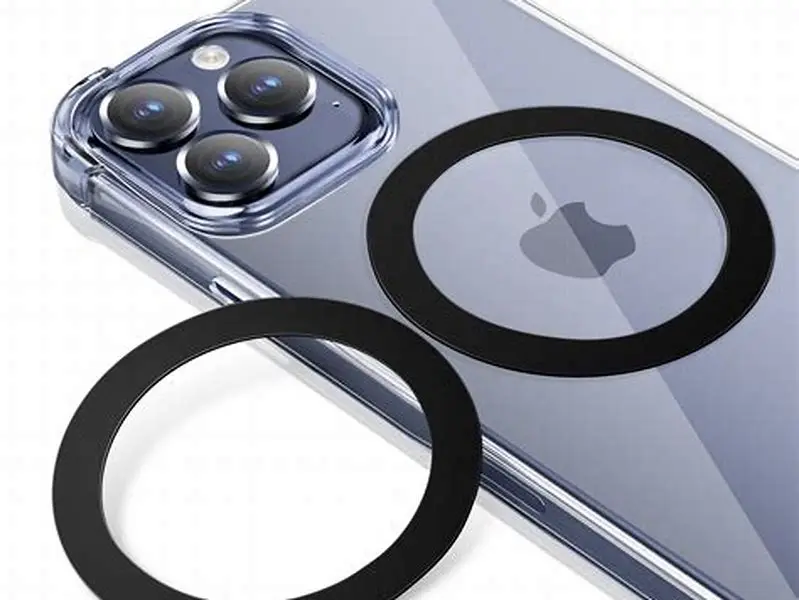
Short answer (qualified): It may hold in mild driving, but reliability is marginal for aggressive cornering. The figures below are estimates based on basic magnetic field-distance behavior, simple F = ma calculations for cornering, and informal user-test ranges reported by product specifications and reviewers. Treat all numerical values as approximations and follow the testing steps described to confirm your actual setup.
On this page (9 sections)
- Key takeaways
- How Case Thickness and Magnet Placement Affect Magnetic Hold (with qualifying estimates)
- Pixel 7a: dimensions, weight, and how a battery case changes alignment
- What lateral forces to expect in cornering (physics-backed, approximate)
- How magnetic-only vs hybrid vent mounts change the calculation
- Genuine Apple MagSafe ring vs third‑party sticker rings — practical comparison
- How to measure or test your particular setup (practical steps)
- Choosing a safer setup for Pixel 7a with a 3mm battery case
- Questions people still ask
Part of our guide on qi2 ring sticker holding pixel 10 pro
Want the confidence that your Pixel 7a won't fly off the vent while cornering? Measure the pull force of your exact phone+case+sticker+mount configuration, or pick a hybrid/verified mount for peace of mind.
| Pixel 7a weight (official) | Approx. 193 g (phone alone) — labeled value; add case/battery mass separately |
|---|---|
| Pixel 7a dimensions (official) | Approx. 152.2 x 72.9 x 8.9 mm (height x width x thickness) — used to judge magnet placement and center of mass |
| Case thickness (subject) | 3 mm (battery case) – listed thickness between magnet and mount |
| Magnetic force reduction | Estimate: force typically falls markedly with small added separation; common practical reduction ranges from ~30% to 70% depending on magnet design and magnet-to-target geometry (range, not a precise value) |
| Estimated hold force needed in typical cornering | Approximate ranges: light turns ~1–3 N, moderate cornering ~3–6 N, aggressive turns/bumpy roads can require upwards of ~6–12 N depending on vehicle speed and turn radius — estimates only |
Key takeaways
- All numerical values are approximate estimates derived from magnetic field decay principles, vehicle acceleration physics (F = ma), and aggregated product-spec/user-test ranges — not precise guarantees.
- A 3 mm case between the magnet and mount typically reduces the usable magnetic pull compared with direct contact; the reduction depends strongly on magnet size and construction and is best expressed as a range.
- Pixel 7a (dimensions and weight below) plus a 3 mm battery case increases mass and can shift magnet alignment; that raises the force needed to resist lateral (cornering) acceleration.
- Magnetic-only vent mounts rely entirely on magnet strength; hybrid mounts add mechanical clamps that greatly increase reliability during cornering and vibration.
- Practical test: measure detach force with a spring scale or perform incremental real-world tests before relying on the mount.
How Case Thickness and Magnet Placement Affect Magnetic Hold (with qualifying estimates)
Magnetic attraction strength depends strongly on distance and geometry between the magnet and the magnetic target. For small permanent magnets arranged to approximate a magnetic dipole, the field strength drops rapidly with distance — often on the order of 1/r^3 for dipole components in the far field. In practical near-field situations (millimeters of separation), the drop is highly dependent on magnet cross-section, flux return path, and the ferrous target plate design.
Because of this physics, adding a 3 mm barrier (your battery case thickness) between a magnet embedded in the case and the metal/receiver in a vent mount generally reduces the usable magnetic grip. The exact reduction depends on the magnet size and quality: a large multi-pole neodymium assembly loses less relative hold than a very small single magnet when you add 3 mm of separation.
To avoid overstating precision, express the change as a range: for many small consumer magnets used in sticker rings, expect an approximate reduction in effective pull force on the order of tens of percent — often roughly 30% to 60% — compared with a bare-phone direct contact mount. That range should be treated as an engineering estimate, not a measured constant for every product.
Pixel 7a: dimensions, weight, and how a battery case changes alignment
Official Pixel 7a specifications list the phone’s weight at about 193 g and external size near 152.2 × 72.9 × 8.9 mm (height × width × thickness). These numbers matter because the phone’s center of mass and the location of the magnet relative to that center influence torque and the tendency for the phone to pivot off a mount under sideways force. The other half of this decision is holding iphone 14 plus with small magnet.
A battery case that adds mass (for example, a small battery case might add ~40–100 g depending on capacity — treat this as a typical range) increases the total mass the magnet must hold and can increase the lever arm if the case shifts the magnet or moves the phone’s center of mass away from the mount plane. That means the required holding torque (rotational resistance) as well as shear (sideways) force can increase.
If the sticker ring is centered precisely over the phone’s internal center or the magnetic receiver and the mount’s magnet aligns well with that ring, you get the best torque resistance. If the ring is off-center or the case thickens only part of the gap (asymmetry), you may experience leverage that makes slippage more likely even at the same nominal pull force.
What lateral forces to expect in cornering (physics-backed, approximate)
Use F = ma as a starting point: sideways force on the phone equals the phone’s mass times the lateral acceleration. Lateral acceleration in passenger cars during normal turns is often in the range of 0.2–0.6 g; sporty driving or emergency maneuvers can reach 0.8–1.5 g or more. Multiply mass (in kg) by acceleration (in m/s²; 1 g ≈ 9.81 m/s²) to get Newtons (N). We cover magnetic mounting for android phones in its own article.
Example (estimate): a 0.25 kg phone+case undergoing 0.5 g lateral acceleration experiences F ≈ 0.25 × (0.5 × 9.81) ≈ 1.2 N lateral force. At 1.0 g that force doubles to ≈2.45 N, and at 1.5 g it is ≈3.7 N. These are lateral shear forces; tipping/torque and vibration add complexity beyond the simple shear value.
Because the magnet resists shear primarily by friction and magnetic normal force, you need the magnetic mount’s effective shear-resisting capability (through the case thickness) to exceed these combined forces and torques with a safety margin.
How magnetic-only vs hybrid vent mounts change the calculation
Magnetic-only vent mounts rely entirely on magnet-to-metal attraction to hold the phone. Their effectiveness therefore depends almost wholly on magnetic flux, magnet size, magnet-to-plate interface, and intervening case thickness. If your magnet’s claimed or measured hold force (through the 3 mm case) is lower than expected cornering forces plus a safety margin, the phone can slide or detach. There is more on galaxy a54 with glued pixel magsafe adapter fit in a separate guide.
Hybrid mounts combine magnets with mechanical elements — for example, a magnetic face plus side grips, or a mechanical cradle with magnetic assistance. Hybrids dramatically increase reliability because mechanical clamps take up shear and torque loads that magnets alone might not resist through a thick case. The vent clip attaching the mount to the vent also matters: a flimsy vent clip can let the entire mount pivot or detach, regardless of magnet strength.
When assessing your setup, treat the system as the minimum of (magnet hold vs applied forces) and (vent clip stability vs applied moments). In other words, both magnet force and vent clip strength limit overall reliability.
Genuine Apple MagSafe ring vs third‑party sticker rings — practical comparison
Genuine Apple MagSafe accessories are designed to work with Apple's MagSafe specification — a specific arrangement of magnets and optimized alignment that gives predictable attachment and wireless charging alignment. Apple’s MagSafe accessories typically show consistent performance when used as intended, but Apple does not publish a single industry-standard holding-force number for all conditions.
Third‑party sticker rings vary widely. Some use high‑quality neodymium magnets and good multi-pole layouts approaching the feel of genuine MagSafe; others are thin, have fewer magnets, poorer flux return, and weaker attraction. In practice, a well-built third‑party ring can perform nearly as well as an Apple accessory, but lower-quality stickers can lose a large fraction of pull when a case is present.
For practical decision‑making: assume a third‑party sticker ring might be on the low end of the force range unless the vendor provides a holding-force spec. When shopping, prefer sellers that specify compatibility with cases (e.g., 'works through cases up to X mm') or provide pull‑force data.
How to measure or test your particular setup (practical steps)
Because product and build differences are large, the most reliable path is to measure the pull/detach force of your exact phone+case+sticker+mount combination. A simple approach uses a small spring scale or luggage scale (capable of reading in Newtons or grams), a string looped around the phone, and a method to pull slowly and steadily.
Step-by-step (practical and safe):
1) Attach the phone to the vent mount in the car as you normally would. 2) Attach a loop or strap around the phone such that when you pull horizontally the motion approximates the direction of expected cornering shear. 3) Hook the spring scale to the strap and pull slowly; record the force at which the phone slides or detaches. Convert grams to Newtons by multiplying mass (kg) × 9.81 or use the scale's Newton readout if available. 4) Repeat several times and average the results.
Compare your measured detachment force (through the case) to estimated cornering forces for your driving style (use F = ma with your measured mass and likely lateral g). Add a safety margin — for example, target a measured holding capability at least 2× the expected lateral force for your typical driving to allow for vibration and dynamic loads.
If you cannot measure, perform controlled road tests: begin with slow turns, then progressively increase severity in safe conditions, and watch for slippage. But measurement with a scale is preferable because it yields a repeatable number you can compare to estimates.
- Attach Pixel 7a with 3mm case to car vent mount.
- Hook a spring or luggage scale to the phone and pull horizontally to simulate lateral force.
- Note the force at which the phone slips or detaches (use multiple trials and average).
- Compare the measured force (N) to estimated cornering forces for your driving and include a safety margin.
Choosing a safer setup for Pixel 7a with a 3mm battery case
If your measured holding force through the 3 mm case is near or below your estimated cornering load (including safety margin), consider these options: use a thinner case or remove the external battery case while driving; upgrade to a higher-rated magnetic mount that explicitly advertises compatibility with cases of 3 mm or more; choose a hybrid mount with mechanical clamps; or use a dash/windshield mount with a stronger base (if legal and safe in your region).
When reading product specs, treat manufacturer holding-force numbers as optimistic unless verified. Some reputable mounts give pull-force ranges or case‑through ratings; prefer those with transparent specs or independent reviews that measure pull force.
Finally, ensure the vent clip form factor fits your vehicle vents and that the clip's grip is robust — a strong magnet is wasted on a flimsy vent clip.
| Mount Type | Typical Real‑World Reliability (with 3 mm case) | Best Use |
|---|---|---|
| Robust multi‑magnet mount (verified case‑through spec) | Higher — often sufficient for moderate cornering if verified | Daily driving with moderate turns |
| Hybrid magnet + mechanical clamp | High — mechanical parts carry shear/torque | Aggressive driving, bumpy roads |
| Small generic sticker + magnetic-only vent mount | Low — high risk during sharp cornering or vibration | Light urban driving, avoid for aggressive turns |
A MagSafe sticker ring embedded inside a 3 mm battery case can hold a Pixel 7a on a car vent mount in mild conditions, but reliability is marginal for aggressive cornering or very bumpy roads unless the mount is a verified high‑force design or hybrid with mechanical clamps. Measure your exact setup and include a safety margin before relying on it.
Questions people still ask
Does a MagSafe ring inside a case reduce wireless charging speed?
Yes, added distance and magnetic materials can reduce wireless charging efficiency and may increase heat. A battery case with an embedded ring can interfere with Qi alignment; results vary by accessory design. Test charging performance with your particular case and ring to confirm.
Can vent clip strength alone hold the phone if the magnet is weak?
No — the vent clip secures the mount to the vent but normally does not directly hold the phone unless the mount uses mechanical clamps. A weak magnet with a strong clip can still result in the phone falling off the mount face. Evaluate both magnet pull and clip stability.
Will a thinner or no case improve magnetic hold significantly?
Generally yes: reducing separation to the mount increases magnetic attraction. How much improvement you see depends on magnet design; moving from 3 mm to ~1.5 mm separation commonly improves effective pull by a noticeable fraction (estimate: tens of percent).
Are magnetic mounts safe for Pixel 7a sensors or battery?
Most users report no damage; modern phones are shielded and designed to tolerate external magnets. However, strong magnets can affect compass calibration and, in some cases, wireless charging behavior. Keep magnets away from camera modules and verify accessory guidance from the manufacturer.
What if my phone falls frequently despite using a MagSafe mount?
Measure your mount's holding force, check magnet alignment, reduce case thickness, upgrade to a hybrid or stronger mount, or relocate to a dash/windshield mount. Also check vent clip tightness; a failing clip can make an otherwise strong magnet ineffective.