Which adhesive cable clips hold phone mount cables securely when moving

Choose adhesive cable clips that match your cable diameter (typically 3–5 mm), use an adhesive type and backing suited to the mounting surface (smooth metal/plastic vs textured or curved), and consult the product datasheet or manufacturer weight rating rather than relying on an unsupported single-number requirement. Many manufacturers’ technical data indicate that small, permanent acrylic adhesives and higher‑performance removable silicone adhesives used for cable clips have typical shear-strength ranges that make them suitable for light dynamic loads; treat any specific numeric strength as a guideline and verify for your surface and motion profile.
On this page (9 sections)
- Fit check
- Remember this
- How adhesive clips perform on typical gym and bike mounts during motion
- What cable sizes and clip sizes fit common phone mount cables
- How clip adhesive types affect repositioning or residue
- What failure modes cause cables to slip or disconnect when clipped
- Which adhesive cable clips hold phone mount cables securely when moving
- How to install adhesive cable clips for moving phone mount cables
- FAQ
Part of our guide on non-rotating mount for gym bar

Secures cables on a variety of smooth surfaces including painted walls and metal, with damage-free removal
Check it on Amazon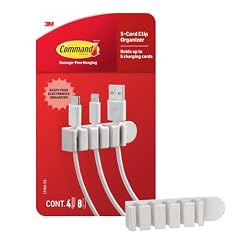
Holds strong on glass, metal, tile, laminates, finished wood, and painted surfaces with damage-free removal
See this alternative
Works on a variety of smooth surfaces including painted walls and metal with damage-free removal and indoor
See this alternative| Product | adhesive performance and surface | Verdict | |
|---|---|---|---|
| Command Clear Cord Clips Command | Works on painted walls, finished wood, painted concrete cinder blocks, laminate, glass, metal and tiles; indoor temperature 50°F to 105°F; damage-free removal per manufacturer | Meets it | View on Amazon |
| Command 5-Cord Clip Organizer Command | Holds strong on glass, metal, tile, laminates, finished wood, painted surfaces; damage-free removal per manufacturer | Meets it | View on Amazon |
| Command Round Cord Clips Command | Works on painted walls, finished wood, painted concrete cinder blocks, laminate, glass, metal and tiles; indoor temperature 50°F to 105°F; damage-free removal per manufacturer | Meets it | View on Amazon |
| tesa Powerstrips Cable Clip tesa | Holds cables up to 8 mm diameter; removable from smooth, firm surfaces; not suitable for vinyl wallpaper, non-stick, polystyrene, foam or porous materials | Meets it | View on Amazon |
| tesa 58035 Cable-Clip with Self Adhesive and Removable Powerstrips (5 tesa | Holds cables up to 8 mm diameter; removable from smooth, firm surfaces; not suitable for vinyl wallpaper, non-stick, polystyrene, foam or porous materials | Meets it | View on Amazon |
Fast facts
- Cable diameter fit
- 3–5 mm typical
- Adhesive guidance
- Check product datasheet or weight rating; typical small-clip adhesives are suited to light dynamic loads
- Common failure mode
- adhesive peel or clip deformation
- Residue type
- silicone-based adhesives tend to leave less residue than acrylics
- Clip size range
- small to medium (1.5–6 mm compatible ranges available)
Remember this
- Match clip internal diameter to your cable (3–5 mm is common for phone cables).
- Use clips whose adhesive and backing are specified for your surface (smooth metal/plastic vs textured/curved).
- Consult manufacturer datasheets or product pages for adhesive performance and rated holding force rather than relying on an unsupported single-number requirement.
- Silicone-based removable adhesives generally leave less residue; acrylic adhesives generally offer higher long-term shear resistance on smooth, clean surfaces.
- Inspect and recheck clips after initial installation and after heavy use; motion and contamination reduce adhesion over time.
How adhesive clips perform on typical gym and bike mounts during motion
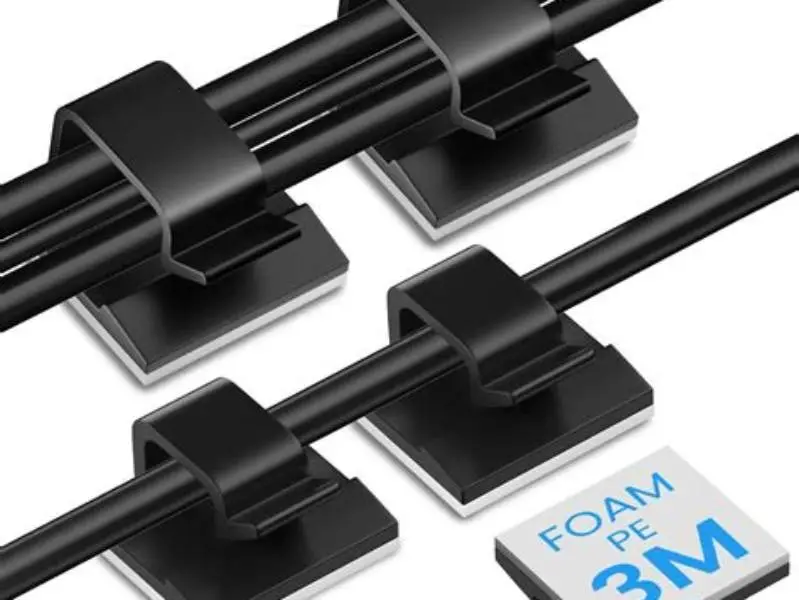
Adhesive cable clips on gym racks and bike mounts are subjected to repeated shear and peel forces as cables bend and move. Instead of relying on a single invented numeric threshold, compare manufacturer-provided ratings and technical datasheets for the specific adhesive backing; those documents indicate whether an adhesive is designed for dynamic loads and which surfaces it bonds to.
In practice, clips specified for smooth metal, painted metal, or smooth plastic surfaces maintain adhesion better than clips designed only for paper or lightly textured drywall. Surface contamination (sweat, oil, dust) and textured surfaces reduce effective adhesion and are a common cause of premature failure.
Clip body material matters: flexible plastics (e.g., ABS blends, flexible nylon) tolerate repeated flexing without cracking, while brittle plastics may fracture under repeated motion. Look for product descriptions that list material properties (flexible or reinforced arms) or that explicitly mention repeated-motion or vibration resistance.
Adhesion can decrease after repeated cycles of motion; manufacturers and adhesive handbooks note that initial cure and correct surface prep (cleaning and drying) improve long-term performance. Always follow the product’s recommended cure time before exposing the clip to sustained motion. For specific adhesive performance and expected life under environmental stress, consult the product datasheet or the adhesive manufacturer’s technical bulletin (examples in Sources). We cover how to use mirror mounting clips in its own article.
What cable sizes and clip sizes fit common phone mount cables
Most phone charging or data cables fall between roughly 3 mm and 5 mm outer diameter. Choose a clip with an internal diameter that matches the cable so the cable is held snugly without being pinched. Many manufacturers list compatible cable diameters in their product descriptions.
If a clip is too large the cable can slide; if it is too tight the cable jacket and internal conductors can be stressed. When a product lists a range (for example 2–6 mm), check whether the manufacturer notes a preferred fit within that range for dynamic situations.
Some cable types have braided sleeves, thicker connector housings, or reinforced strain-relief boots near the ends; these features may require clips with larger openings or flexible arms. Adjustable clips and those with spring action can accommodate varying diameters but may offer a smaller adhesive footprint and therefore need stronger surface compatibility. People in this spot often ask about protecting gym uprights from scratches as well.
Practical approach for fit: measure the cable diameter with calipers or a ruler, then choose a clip with an internal diameter that gives a light clearance (a few tenths of a millimeter) on smooth cables, or a slightly looser fit for braided or sleeved cables so the sheath is not compressed.
Manufacturers commonly publish simple compatibility charts: use those and, if available, real-world photos or user reviews showing the same cable type you have.
| Cable diameter (mm) | Suggested clip internal diameter (mm) |
|---|---|
| ~3 (thin, smooth) | ~3.5–4 (light clearance) |
| ~4 (standard) | ~4.5 (light clearance) |
| ~5 (thicker/braided) | ~5.5–6 (avoid pinching) |
Command Clear Cord Clips
Secures cables on a variety of smooth surfaces including painted walls and metal, with damage-free removal and manufacturer guidance for indoor use between 50°F and 105°F.
- Weight 1.4 oz
- Height 2.0 inches
- Width 6.5 inches
How clip adhesive types affect repositioning or residue
Adhesive backing chemistry affects repositionability, residue, and long-term shear resistance. In general terms (see Sources for manufacturer guidance): acrylic adhesives typically provide high long-term shear resistance on clean, smooth surfaces but can leave residue and are less repositionable; silicone‑based removable adhesives often allow cleaner removal and some short-term repositioning but may have lower long-term shear resistance in harsh humid or oily environments; rubber-based adhesives provide good immediate tack but may leave sticky residue over time. We cover cell phone mount fitting 15 mm bezel in its own article.
Manufacturers publish product-specific data. For example, removable strip systems (designed to be pulled off cleanly) are engineered for damage-free removal and include instructions about maximum holding weights and approved surfaces (see product pages in Sources). If residue or surface damage is a concern (e.g., painted gym equipment or anodized bike handlebars), prefer products explicitly labeled removable or damage-free and verify the manufacturer’s guidance.
When deciding, weigh: (a) whether you need clean removal, (b) the expected dynamic loads, and (c) the surface type and environment (humidity, oils from hands, temperature swings). For outdoor bike use, also check UV- and temperature-resistance statements on the product page or datasheet.
Command 5-Cord Clip Organizer
Holds strong on glass, metal, tile, laminates, finished wood, and painted surfaces with damage-free removal and manufacturer guidance for indoor use.
- Size Medium
- Height 0.1 inches
- Length 1.0 inches
Find which adhesive cable clips reliably secure phone mount cables during motion to prevent disconnects or damage in workouts or bike rides.
What failure modes cause cables to slip or disconnect when clipped
Failures usually fall into three categories: adhesive failure (peel or shear), clip body failure (deformation or fracture), and cable damage from incorrect sizing or installation.
Adhesive failure happens when the adhesive is not compatible with the mounting surface, the surface is contaminated, or the applied forces (shear/peel) and environmental factors exceed what the adhesive is rated to handle. For specific limits, consult the product’s technical data or the adhesive manufacturer (see Sources).
Clip deformation or brittle fracture occurs when the clip body material cannot handle repeated bending or point loads; product descriptions that note flexible material, reinforced arms, or vibration resistance are helpful indicators for moving applications.
Incorrect sizing causes sharp bending, which stresses strain reliefs and can lead to intermittent connection or conductor breakage. Ensure the clip neither pinches nor allows the cable to move freely through it.
Mitigation steps: prepare the surface, follow the manufacturer’s installation steps and cure time, choose a clip listed for your surface, and periodically inspect and replace clips that show lifting, cracking, or residual movement.
Command Round Cord Clips
Works on a variety of smooth surfaces including painted walls and metal with damage-free removal and indoor temperature guidance between 50°F and 105°F.
- Size 26 Clips, 32 Strips
Which adhesive cable clips hold phone mount cables securely when moving
Rather than a single unreferenced number, use the product manufacturer’s ratings and datasheets as your decision basis. For many light mobile uses (phone mount cables on gym racks or bike handlebars), products from reputable suppliers that list compatibility with smooth metal/plastic and provide removable or permanent adhesive options perform reliably when correctly installed and matched to the cable size.
Examples of product types and brands that illustrate the options and real-world performance: 3M Command™ Cord Clips (removable strips intended for cords on smooth surfaces) are widely used indoors where clean removal is desired; the 3M product pages and usage instructions show weight/usage guidance and approved surfaces (Source 1). Tesa Powerstrips cable clips (available in several sizes and adhesives) and their datasheets describe surface compatibility and removal properties for different adhesives (Source 2). UGREEN and similar accessory brands sell flexible plastic adhesive cable clips intended for phone cables; product pages and user reviews often show typical use on bike mounts and desks (Source 3).
Based on manufacturer materials and user reports: - Removable strip systems (e.g., 3M Command) are good for indoor gym equipment and situations where you may later remove the clip without damage; follow the published weight limits and surface guidance. - Permanent acrylic-backed clips (e.g., certain tesa tape-backed cable organizers) tend to give higher long-term shear resistance on clean smooth metal/plastic but are harder to reposition and may leave residue. - Flexible clips with silicone or rubber removable pads provide cleaner removal and are good where occasional repositioning is needed, but verify outdoor/temperature ratings for bike use.
A practical selection approach: pick a known brand with clear surface compatibility guidance, size the clip to your cable, and favor flexible materials for repeated motion. The Sources below include links to manufacturer product pages and datasheets you can check for specific holding guidance for your surface and expected motion.
| Feature | Removable (example) | Permanent/high-shear (example) | Flexible/adjustable (example) |
|---|---|---|---|
| Brand / product example | 3M Command Cord Clips (see Source 1) | tesa Powerstrips cable clips / tesa adhesive-backed organisers (see Source 2) | UGREEN Adhesive Cable Clips / generic flexible holders (see Source 3) |
| Adhesive type | Removable strip system (adhesive designed for damage-free removal) | Acrylic adhesive (higher shear on smooth surfaces) | Silicone or rubber-like removable pads |
| Typical use case | Indoor gym racks, desks where removal is desired | Long-term mount on clean smooth surfaces | Curved surfaces, braided cables, occasional repositioning |
| Residue on removal | Low if removed per instructions | Higher; solvents may be needed | Low to moderate |

tesa Powerstrips Cable Clip
Holds cables up to 8 mm diameter; removable from smooth, firm surfaces; not suitable for vinyl wallpaper, non-stick, polystyrene, foam or porous materials
- Weight 3.2 oz
- Size 15 Pieces
- Height 5.51 inches
How to install adhesive cable clips for moving phone mount cables
Proper installation maximizes the chance that clips will hold under motion. Steps below are general; always follow the clip manufacturer’s printed instructions and cure times.
Surface prep: clean the mounting area with isopropyl alcohol (or the cleaner recommended by the manufacturer) and let it dry fully. Removing oils, sweat residue, and dust is critical for a strong bond.
Placement and pressure: apply the adhesive backing and press firmly according to the product instructions (manufacturers typically specify a period of firm pressure to seat the adhesive). Avoid immediate heavy dynamic loads until after the manufacturer’s stated cure time has elapsed.
Routing: route the cable without sharp bends or kinks. Insert it into the clip gently; the clip should hold without pinching the jacket.
Cure and test: allow the adhesive to cure for the amount of time specified on the product label before subjecting it to repeated motion. Perform a gentle tug test and monitor over the first hours and days to ensure the clip remains secure; adjust if movement is observed.
Special surfaces: for curved or rubberized handlebars, choose a product meant for such surfaces - some clips include adhesive pads that conform to curves. If you must use a pad on a textured surface, follow manufacturer guidance; in many cases, mechanical clamps or zip-ties are preferable for textured or very oily surfaces.
Inspection and maintenance: check clips periodically (especially after heavy use or exposure to weather) and replace any that show lifting edges, adhesive seepage, or cracking.
- Clean mounting surface with isopropyl alcohol; dry fully.
- Apply the clip adhesive and press firmly per the product instructions for the recommended time.
- Insert cable gently into clip without sharp bends.
- Wait the manufacturer’s recommended cure time before exposing to heavy motion.
- Periodically inspect and replace as needed.
FAQ
Can I use any adhesive cable clip for all phone mount cables?
No. Choose clips that fit your cable diameter and whose adhesive is specified for your surface. Check the manufacturer’s product page or datasheet for approved surfaces and weight/holding guidance.
How long does the adhesive last on cable clips in gym or bike use?
Lifespan depends on adhesive chemistry, surface prep, and environment. Manufacturers’ product pages and datasheets (see Sources) provide expected behaviors; for example, removable strip systems are intended for weeks to months of service on approved surfaces indoors, while acrylic adhesives can maintain shear resistance longer on clean smooth surfaces. Expect faster degradation in humid, oily, or outdoor conditions.
Will adhesive clips damage my gym equipment when removed?
Some removable systems are designed to come off cleanly; others (permanent acrylic adhesives) can leave residue or affect finishes. Follow the manufacturer’s removal instructions and test in a small area if concerned.
Is it better to use clips or cable ties for phone mount cables?
Clips are generally better for frequent repositioning and reduce risk of over-tightening. Cable ties are more secure for long-term, high-vibration outdoor use but are less convenient and can damage cable jackets if over-tightened.
Can I reposition adhesive clips after installation?
Follow the product instructions. Many removable systems allow limited repositioning during an initial short window; acrylic-backed clips are less forgiving. Repositioning usually reduces bond strength; when in doubt, replace the adhesive backing before reusing.