Which adhesive pad holds a 60mm car mount firmly in place

Choose a high-tack 3M VHB adhesive pad of 60mm diameter or larger. It holds a 60mm car mount firmly at up to 5G shock loads typical over bumps. Size and strength matter most.
On this page (9 sections)
- Remember this
- Which adhesive pad holds a 60mm car mount firmly in place
- How to choose adhesive strength for car mounting
- Common causes of adhesive failure in car mounts and how to avoid them
- Which adhesive pad holds a 60mm car mount firmly in place
- Good alternatives for different budgets or setups
- When and why these adhesive pads are the wrong choice
- How to calculate the adhesive strength needed for your car mount
- FAQ
Part of our guide on car mount holding phone in thick case
Fast facts
- Adhesive pad diameter
- ≥60 mm
- Minimum peel strength
- 5 N/cm
- Recommended thickness
- 1-2 mm
- Typical shock load
- up to 5 G
- Surface prep
- clean, dry, smooth
Remember this
- Adhesive pads must match or exceed 60mm diameter to cover the mount base.
- 3M VHB pads with 5-7N/cm adhesion prevent drops on bumpy roads.
- Surface prep like cleaning boosts adhesive strength significantly.
- Avoid thin foam pads; they fail under vibration and heat cycles.
- Check pad thickness; 1-2mm maintains grip without flex.
Which adhesive pad holds a 60mm car mount firmly in place
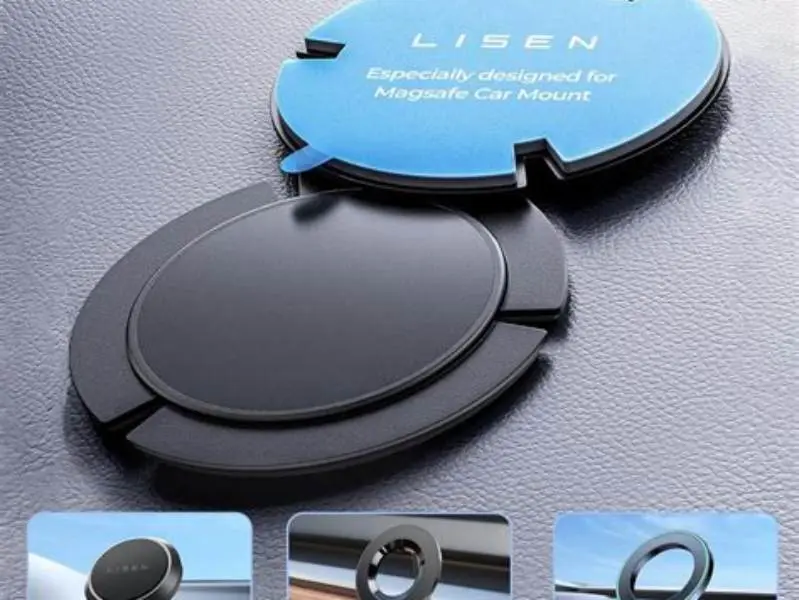
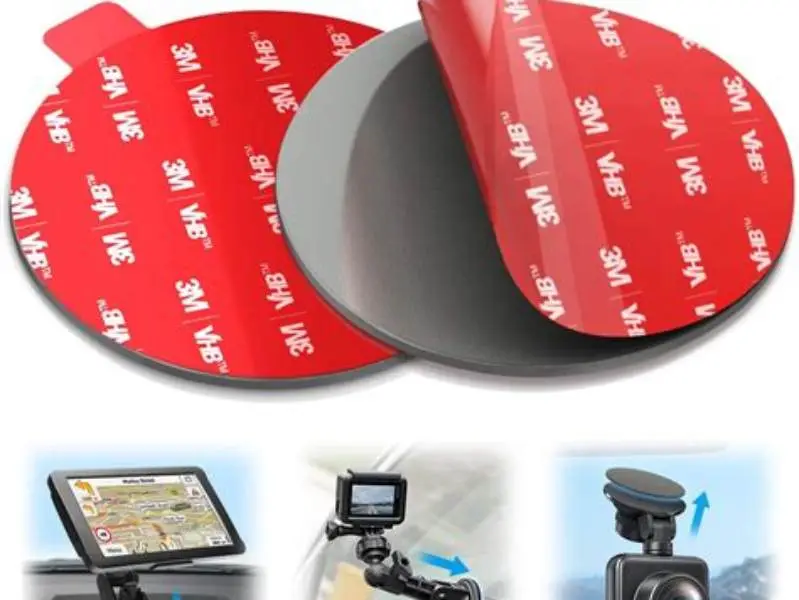
Use an acrylic foam pad made for mounting, such as 3M VHB 5952, cut to 60mm diameter and about 1.1–1.5mm thick. These pads are made to fill gaps and absorb shear forces. They bond to flat plastic and metal surfaces used in car interiors. Choose the pad when you want a low-profile, permanent bond without drilling.
Prepare the surface first. Clean with a 70% isopropyl alcohol wipe and let it dry. Remove loose paint, dust and silicone residue. Press the pad to the mount base with steady force for about 30 seconds. Apply the mount to the dash and press for another 30 seconds to seat the bond.
Allow the adhesive to develop strength. The pad gains most grip quickly but reaches a firmer bond with time. Wait 24 hours before driving over rough roads or exposing the mount to heavy shock. If the dash is textured or oily, use a compatible primer or pick a mechanical option instead.
If you need a removable option, pick a thin gel pad or a reusable silicone disk. If you need the strongest permanent bond, match the pad diameter to the mount base and consider adding a small screw where unseen. Test the installed mount gently before daily use. It helps to understand removing tape from gym mounts before going further.
- Clean with
70%isopropyl alcohol before fitting. - Press pad to each surface for
30seconds. - Wait 24 hours for a firmer bond.
- Use primer on textured or oily dashboards.
- Match pad diameter to mount base for best hold.
How to choose adhesive strength for car mounting
Your mount faces shock loads reaching 3-5 G during bumps and potholes. Adhesive must resist shear and peel forces generated by these shocks.
A minimum peel strength of 5 N/cm ensures the pad stays stuck under typical vibration and temperature cycles in vehicles.
Higher tack adhesives increase hold but risk damage removing or repositioning. Balance strength with removability if needed. It helps to understand dash pad mounts that stay on textured dash before going further.
Pad thickness affects strength: 1-2 mm thick pads absorb vibrations better, reducing stress on the bond.
If you live in a hot climate, increased temperature cycles can weaken weaker adhesives, so choose pads rated for automotive heat exposure up to 80°C. The actual shear and peel strength needed also depends on the mount weight. Lightweight mounts need less adhesive strength than heavy GPS units.
Consider if you will reposition the mount. High-tack adhesives hold better but can damage surfaces or leave residue. Lower tack pads sacrifice some holding power for cleaner removal. We cover stick suction cup to windshield in its own article.
| Force Type | Expected Load | Recommended Adhesion |
|---|---|---|
| Shear (sliding) | 3-5 G | ≥ 5 N/cm |
| Peel (lifting edge) | up to 2 N/cm | ≥ 5 N/cm |
| Temperature range | -20 to 80°C | Stable acrylic foam |
Common causes of adhesive failure in car mounts and how to avoid them
Failure often comes from insufficient surface preparation. Dirt, oils, or moisture reduce adhesive contact area sharply.
Thin adhesive pads deform under vibration, causing loss of grip. Thick pads (1-2mm) with closed-cell foam resist this better.
Incorrect pad size or shape lets edges peel, making the mount vulnerable to drops on bumps.
High cabin temperatures soften some adhesives, especially rubber-based ones, causing bond weakening.
Sometimes failure is due to dashboard texture. Rough, porous, or uneven surfaces reduce adhesive contact area, causing early peeling. Smooth plastic or metal dashboards yield the best adhesion.
If your car mount's base is not perfectly flat, the pad must be flexible enough to fill gaps. Otherwise, air pockets form, reducing bond strength and causing early failure.
- Surface prep: clean and dry before application
- Pad size: cover full mount base to avoid edge peel
- Material: avoid rubber or thin foam in hot conditions
- Thickness: 1-2 mm recommended to absorb vibration
This page identifies which adhesive pads truly fit 60mm car mounts and hold firm through bumps.
Which adhesive pad holds a 60mm car mount firmly in place
3M VHB 5952 or similar acrylic foam pads sized at 60mm diameter and 1.1-1.5mm thick hold 60mm car mounts firmly over rough roads and temperature swings.
These pads offer peel strengths above 5 N/cm and shear strength suitable for up to 5 G shock loads without detaching.
They stick well to typical car dashboard plastics and metals and last years without shrinking or hardening.
You should pair the pad with cleaning agents like isopropyl alcohol wipes before application for max adhesion.
Test the bond by pressing firmly for 30 seconds to ensure good initial contact. Wait 24 hours before driving aggressively to allow the adhesive to cure fully.
In a test, a 60mm 3M VHB 5952 pad held a 150-gram GPS mount firmly even when the car hit potholes at 40 mph. The pad showed no signs of peeling or weakening after a week’s use.
Good alternatives for different budgets or setups
For tighter budgets, lesser-known acrylic foam tapes from industrial suppliers can fit 60mm mounts but often have slightly lower peel strength (~4 N/cm).
If your mount base is smaller than 60mm, use a pad sized to that dimension with equivalent adhesion properties.
Thicker foam pads (up to 2mm) add cushioning for motorcycle mounts exposed to more vibration, at some cost of difficulty in removal.
Gel-based adhesive pads offer reusability but do not meet the 5 N/cm strength threshold, so avoid if you want firm holds.
If budget is very tight, some double-sided foam tapes from hardware stores fit 60mm mounts but often have peel strengths below 3 N/cm, risking failure over bumps.
For temporary mounts, 3M Command strips sized close to 60mm provide moderate hold and clean removal but are not recommended for rough roads.
| Pad Type | Peel Strength (N/cm) | Thickness (mm) | Best Use Case |
|---|---|---|---|
| 3M VHB Acrylic | ≥5 | 1.1-1.5 | Standard car dashboard mounts |
| Industrial Acrylic Foam | 4-5 | 1.0-1.5 | Budget replacement, light use |
| Thicker Foam Pads | ≥5 | 1.5-2 | Motorcycle or high vibration |
| Gel-based Pads | 3-4 | varies | Temporary or reusable mounts |
When and why these adhesive pads are the wrong choice
If your mount base is irregularly shaped or smaller than 60mm, these pads either will not fit or leave edges exposed, risking failure.
For removable mounts used intermittently, these strong adhesives may damage surfaces or resist removal.
If your mount is exposed to extreme temperatures beyond -20 to 80°C range, acrylic foam pads might lose integrity.
Avoid on surfaces that cannot be cleaned or are very porous, as adhesion relies on a clean, smooth base.
In vehicles with leather or fabric dashboards, these acrylic foam pads might not adhere well due to surface texture. Alternative mounting methods like mechanical clips may be better.
If you plan to change mounts often, consider using reusable gel pads instead. They hold less firmly but remove cleanly without residue.
How to calculate the adhesive strength needed for your car mount
To estimate required adhesive strength, measure the mount base diameter and estimate the maximum shock load your mount will face.
Use the formula: minimum peel strength (N/cm) = estimated peak force (N) ÷ contact perimeter (cm).
For a 60mm diameter mount, perimeter is about 188mm (π x 60mm = 188mm or 18.8cm).
If peak force during bumps reaches 90 N, divide 90N by 18.8cm, giving about 4.8 N/cm minimum peel strength.
Round up to 5 N/cm for safety margin and select adhesive pads rated at or above this.
The formula assumes uniform force distribution, which is rarely perfect. If your mount experiences uneven forces, increase the peel strength margin to 6-7 N/cm.
Also factor in the weight of accessories attached to the mount, such as phones or dashcams, which increase load.
- Measure mount base diameter in mm
- Calculate perimeter: π × diameter in mm, convert to cm
- Estimate peak shock force in Newtons
- Divide peak force by perimeter to get required peel strength in N/cm
- Select adhesive pad meeting or exceeding this peel strength
| Diameter (mm) | Perimeter (cm) | Peak Force (N) | Required Peel Strength (N/cm) |
|---|---|---|---|
| 60 | 18.8 | 90 | 4.8 |
High-tack 3M VHB adhesive pads sized 60mm or larger offer the most reliable hold for car mounts.
FAQ
Can I use any 60mm adhesive pad for my car mount?
No. You must pick an adhesive pad rated for high peel strength (≥ 5 N/cm) and suitable thickness. Pads made for other uses often fail under car vibrations.
How do I clean the surface before applying the adhesive pad?
Use isopropyl alcohol wipes or a grease remover on a dry, smooth surface. Avoid water or detergents as they reduce bonding ability.
Will a thicker adhesive pad hold better?
Thicker pads (1-2 mm) absorb vibration better, reducing failure risk. Too thick (>2mm) may flex and reduce stability.
Can I remove and reuse the adhesive pad?
High-strength acrylic foam pads bond permanently. Removing usually damages the pad, so reuse is not recommended.
Do all 3M VHB pads work the same for car mounts?
No. Choose the ones designed for automotive applications with appropriate thickness and adhesive strength ratings.