How to get a suction cup to stick securely on your windshield glass

Clean the windshield spot with 70% isopropyl alcohol, warm the suction cup for 30 seconds in your hand or under warm water, press it onto smooth glass away from dots or tint edges, and push out all air from the center outward.
On this page (8 sections)
- Remember this
- Why suction cups fail on windshields in the first place
- Best way to clean the windshield before attaching
- How to press and position the suction cup for maximum adhesion
- Where suction cups hold best and where they always fail
- Tips to keep the suction cup stuck over time
- How to remove the suction cup without damage
- FAQ
Part of our guide on mounts that secure phones on rough roads
Fast facts
- Alcohol strength
- 70% or higher isopropyl
- Warming time
- 30 seconds minimum
- Reapply interval
- every 4-6 weeks
- Avoid dots within
- 1 inch of suction area
- Temperature range
- ideally 60-80°F for install
Remember this
- Clean the exact spot with 70% or higher isopropyl alcohol and a microfiber cloth, never glass cleaner with silicone
- Warm the suction cup for 30 seconds before pressing to make the rubber pliable and seal better
- Press from the center outward to force all air out, then engage the locking lever if the mount has one
- Position on smooth glass away from ceramic dots, tint edges, and defrost lines: those break the seal
- Re-clean and reapply every 4-6 weeks or when you see the cup starting to lift at the edges
Why suction cups fail on windshields in the first place
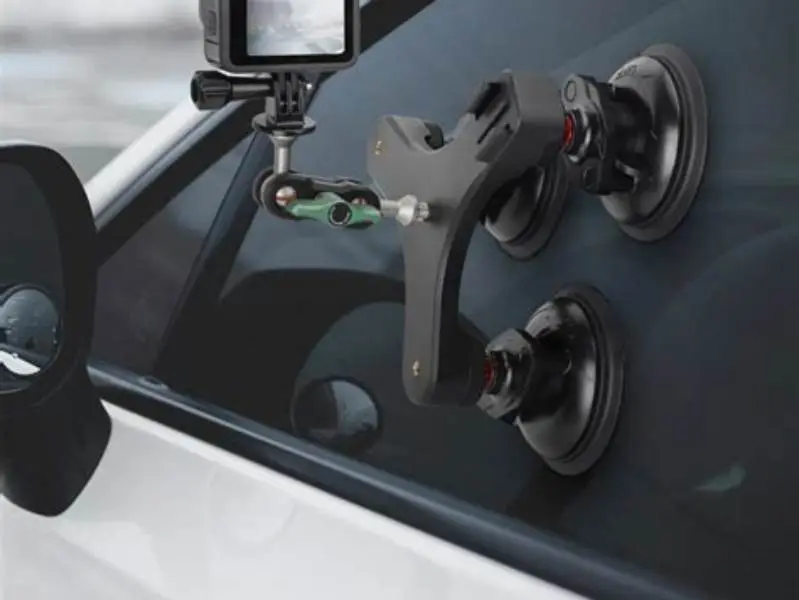
A suction cup holds by creating a vacuum between the rubber and the glass. Any air that sneaks in breaks that seal. The three things that let air in are invisible oil or residue on the glass, cold rubber that won't flex enough to mold to the surface, and textured or curved areas where the cup can't make full contact. Most people wipe the windshield with whatever is in the car and press the mount on cold. That works for a day or two, then the phone drops.
Windshield glass collects a film from dashboard off-gassing, hand oils, and the waxy residue left by most spray glass cleaners. That film is thin enough that you don't see it, but thick enough to keep the suction cup from bonding. Cold rubber is stiff and doesn't conform to microscopic irregularities in the glass, so the seal never forms completely. A stiff cup pressed onto glass traps tiny air pockets at the edges, and those grow as the car heats and cools.
The ceramic dots printed on windshields near the edges, tinted film edges, and the fine wires of a defrost grid all create ridges the suction cup can't cross. Position the cup over any of those and it will peel off within hours. The fix is not a bigger or stickier cup. It's preparation and placement.
Best way to clean the windshield before attaching
Use 70% isopropyl alcohol or stronger on a clean microfiber cloth. Wipe the area where the suction cup will sit, then flip the cloth and wipe again. Let it dry for 20 to 30 seconds. The alcohol cuts through oils, evaporates completely, and leaves no residue. Glass cleaner does not do the same job: most formulas contain silicone or wax to make water bead, and that layer stops the suction cup from sealing. Even the no-streak kinds leave a thin film. For the detail, see our notes on cup holder phone mount that fits 70mm diameter cup holder.
Do not use water alone, paper towels, or a rag you pulled from under the seat. Water doesn't dissolve oils, paper towels leave lint, and most rags carry oils from your hands or from whatever they were last used for. If you don't have isopropyl alcohol, buy a bottle: it's under five dollars at any pharmacy and solves the problem permanently. A single wipe with 91% isopropyl does more than ten passes with glass cleaner.
Clean the suction cup itself with the same alcohol and cloth. The rubber picks up oils from your fingers and dust from storage, and those interfere with the seal as much as a dirty windshield does. Wipe the entire contact face of the cup, not just the rim. If the rubber looks cloudy or feels tacky, it has degraded and won't hold no matter how well you clean: replace the mount.
The glass must be above 60°F when you attach the cup. Cold glass contracts and stays contracted in winter, and a suction cup installed on cold glass will lift as soon as the cabin warms up. If the car has been sitting in freezing weather, run the defroster for a few minutes before you clean and mount. Warm glass expands slightly and clamps onto the rubber as it cools, which strengthens the hold. Before you commit to anything, it is worth looking at windshield mount for rough roads.

Amazon Basics 91% Isopropyl Alcohol First Aid Antiseptic for Minor Cuts
Cleans your windshield with 91% isopropyl alcohol concentration to ensure a residue-free surface for suction cup attachment.
How to press and position the suction cup for maximum adhesion
Warm the suction cup in your hands or under warm tap water for 30 seconds before you press it on. Cold rubber is rigid and won't conform to the glass. Warm rubber is pliable and molds into every microscopic valley, which pushes out air and forms a complete seal. You should feel the rubber soften slightly. Don't use hot water: heat above 120°F can warp cheaper mounts.
Press the cup onto the glass and hold the center down with your thumb while you use your other fingers to press the edges down in a circle, working outward. You are forcing the air out from under the rubber. If the mount has a locking lever or tab, press the cup flat first, then flip the lever. The lever pulls the center of the cup away from the glass slightly, which increases the vacuum. Do not flip the lever before the cup is fully seated: that traps air instead of removing it.
Position the mount on smooth, flat glass at least one inch away from the ceramic dot matrix at the top or sides of the windshield, any tint film edges, and all defrost lines. Those features create steps and ridges that break the seal. The center of the windshield is the flattest and smoothest area. Avoid the curved sections near the A-pillars: most suction cups are designed for flat surfaces and will not seal on curves tighter than about 10 inches of radius. For the detail, see our notes on keeping phones working in cold.
Check the seal by trying to slide the mount sideways gently. It should not move at all. If it shifts even slightly, pull it off, wipe both surfaces again with alcohol, rewarm the cup, and reapply. A weak mount that holds for now will fail as soon as you hit a bump or the cabin temperature changes. A proper seal feels locked down immediately.
- Warm the suction cup for 30 seconds in your hands or under warm water
- Press the center of the cup onto the clean glass with your thumb
- Push the edges down in a circle, working outward to expel all air
- Engage the locking lever or latch if the mount has one
- Tug the mount gently in all directions to confirm it will not move
Most suction cups fail because the glass looks clean but isn't, or because the cup is cold and won't seal—fix both and the mount holds for months.
Where suction cups hold best and where they always fail
The center third of the windshield, below the rearview mirror and above the dashboard, is the best zone. The glass is flattest there, the temperature is most stable, and you avoid all the printed dots and tint edges. Mounting high on the windshield puts the cup in the dot matrix area where the ceramic texture prevents a seal. Mounting low puts it in the path of the defroster, which cycles the temperature and loosens the bond.
Side windows are acceptable if they are flat, but most curve near the edges and the tint film is often applied poorly there, leaving bubbles and edges that break the seal. Rear glass is usually too curved and is always in the path of the rear defroster, which heats and cools the suction cup repeatedly until it gives up. If your only option is a side or rear window, test the spot by pressing the cup on without the mount and seeing if it holds for ten minutes while you drive.
Aftermarket tint film creates a problem because the film edge sits on top of the glass, and the suction cup cannot bridge that ridge. If your windshield or windows are tinted, position the mount entirely on the film or entirely on bare glass: never across the edge. Tint that is peeling or bubbling will not hold a mount at all. Factory tint is embedded in the glass and does not create a ridge, so it is fine.
| Location | Seal quality | Why it matters |
|---|---|---|
| Center glass, below mirror | Excellent | Flattest area, stable temperature, no texture |
| Upper windshield near dots | Poor | Ceramic dot texture breaks the seal within hours |
| Lower windshield over vents | Fair | Defroster heat cycles loosen the bond over time |
| Side windows, center area | Good if flat | Often curved near edges or has tint film ridges |
| Rear glass | Poor | Curved and heated repeatedly by rear defrost |
Tips to keep the suction cup stuck over time
Remove the mount and clean both the glass and the rubber every four to six weeks. Dust and oils build up gradually, and a suction cup that held perfectly in July will drop your phone in September if you never maintain it. Pull the cup off, wipe both surfaces with isopropyl alcohol, and reattach. This takes two minutes and prevents the slow leak that makes a mount fail without warning.
Store the mount with the suction cup pressed against a smooth surface, not hanging loose or lying face-up in a bin. Rubber left unsupported sags and deforms over time, and a deformed cup will never seal properly again. If you take the mount off for winter or because you're lending the car, press it onto a window at home or onto a tile, or store it in a ziplock bag with the cup pressed against the plastic.
Avoid slamming the car door with the windows up. The pressure spike inside the cabin pushes against the suction cup and can break the seal, especially if the mount is holding a heavy phone. Crack a window before you close the door, or close it gently. If the cup does pop off from a door slam, it means the seal was already marginal: clean and reattach before you drive.
In summer heat, check the mount every two weeks. Temperatures above 120°F inside a parked car soften the rubber and weaken the vacuum. If you park in full sun regularly, take the mount off when you leave the car and reattach it when you get back in. That sounds tedious, but it is faster than picking your phone up off the floor every day. Some mounts use harder rubber compounds that resist heat better: if yours fails in summer no matter what you do, replace it with one rated for high temperatures.
How to remove the suction cup without damage
Lift one edge of the suction cup gently with your fingernail or a plastic card to let air in. Do not yank the mount straight off: that can crack the windshield if the seal is very strong, especially in cold weather when glass is brittle. Once air breaks the vacuum, the cup lifts off with no force. If the mount has a quick-release tab or lever, flip it first to collapse the vacuum, then lift.
Never use a metal tool to pry the cup off. A screwdriver or knife edge can scratch the glass or gouge the rubber, and a scratched windshield is expensive to replace while a scratched suction cup is useless. If the cup is stuck so firmly that you cannot get a fingernail under it, press down on one side to tilt the cup slightly: that opens a gap on the opposite side where air can enter.
For mounts that have been on the glass for months and seem glued down, warm the rubber first by running the defroster or by holding a warm cloth against the cup for 30 seconds. Warm rubber is more flexible and releases more easily. Cold rubber can tear if you force it, and a torn suction cup cannot be repaired.
After removal, wipe the glass with isopropyl alcohol to remove any oils or residue the rubber left behind. The mark is faint but it is there, and it will interfere with reattachment. Clean the suction cup at the same time so it is ready for the next use. Store it properly: pressed against a smooth surface, not loose in a glove box where it will deform.
FAQ
Can I use water or spit to help the suction cup stick?
Water gives you a few seconds of surface tension that feels like it helps, but it evaporates or absorbs into the rubber within hours and the cup falls off. Spit is worse because it contains oils and proteins that leave a residue. Clean glass and warm rubber create a stronger, longer-lasting seal than any liquid trick.
How do I know if my windshield glass is too curved for a suction cup?
Press the cup onto the glass and look at it from the side. If you see air gaps at the edges or if the center of the cup does not sit flush, the curve is too tight. Most suction cups need a radius flatter than about 10 inches. Move the mount to a flatter section of the windshield or switch to a vent or dash mount.
Will a suction cup damage my windshield or leave a mark?
No. Suction cups do not bond chemically to glass: they rely on air pressure alone. They leave a faint oily ring from the rubber, but it wipes off with alcohol or glass cleaner. Yanking the cup off forcefully in very cold weather can crack glass, but lifting an edge gently to release the vacuum prevents that.
Why does my suction cup fall off only when it's hot outside?
Heat softens the rubber and reduces the vacuum as air trapped in the rubber expands and seeps out. Cabin temperatures above 120°F in a parked car are enough to weaken most mounts. Clean and reattach the cup more often in summer, or remove it when you park and press it back on when you return.
Can I reuse a suction cup that fell off, or do I need a new one?
Clean both the cup and the glass with isopropyl alcohol, warm the cup, and try again. If it holds firmly for a week, it is fine. If it falls off again within a day or two, the rubber has degraded or deformed and you need a replacement. Suction cups do not last forever: UV and heat break down rubber over months.