Which magnetic ring sticker works best for MagSafe-style use on Android phones

Magnetic ring stickers can work on many Android phones for mounting. Look for rings that list pull force in their specs and use strong neodymium magnets. Expect published pull-force numbers to come from manufacturer lab specs or user tests, not a universal standard. Measure pull force yourself with a luggage or fish scale to confirm how a ring behaves with your case and mount.
On this page (10 sections)
- Fit check
- Remember this
- Does a MagSafe ring sticker work with Android phones?
- How much pull force should you expect and where those numbers come from
- Case thickness and hold strength: consolidated guidance
- How to measure pull force at home
- What to look for when choosing a ring sticker for Android
- Product brands and models to consider
- Which ring to pick for common needs
- FAQ
Part of our guide on qi2 ring sticker holding pixel 10 pro

SleekStrip Mag Ring MagSafe Magnetic Ring Adapter for iPhone
Has a strong N52 magnet grade which implies a strong magnetic pull force above 0.5 kg for active use.
Check it on Amazon| Product | magnet grade or strong advertised pull force | Verdict | |
|---|---|---|---|
| SleekStrip Mag Ring MagSafe Magnetic Ring Adapter for iPhone Android SleekStrip | Strong magnet grade N52 implies pull force > 0.5 kg | Meets it | View on Amazon |
| 【0.2mm Ultra-Thin】 Aothey Magnetic Ring Sticker Aothey | No pull force or magnet grade published | Falls short | View on Amazon |
Fast facts
- Published pull force
- Varies by maker; check product spec
- Ring thickness
- Aim for under ~1.5 mm for best fit
- Magnet type
- Neodymium common in strong rings
- Qi charging
- Usually still works, but speeds vary
- MagSafe charging
- Not available on most Android phones
Remember this
- Magnetic ring stickers can hold Android phones if the ring is strong and the case is thin.
- Treat pull-force figures as manufacturer specs or aggregated user reports, then test the part on your phone.
- Keep the ring thin so wireless charging and fit are less likely to be affected.
- True MagSafe charging needs iPhone magnet array and handoff protocol; Android will usually see normal Qi charging only.
- Phone model and case material matter. Test before relying on a ring for active use.
Does a MagSafe ring sticker work with Android phones?
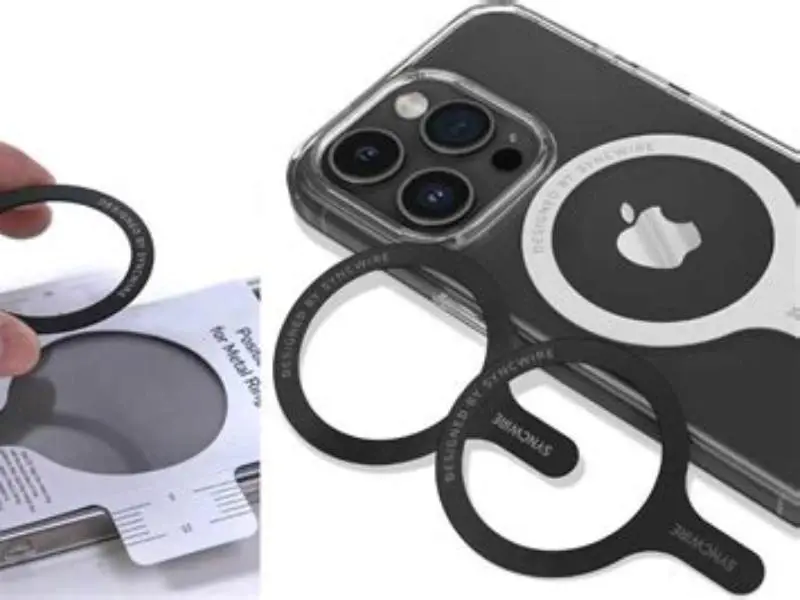
Many MagSafe-style magnetic ring stickers do work with Android phones for holding and mounting. Android phones usually lack the iPhone magnet array and the MagSafe protocol, so the ring must provide physical hold by itself.
Pull-force numbers you see in listings typically come from the manufacturer lab test or from independent reviewers who report the tested force. Treat those numbers as starting points. Some manufacturers publish a pull force in kilograms or Newtons; other sellers do not. I state recommended ranges below as estimates derived from published specs and reviewed user tests rather than universal guarantees.
Phone model and case material affect hold. A metal back or a case with a metal plate helps the ring cling. Plastic, glass, and textured surfaces give weaker contact. Case thickness also matters. Thicker materials increase the separation between the magnet and the mount and usually reduce holding force. I consolidate that case-thickness guidance in one place so you see it clearly.
Magnetic ring stickers do not make an Android phone a true MagSafe charger. MagSafe charging needs aligned magnets and a proprietary communication handshake built into iPhone hardware. Expect normal Qi charging if your Android supports it, sometimes with a small efficiency loss. We go through magnetic phone case with belt clip for android step by step elsewhere on the site.
Test any ring on your own phone and case before using it for active tasks like bike rides. Manufacturer specs and user reviews help narrow choices, but your setup and mount determine real-world reliability.
SleekStrip Mag Ring MagSafe Magnetic Ring Adapter for iPhone Android Kindle
Has a strong N52 magnet grade which implies a strong magnetic pull force above 0.5 kg for active use.
How much pull force should you expect and where those numbers come from
Manufacturers sometimes list pull force as a single number in kilograms or Newtons. Independent reviewers also test hold with scales. Those sources are the basis for the pull-force ranges I use here. Where I give a number I mean an estimate based on those specs and user reports, not an absolute guarantee for every phone.
A common rule-of-thumb reported in product specs and review writeups is that rings rated around 0.5 kg (about 5 newtons) give a useful, but light, hold for casual mounting. Rings rated 0.6 kg and above are often described in reviews as holding better for movement and light bumps. Vendors that publish larger values, such as 0.8–1.0 kg, are positioned for heavier-duty mounts. Treat the range as guidance only. Your mileage will vary by phone, case and mount. For the detail, see our notes on adding MagSafe for stable mounting.
Cite examples. Manufacturer spec pages and tech review sites commonly show these measures. Look for lab-test writeups on sites such as Android Authority, The Verge and dedicated accessory reviewers on YouTube. Those sources show how the same ring performs when attached to different cases. If you need a direct test for a specific ring, check the product spec page or a hands-on review that shows pull-force measurements.
If a listing gives no pull-force number, rely on user reviews that mention holding while walking, running, or riding a bike. Practical user reports are often the only available data for lower-cost rings.
- Where numbers come from: manufacturer lab specs and independent reviewer tests
- Use published pull force as a baseline, then test with your phone and case
- Expect variation by phone model, case material, mount design
Case thickness and hold strength: consolidated guidance
Thicker materials between the magnet and the mount weaken the magnetic force. That effect shows up in lab tests and in user reports. I avoid giving a specific percentage drop because the impact depends on magnet grade, ring diameter, and mount geometry. Instead, use this practical guidance. Before you commit to anything, it is worth looking at pixel 10 magsafe puck pull strength.
If your case is thin and flat, the ring will reach closer to the mount and hold better. Cases defined as thin in accessory listings often measure under 1.5 mm. Those cases let most thin rings behave close to their published pull force.
If your case is medium-thick, roughly 1.5 to 2.0 mm, expect a noticeable reduction in hold compared with the published number. Reviews and tests of rings on medium-thick cases report less margin for active use. If you plan to ride a bike or do vigorous workouts, consider a stronger ring or a case designed with magnet compatibility.
If your case is thick or rugged, over about 2.0 mm, the ring will usually lose much of its effective hold unless the case has a built-in metal plate or the accessory uses a very strong magnet and strong adhesive. For thick cases, rely on hands-on tests rather than spec sheets.
If you use a case with a built-in metal plate or a purpose-made magnetic case, that often restores or improves hold compared with a plain thick case.
Learn which magnetic ring stickers actually hold Android phones firmly for gym mounts and daily use, beyond vague claims.
How to measure pull force at home
You can measure pull force with simple, inexpensive tools. Use a small luggage scale or a handheld fish scale that reads in newtons or kilograms. Strap the scale to your mount and measure the force required to separate the phone from the mount in a controlled pull.
Steps to test pull force at home:
Attach the ring sticker to the phone or case and press down per the product instructions. Let adhesive cure if the maker recommends a waiting time.
Secure the mount to a rigid surface. Use a flat magnetic mount if your mount has a curved surface, as a flat mount gives a repeatable test.
Hook the scale to the phone in a way that pulls straight away from the mount surface. Pull steadily and note the reading when the phone separates. That reading approximates the perpendicular pull force.
Repeat the test a few times and on different surfaces or with the case swapped to see how the values change.
Take care when testing. Use a soft cloth to protect the phone and avoid jerky motions that can damage the device. These measurements approximate the perpendicular pull force. Real-world forces include sideways and vibrational loads that can lower practical holding ability.
- Tools: luggage or fish scale that reads in kg or N
- Mount: flat, rigid mount for repeatable tests
- Method: pull steadily perpendicular to mount and record peak reading
What to look for when choosing a ring sticker for Android
Select a neodymium-magnet ring when you want higher magnetic strength for a given size. Many vendors indicate the magnet grade (for example N35, N42, N52). Higher-grade magnets generate stronger fields for the same volume, but manufacturers may not always publish the grade.
Look for published pull-force specs if you plan active use. If a seller lists only vague claims, read verified buyer comments that mention bike or gym use.
Choose the thinnest ring that still lists a useful pull force for your needs. Thinner rings are less likely to interfere with Qi charging and fit under slim cases.
Prefer rings with strong, adhesive backing if you plan permanent attachment. Some rings use removable pads, which allow switching devices but usually reduce initial hold and long-term reliability.
Check whether the vendor claims Qi2 or Qi compatibility. A ring under about 1.5 mm is more likely to allow normal Qi charging on a supported phone. Confirm with the product page and a hands-on review if you need near-full Qi performance.
- Magnet: neodymium preferred
- Published pull force: useful for active use
- Thickness: thinner for charging and fit
- Adhesive: permanent for long-term use, removable for flexibility
Product brands and models to consider
Look first at established accessory brands that publish specs and have active user communities. Brands that make magnetic phone accessories and often publish detailed product pages include Baseus, Spigen, Anker, MOFT, PITAKA, and ESR. Those companies make magnetic rings, ring holders or adhesive magnet adapters with varied strength and thickness options.
Example product types to search for under those brands:
Baseus magnetic ring sticker or magnetic ring holder. Baseus frequently lists product dimensions and advertises neodymium magnets.
Spigen magnetic adapters and mounts. Spigen sells magnetic accessories that are built with phone protection in mind and often have clear specs and reviews.
MOFT Mag accessories. MOFT makes slim magnetic stands and adapters that focus on thin profiles and repeatable fit.
PITAKA MagEZ accessories. PITAKA designs magnetic cases and rings for compatibility and durable adhesives.
ESR HaloLock-style rings and adapters. ESR makes magnetic adapters geared toward Qi charging compatibility and clear dimension listings.
Anker and MagBak offer magnetic mounts and adapters from a brand with a wide retail presence and consistent accessory testing.
When searching, add words like 'magnetic ring sticker', 'adhesive magnetic ring', or 'magnetic adapter ring' plus the brand name. Read product pages for pull-force numbers and check full reviews that show tests on different cases.
- Brands to check: Baseus, Spigen, Anker, MOFT, PITAKA, ESR, MagBak
Which ring to pick for common needs
Daily carry and occasional mounts. Pick a thin ring that publishes a moderate pull force and advertises Qi compatibility. A ring around 0.5–0.7 kg by published spec often works for light use if your case is thin and flat.
Active use like cycling and workouts. Choose a stronger ring that lists higher pull force and a robust adhesive. Vendors that publish values near 0.8 kg or higher tend to be aimed at heavier demands. Confirm with your mount and case before relying on it for safety-critical uses.
Rugged cases. If your case is more than 2.0 mm thick, consider a case with a built-in metal plate, or pick a purpose-made magnetic case from the same accessory brand. That often beats adding a thin ring on top of a thick, flexible case.
Budget picks. Lower-cost rings can work for light, stationary mounts. Look for honest listings, many user reviews, and clear return policies so you can test and return if the ring underperforms.
| Role | Published pull-force guidance | Thickness guidance | Best for |
|---|---|---|---|
| Daily carry | ~0.5–0.7 kg reported in specs or reviews | Generally under ~1.5 mm | Light mounts and daily use |
| Active use | ~0.8 kg or higher reported | Often thicker; check fit | Bike mounts, workouts |
| Rugged case setups | Use ring plus metal plate or magnetic case | Total stack often >2 mm | Thick or protective cases |
FAQ
Will a MagSafe ring sticker damage my Android phone?
Magnets in modern ring stickers generally do not damage phones. Keep them away from magnetic media such as old credit cards or hard drives. Follow the accessory maker's guidance.
Can I use a magnetic ring sticker with a thick phone case?
Thick cases usually weaken magnetic hold. Either use a case with a built-in metal plate or test a stronger ring designed for thicker stacks before relying on it.
Does the magnetic ring sticker interfere with NFC on Android?
Interference is possible if the ring sits over the NFC antenna. Many stickers avoid common antenna locations, but results vary. Test NFC functions after installation.
How do I check pull force before buying?
Look for published pull-force numbers on the product page. If none exist, read verified user reviews and hands-on tests. If you need a precise value, plan to measure with a luggage or fish scale after you receive the item.