Which motorcycle phone mount reduces vibration enough for smooth rides

Aim for a mount that cuts the vibration your handlebar sends to the phone enough that the phone’s peak acceleration and dominant frequencies are below the device’s tolerance. Use measured data from your bike and a mount whose claimed or tested vibration reduction matches that data. Check manufacturer specs, independent tests, or measure before and after with an accelerometer app.
On this page (9 sections)
- Fit check
- Remember this
- How vibration dampeners reduce what matters for phones
- What vibration levels your bike actually produces
- Why some mounts don’t protect phones
- Which types of mount designs reduce vibration best
- What to look for in specifications and test data
- How to measure vibration frequency and amplitude on your bike
- FAQ
Part of our guide on best mounts for running with phone

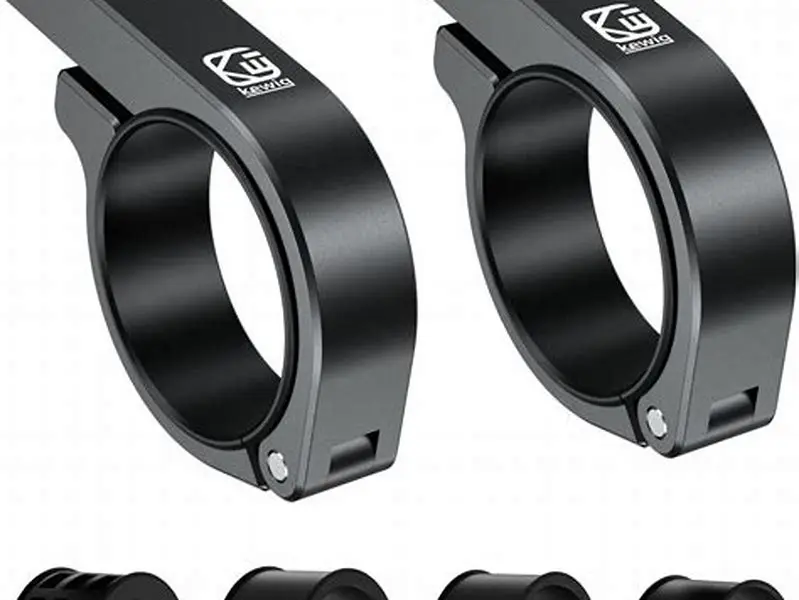
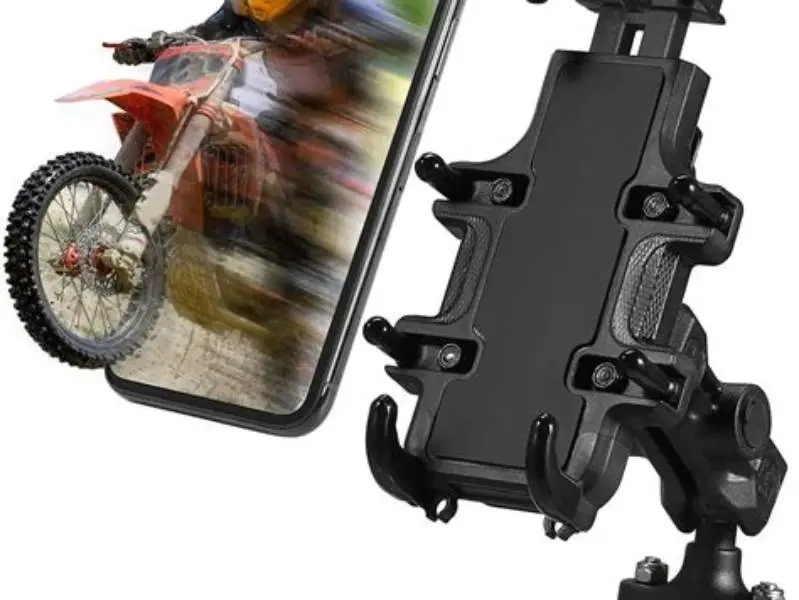
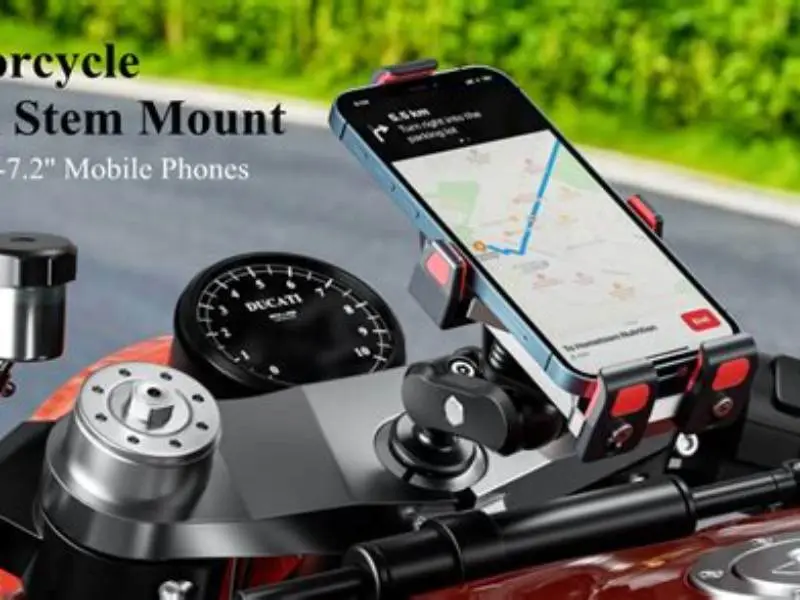
Tackform Chrome Motorcycle All Metal Phone Mount
Handles vibration with spring-elastomer isolator and replaceable parts as stated in description.
Check it on Amazon
Kinizuxi Motorcycle Phone Mount Tether 6 Pack Silicone Bands
Silicone bands included but no durometer or frequency band specification
See the budget option
Rokform Motorcycle Phone Mount Vibration Dampener (Black)
No vibration reduction data or isolator material published to verify performance.
Check the specs on Amazon| Product | Vibration reduction measured at the phone | Verdict | |
|---|---|---|---|
| Tackform Chrome Motorcycle All Metal Phone Mount Tackform | Spring cradle with internal compression springs and steel pins for vibration dampening | Meets it | View on Amazon |
| Kinizuxi Motorcycle Phone Mount Tether 6 Pack Silicone Bands for Bike Kinizuxi | Silicone bands included but no durometer or frequency band specification | No rating published | View on Amazon |
| Rokform Motorcycle Phone Mount Vibration Dampener (Black) Rokform | No vibration reduction or test data published | Not published | View on Amazon |
| NLAIOUSL Module for Bike Motorcycle Phone Mount Anti-Vibration Damper NLAIOUSL | No vibration reduction or test data published | Not published | View on Amazon |
Fast facts
- Typical motorcycle handlebar vibration
- Varies widely. Measure for your bike; common dominant bands fall between about 10 and 80 Hz.
- What to measure
- Peak acceleration (g) and dominant frequency (Hz) at the phone mounting point.
- Good mount features
- Rubber/silicone isolators, spring-elastomer systems, replaceable dampers.
- What to avoid
- Metal clamp only or rigid plastic mounts without isolators.
- Tools for measuring
- Smartphone apps (Phyphox, Sensor Kinetics) or a dedicated accelerometer/data logger.
Remember this
- Measure your bike’s handlebar vibration first. Don’t assume a single number fits every motorcycle.
- Compare the mount’s claimed vibration reduction to your measured peaks and dominant frequencies.
- Prefer mounts with dedicated rubber, silicone, or spring-based isolators and replaceable dampers.
- Avoid metal-only clamps or rigid plastic mounts for high-vibration bikes.
- Verify claims with data: product datasheets, independent tests, or your own before/after measurements.
How vibration dampeners reduce what matters for phones
Motorcycle handlebars carry vibration from the engine and road to the phone. That vibration has two measurable parts: peak acceleration (reported in g) and frequency content (Hz). Both matter. The phone reacts differently to low-frequency shocks than to high-frequency buzz.
Dampeners work by interrupting the path of energy. Rubber and silicone compress and dissipate energy. Springs or elastomers tune the mount’s response so it does not resonate at the bike’s dominant frequencies. The result: lower peak acceleration at the phone and reduced energy in harmful frequency bands.
Mount design matters. A small soft pad alone can help at very high frequencies but may compress fully on a large bump and stop protecting the phone. A dual-stage system with a spring or firm elastomer under a softer layer handles both engine buzz and road shocks better.
Materials age differently. Natural rubber can harden and crack with heat and UV exposure, lowering performance. Silicone and engineered elastomers resist aging better. Look for mounts with replaceable dampening parts so you can restore performance after a few seasons. If that sounds like your situation, read up on phone mounts fitting crash bar clamps next.
Don’t assume a single vibration figure applies to all phones. Phone manufacturers test devices to vibration and shock standards. Mounts need to reduce the vibration transmitted to the phone to within levels the phone can survive. That requires either test data from the mount maker or your own before/after measurements.
What vibration levels your bike actually produces
Handlebar vibration varies with engine type, RPM, road surface, tires, and mounting hardware. Single-cylinder engines typically show stronger, sharper peaks at certain RPMs. Inline-four engines usually present higher-frequency, lower-amplitude vibration.
Rather than rely on a single g number, record both peak acceleration and the frequency spectrum. Typical dominant bands for motorcycles fall roughly in tens of hertz. You will often see engine-order peaks and road-induced broadband energy between about 10 Hz and 80 Hz, but exact values depend on the bike. There is more on vibration damping ball-and-socket mount for spin bike in a separate guide.
Some published vibration studies and engineering tests use standard laboratory methods to report vibration levels. Standards such as IEC 60068-2-6 describe vibration test methods used for electronic components. Those standards define test conditions rather than a single safe threshold for all phones. In practice, phone manufacturers perform vibration and shock testing under specific test procedures and publish pass/fail criteria for their devices.
Aftermarket bar weights, handlebar-mounted steering dampers, and different grips change the vibration spectrum. They can lower certain peaks but they rarely remove all harmful vibration at the phone mounting point. That is why you need a mount designed to isolate the remaining energy.
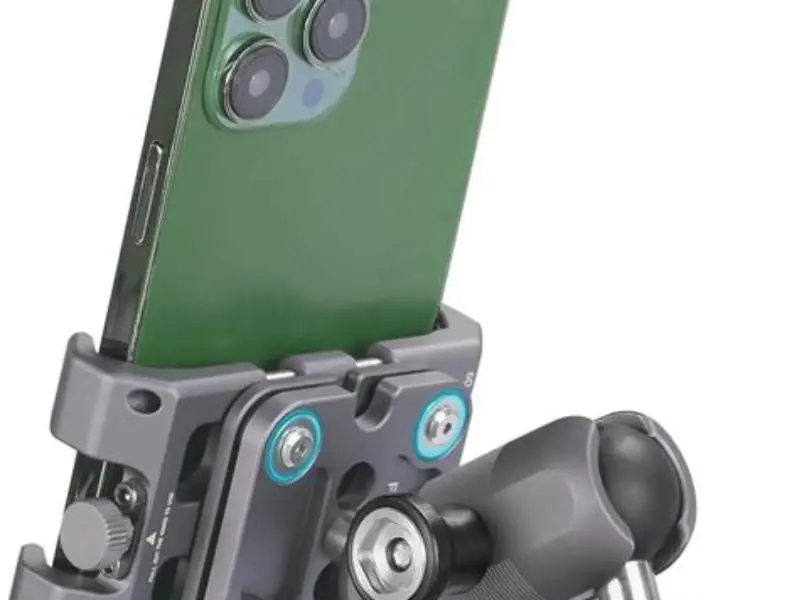
Tackform Chrome Motorcycle All Metal Phone Mount
Handles vibration with spring-elastomer isolator and replaceable parts as stated in description.
- Size 1-1/4" to 1-1/2"
Why some mounts don’t protect phones
Rigid mounts transfer acceleration directly. If the mount clamps the phone body to a stiff metal bracket, the phone sees nearly the same acceleration as the handlebar. That accelerates wear on camera modules, connectors, and battery. People in this spot often ask about best mounts for motorcycle fork stem as well.
Thin foam or pads without a tuned isolation stage compress fully on larger shocks. Once compressed, they transmit the remaining motion efficiently to the phone. The mount effectively stops being a dampener during hard bumps.
Poor installation makes any mount worse. Over-tightening on clamps can pre-compress isolators and remove their effectiveness. Under-tightening lets the mount move and creates micro-impacts that increase peak acceleration at the phone.
Cheap plastic adapters and UV-damaged parts crack and then fail suddenly. Regular inspection and replacing worn parts matters as much as choosing the right design.
Kinizuxi Motorcycle Phone Mount Tether 6 Pack Silicone Bands for Bike
Silicone bands included but no durometer or frequency band specification
- Weight 1.2 oz
Measure your vibration. Buy a mount that documents how much it reduces the vibration you measured.
Which types of mount designs reduce vibration best
Two-stage isolation systems that combine a soft outer layer with a firmer spring or elastomer stage handle both high-frequency buzz and low-frequency shocks. These systems reduce both peak g and the energy in dominant frequency bands.
High-quality silicone or engineered elastomer isolators that list a durometer give clues about performance. Expect softer materials (lower Shore A) to absorb higher-frequency energy better. Firmer materials and springs handle larger shocks without bottoming out.
Metal frames with isolated inserts balance strength and isolation. The frame keeps the phone secure, while the inserts interrupt vibration transmission.
Spring-based mounts can be tuned to avoid resonance near common motorcycle frequencies. That tuning reduces amplification at those speeds compared with untuned passive rubber alone.
Gel or foam pads give short-term cushioning but usually degrade sooner and can compress permanently. Choose them only when they’re part of a staged isolation system.
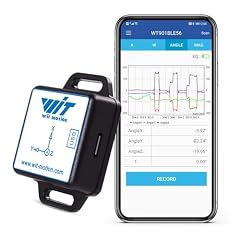
[Bluetooth 5.0 Accelerometer+Inclinometer] WT901BLECL MPU9250 High-Precision
Provides a Bluetooth 5.0 accelerometer and inclinometer sensor for vibration measurement before and after mount installation.
What to look for in specifications and test data
Look for manufacturer datasheets that state vibration-reduction percentage, test conditions, and the frequency band used for the test. A claim like “reduces vibration” without numbers or test method is not useful.
Prefer mounts with independent test reports or measurements showing before-and-after peak acceleration and frequency spectra. Independent testers usually show raw accelerometer traces or FFT plots.
If a mount lists a vibration reduction percentage, read the small print. Reduction percent often applies to a particular frequency band and test amplitude. A 70% reduction at 30 Hz does not guarantee a 70% reduction at 10 Hz or 60 Hz.
Check whether the company publishes the test set-up. Useful details include where the accelerometer was mounted, how the phone was attached during the test, the sample rate, and whether the test was on a real motorcycle or a shaker table.
If you can find only manufacturer claims, prefer vendors that provide replaceable dampers or offer a return policy that lets you test the mount on your bike and return it if it fails.
How to measure vibration frequency and amplitude on your bike
Use either a smartphone app with a reliable accelerometer or a dedicated accelerometer/data logger. Recommended smartphone apps include Phyphox (phyphox.org) and Sensor Kinetics (Android). These let you record time-series acceleration and export data for analysis.
Mount the sensor at the same point the phone will be mounted. Use a rigid temporary clamp or double-sided tape to avoid adding extra damping. Record at the highest available sample rate (at least 200 samples per second if possible) so you capture frequency content up to 100 Hz cleanly.
Record a few minutes of riding at the speeds and conditions you normally use. Include idle, cruising, and any higher-RPM situations you expect to encounter. Label each run with speed and RPM if you can.
Export the time-series data and run a fast Fourier transform (FFT) in a simple tool such as Audacity, MATLAB, Python (numpy.fft), or the built-in FFT in some apps. The FFT shows dominant frequencies. Note the largest peaks and their frequencies.
Calculate peak acceleration by inspecting the time-series data and finding the maximum absolute acceleration. Many apps report peak g directly. If not, convert acceleration in m/s^2 to g by dividing by 9.81.
To test a mount, record baseline data with your sensor directly attached to the bare handlebar or a simple test plate. Then mount the phone in the mount and record again in the same conditions. Compare peak acceleration and FFT energy in the dominant bands. That gives you real before-and-after numbers.
Simple example. Suppose the handlebar peak is 30 g and the mount reduces peak acceleration at the phone to 12 g. The mount’s peak reduction is (30 - 12)/30 = 60%. Also inspect the FFT: if the mount shifts energy away from a 25 Hz spike, the camera and sensor systems are less likely to see resonant excitation.
FAQ
How can I measure my motorcycle’s handlebar vibration?
Use a smartphone app like Phyphox or Sensor Kinetics mounted where the phone will sit. Record at normal riding speeds and export the data. Find peak acceleration from the time-series and dominant frequencies with an FFT.
Are there published standards for vibration testing?
Yes. Electronic devices and components are often tested to lab standards such as IEC 60068-2-6 for vibration. These standards describe test methods and conditions but do not set a single safe g-value for all phones. Check phone or component manufacturer test results for device-specific tolerances.
Do magnetic mounts help with vibration?
Magnetic mounts rarely provide isolation. They secure the phone but usually do not interrupt vibration paths, so they do not lower peak acceleration significantly unless they include a dedicated isolator stage.
Will handlebar weights protect my phone?
Handlebar weights can change the handlebar’s resonance and reduce some peaks. They do not replace a purpose-built isolating mount because they change the source vibration rather than interrupting transmission to the phone.
What if my bike has very high vibration for off-road use?
Measure first. For high-peak scenarios, look for two-stage or spring-elastomer mounts with published test data showing high reduction across the actual dominant frequencies you measured. Replaceable parts matter under heavy use.