Which collapsible bottle pocket fits a 6.1-inch phone and holds it steady

Rather than a single invented dimension, use a measurement rule: measure your phone with its case, then choose a bottle pocket whose internal width is at least 0.2–0.4 inches larger and internal height is at least 0.4–0.6 inches taller than your measured phone. Prefer pockets with elastic plus a flap (Velcro or zipper) or a reinforced lip for active use.
On this page (9 sections)
- Remember this
- Exact phone size fit for the pocket
- Why the pocket’s closure and fabric matter
- Differentiating phones with cases vs without cases
- How to interpret product listings and what to ask sellers
- Which collapsible bottle pocket fits a 6.1-inch phone well (practical guidance)
- Good alternatives and when to choose them
- How to check your fit and hold before buying
- FAQ
Part of our guide on scratch-free magnetic gym pouch
Fast facts
- Pocket sizing rule (width)
- Phone width + 0.2–0.4 in (5–10 mm) clearance
- Pocket sizing rule (height)
- Phone height + 0.4–0.6 in (10–15 mm) clearance
- Recommended closure
- Elastic plus Velcro or zipper for active gym use
- Test method
- Insert phone (with case) and simulate movement to confirm stability
- Why measure
- Phone screen diagonal (6.1") does not indicate physical width/height/case thickness
Remember this
- Measure your phone with the case before checking pocket specs: manufacturer screen size (6.1") does not equal physical dimensions.
- Allow 0.2–0.4 in extra width clearance and 0.4–0.6 in extra height clearance for cases and easy insertion/removal.
- Elastic-lined pockets grip well; add a Velcro or zip flap for the most reliable hold during vigorous movement.
- If you can't measure a product pocket internally, look for pockets described as fitting the exact external phone dimensions plus a stated case allowance or listed internal pocket sizes.
- Test the fit in-store or simulate your activity (jogging in place, arm swings) to check stability before trusting a pocket for workouts.
Exact phone size fit for the pocket
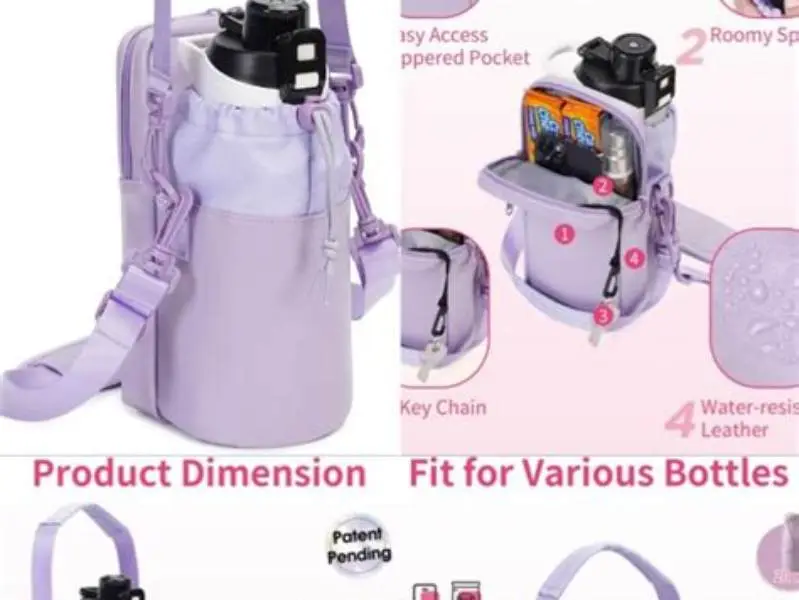
Screen diagonal (for example, “6.1-inch”) is a marketing number describing screen size, not the overall physical phone dimensions or case thickness. To pick a pocket that will actually hold your phone, measure the phone’s maximum external width and height with its case on: this is the value the pocket must accommodate.
Typical 6.1" phones (examples and listed specs): Apple iPhone 13/14/15: overall dimensions roughly 71.5–71.6 mm wide × 146.7–147.6 mm tall (about 2.8–2.82 in by 5.78–5.81 in) depending on model; Samsung Galaxy S21 (one 6.2" example close to 6.1") is about 71.2 mm × 151.7 mm (2.80 in × 5.97 in). These manufacturer specs are the source of exact physical dimensions (see manufacturer tech-spec pages). Use the exact model spec for your phone if available.
Because cases add thickness and sometimes a few millimetres to width and height, add the case thickness when measuring. Rugged or wallet cases can add 3–10 mm (0.12–0.40 in) to each dimension. That’s why a simple rule-of-thumb is safer than quoting a single pocket size: aim for internal pocket width = phone width + 0.2–0.4 in (5–10 mm), and internal pocket height = phone height + 0.4–0.6 in (10–15 mm). The larger height allowance accounts for the phone seating deeper and needing a secure lip above the screen so it can’t slide out during motion.
How to measure your phone with case: lay the phone flat and measure the maximum width (left-to-right) and maximum height (top-to-bottom) including any button bulges or camera bump that could catch on a seam. If you have only the phone and no case, estimate case thickness for the type you use (slim: ~1–2 mm; moderate: ~2–4 mm; rugged: 4–10 mm) and add that to both width and height. People in this spot often ask about finding magnetic bottle sleeves as well.
Why the pocket’s closure and fabric matter
Pocket internal dimensions alone do not guarantee a secure fit: closure type and fabric tension determine how well the pocket grips the phone during dynamic movement.
Elastic-lined pockets: elastic around the pocket opening reduces lateral movement by compressing around phone edges. Elastic is common and works well for moderate activity, but it must be rated for repeated stretch (look for “elastic-lined” or “stretch gusset” in product descriptions).
Velcro or zip flaps: a Velcro or zip flap secures the phone vertically (prevents top-out) and adds security if the bottle tips or experiences sudden impact. For gym use or running, a flap reduces the chance of accidental ejection more than elastic alone. If that sounds like your situation, read up on bags with external bottle pockets next.
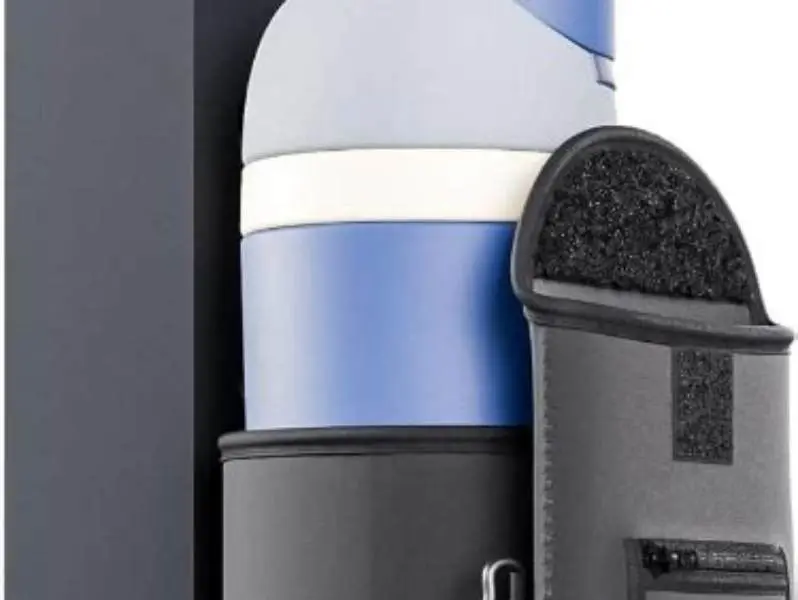
Reinforced lips and semi-rigid inserts: pockets with a sewn-in lip, bonded reinforcement, or a semi-rigid insert (often described as “reinforced phone pocket” or “structured sleeve”) maintain shape and prevent sag, improving stability. Neoprene-lining adds cushion and friction to reduce sliding.
When product descriptions claim a pocket “fits phones up to X inches,” prefer those that show internal pocket measurements in mm/in or state the maximum phone model names they accommodate (for example, “fits iPhone 13/14/15 sized phones with slim cases”). If a product listing has only marketing language, measure or contact the seller for internal pocket dimensions.
Differentiating phones with cases vs without cases
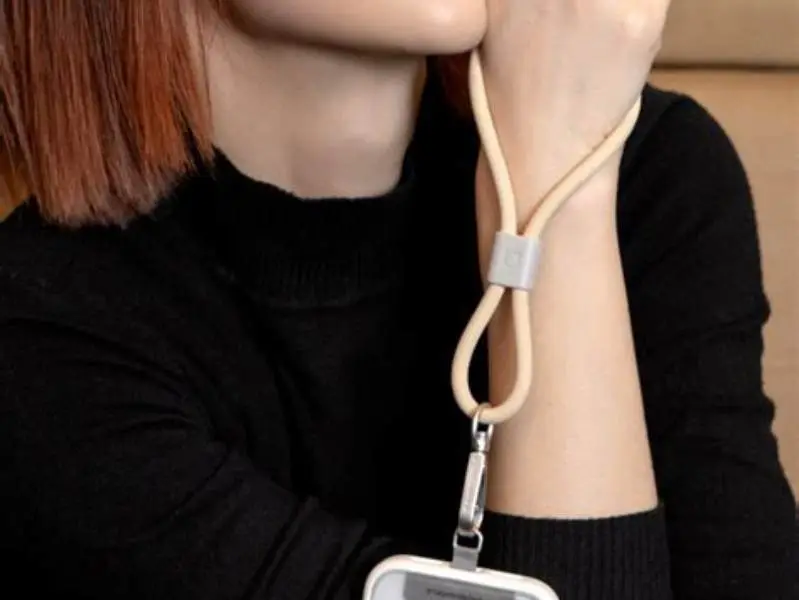
A pocket that perfectly fits a bare phone will often be too tight with even a thin case. Conversely, a pocket described as fitting a phone model may assume either bare-phone dimensions or a standard thin case: manufacturers rarely specify which. Therefore, always measure with the case you plan to use. People in this spot often ask about wrist lanyard with phone pocket for festivals as well.
Typical case impact: slim TPU/silicone cases add 1–2 mm per side (0.04–0.08 in), moderate protective cases add 2–4 mm per side (0.08–0.16 in), and heavy-duty/multi-layer cases can add 5–10 mm per side (0.2–0.4 in). When adding to width and height, add the full extra thickness where it affects the pocket’s opening and how the phone seats: for width, add twice the side thickness if the case adds to both sides; for height, account for any raised bezels or camera bump that might catch on the pocket seam.
Example: if your bare phone is 2.80 in wide and 5.80 in tall, and your slim case adds 0.06 in to the width and 0.04 in to the height, target a pocket internal width of 2.92–3.04 in and a height of 6.20–6.44 in using the clearance rules above. If your case is rugged and adds 0.25 in to width and 0.20 in to height, target a pocket width of 3.20–3.40 in and height of 6.40–6.80 in.
If a vendor states “fits 6.1-inch phones” without further detail, treat it as ambiguous: measurements and case assumptions may differ. When buying online, check images for sewn-in dimensions or ask the seller to confirm internal pocket measurements.
Measure your phone (with case), compare to internal pocket dimensions, and choose elastic + flap or reinforced pockets for secure carrying of 6.1" phones during workouts.
How to interpret product listings and what to ask sellers
Product listings vary in how they present pocket size. Some give internal pocket dimensions (ideal), some list compatible phone models (helpful when specific models are listed), and others say “fits up to X inches” (ambiguous). Prioritize listings that provide internal pocket width × height in millimetres or inches.
Questions to ask a seller or manufacturer when specs aren’t clear:
- What are the internal pocket width and height (in mm or inches)?
- Does that measurement include any lining or reinforcement thickness, or is it usable internal space?
- Is the pocket elastic? Is there a flap (Velcro/zip) or reinforced lip?
- Has the pocket been tested with common phone+case combinations (ask for examples)?
If the seller can’t provide internal dimensions, look for items marketed as having a structured phone sleeve or a dedicated phone pocket with stated internal sizes. Otherwise, prefer retail listings where you can test in person and return if it doesn’t fit.
Which collapsible bottle pocket fits a 6.1-inch phone well (practical guidance)
Bottom line practical guidance for choosing pockets that will reliably carry a 6.1" phone during activity:
1) Measure phone + case. 2) Target internal pocket size: width = phone width + 0.2–0.4 in, height = phone height + 0.4–0.6 in. 3) Prefer elastic + flap/zip or reinforced lip; neoprene or structured sleeves improve grip.
Many collapsible bottles with external sleeves use a small accessory pocket intended for keys/cards rather than phones: do not assume a “pocket” means phone-compatible. If a pocket is called a “phone pocket,” confirm internal dims or listed model compatibility.
If you need a definitive numeric example for shopping: for a phone whose measured size is about 2.8 in by 5.8 in, target an internal pocket around 3.1–3.2 in wide and 6.2–6.4 in tall (this fits slim to moderate cases). For heavier cases, add the case mm and shift the target accordingly.
If you cannot verify dimensions, consider alternatives: a collapsible bottle sold with a removable neoprene sleeve (often sold as “bottle sleeve”) - these sleeves are sometimes offered separately with stated internal dimensions. Retail pages for sleeves sometimes list compatible phone models and internal pocket sizes; when buying bottle + sleeve as a system, these sleeve specs are the most reliable indicator.
| Case type | Approx. added width per side | Target pocket internal width (if bare phone ≈2.8 in) | Target pocket internal height (if bare phone ≈5.8 in) |
|---|---|---|---|
| No case/slim sleeve | 0–1 mm | ≈3.0–3.1 in | ≈6.15–6.3 in |
| Moderate case | 1–2.5 mm | ≈3.1–3.25 in | ≈6.25–6.45 in |
| Rugged/large case | 4–10 mm | ≈3.3–3.6 in | ≈6.4–6.8 in |
Good alternatives and when to choose them
If you frequently use bulky cases or carry cards/keys with the phone, choose a pocket with zipper/Velcro and reinforced fabric or a dedicated armband or belt instead. For runners who want minimal weight, a stretchy mesh pocket may be acceptable but expect more movement.
If your priority is guaranteed security and you cannot verify pocket dimensions, choose a rigid bottle holster or an armband designed for phones: these products usually publish exact internal dimensions and case compatibility.
If you find a collapsible bottle with a removable sleeve where the sleeve manufacturer publishes internal pocket dimensions, that sleeve spec is the most useful verification for fit.
- Measurement-based selection reduces surprises
- Closure and reinforcement choices let you tune security vs convenience
- Removable sleeves with published dimensions are easiest to verify
- Many online listings omit internal pocket sizes
- Marketing “fits 6.1-inch phone” statements can be inconsistent
- Bulky cases rapidly change the pocket required size
How to check your fit and hold before buying
A short checklist before purchase or after receiving the bottle:
1) Measure your phone with case in mm and inches.
2) Confirm the pocket’s internal width and height from the product listing or seller: if unavailable, ask.
3) Ensure the pocket has at least the recommended clearance (width +0.2–0.4 in, height +0.4–0.6 in).
4) Prefer elastic lining plus a flap or zipper for active use; neoprene/structured sleeves increase stability.
5) If you can test in person, insert the phone with the case and simulate the activity you expect (arm swings, light jogging, setting the bottle down and picking it up). If phone moves, ask for a different product or return it.
Document the measurements and seller answers in case you need to return the product.
- Measure phone with case
- Confirm pocket internal dimensions
- Check closure and materials
- Test fit physically or return if inadequate
Do not rely on a single advertised 'fits 6.1-inch phone' phrase. Measure your phone with the case and select a collapsible bottle pocket sized to phone+case with at least 0.2–0.4 in width clearance and 0.4–0.6 in height clearance; prefer elastic + Velcro/zip or reinforced lips for active use.
FAQ
Will a 6.1-inch phone with a bulky case fit in these bottle pockets?
Only if the pocket’s internal dimensions include the additional case thickness. Measure your phone + case and compare to the pocket internal size; for bulky cases you will generally need an extra 0.2–0.6 in in both width and height depending on case type.
Can the phone fall out if the bottle falls over during a gym workout?
A pocket with elastic only can let the phone move or tip out if the bottle falls; adding a Velcro or zip flap or a reinforced lip greatly reduces that risk. Seek product descriptions that explicitly state a flap or closure type, or test the pocket in person.
Are mesh pockets on collapsible bottles reliable for holding phones?
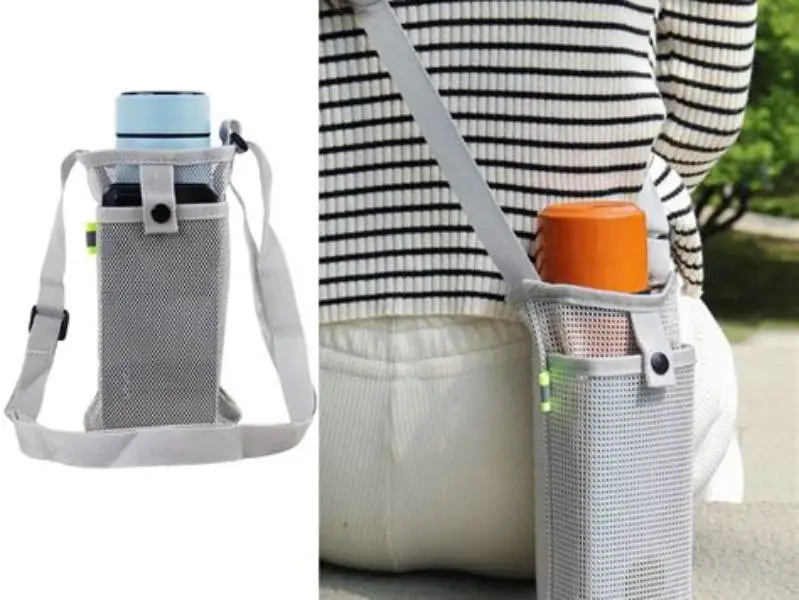
Mesh pockets stretch and can sag over time; they may be acceptable for short, low-intensity activities but are less reliable than elastic-lined or structured pockets for rigorous gym movement.
Do these pockets work for phones larger than 6.1 inches?
Possibly, if the pocket internal size meets the phone + case measurements. Many collapsible bottle pockets are sized for compact phones; larger phones often require larger pockets or different carrying solutions.