How many 500ml bottles a day, and which bottle size hits it

Most adults land on 2-2.5L a day, plus 0.5-1L for a hard training session. For a 70kg person that's 4-5 of 500ml bottles, or 3 of 750ml, or 2-3 of a 1L bottle. Check it with urine colour.
On this page (9 sections)
- Remember this
- How many water bottles a day your body weight sets
- Training sweat: the extra line item nobody counts
- 500ml, 750ml and 1L bottles against a 2L, 2.5L or 3L target
- Why eight glasses a day is the wrong yardstick
- Urine colour and thirst as your daily check
- Is two bottles a day enough
- Which bottle size wins, and what it adds to your bag
- FAQ
Part of our guide on scratch-free magnetic gym pouch
Fast facts
- Baseline per kg
- 30-35 ml of water
- 70kg daily baseline
- 2.1-2.45 L
- Hard 60-90min session
- 0.6-1.5 L of sweat
- 2L in 500ml bottles
- 4 bottles
- 2.5L in 750ml bottles
- 3 bottles plus a third
- Target urine colour
- pale straw
- 1L bottle carried weight
- 1 kg
Remember this
- Baseline equals body weight in kg multiplied by 30-35 ml of water.
- Add roughly 0.5-1.5 L for a hard hour of training or a hot ride.
- Two 1L bottles hit 2L; two 500ml bottles rarely cover an adult.
- Urine colour is the daily check you can repeat; thirst lags behind.
- The 750ml bottle is the compromise: fewer refills, still fits a gym bag pocket.
How many water bottles a day your body weight sets
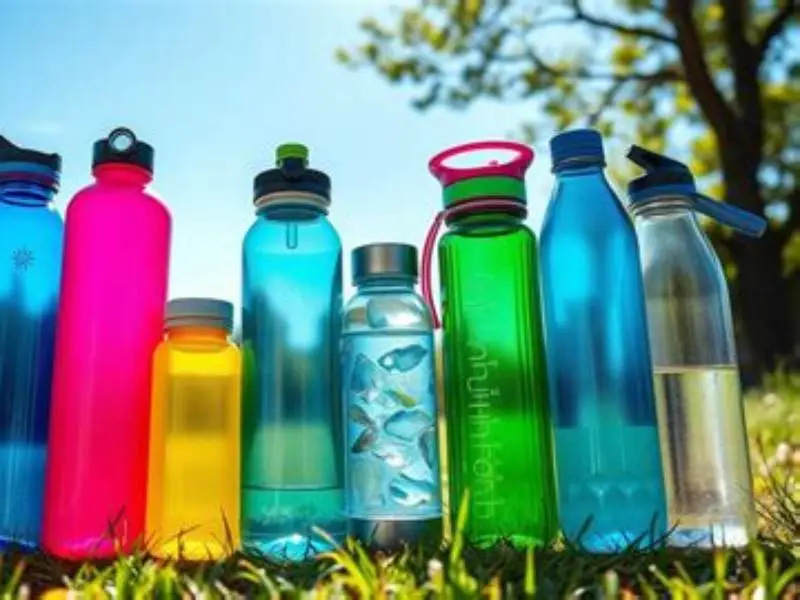
Start with a number instead of a rule of thumb. Multiply your body weight in kilograms by 30 to 35 millilitres and you get a baseline in litres. A 70kg adult lands on 2.1 to 2.45 litres before a drop of sweat. A 60kg person sits at 1.8 to 2.1. An 85kg lifter sits at 2.55 to just under 3.
The range is not padding. The lower end suits cool days and light activity. The upper end suits heat, humidity and a body that runs hot. Pick a starting point inside the range, then adjust it with the two checks further down the page: urine colour and thirst.
Convert litres into the bottle you actually own and the answer becomes concrete. Two litres is four 500ml bottles, or two full 1L bottles. Two and a half litres is five 500ml bottles, or three 750ml bottles and a third of a fourth, or two 1L bottles and a half. Three litres is six 500ml bottles, four 750ml bottles, or three 1L bottles.
So a 70kg person asking how many water bottles a day is looking at four to five 500ml bottles on an ordinary day, and five to seven once training goes in the mix. The same person with a 750ml bottle needs three to four. The same person with a 1L bottle needs two and a bit, or three. Before you commit to anything, it is worth looking at how much water in a nalgene bottle.
- 60kg body weight: 1.8-2.1L baseline
- 70kg body weight: 2.1-2.45L baseline
- 80kg body weight: 2.4-2.8L baseline
- 90kg body weight: 2.7-3.15L baseline
Training sweat: the extra line item nobody counts
Sweat is the reason the bottle count on a training day beats the number on a rest day. A hard 60 to 90 minute session can cost 0.6 to 1.5 litres of fluid. In a hot room or on a summer ride, the top of that range is routine. A gentle 30 minute walk costs a fraction of a litre, and a heavy lift session costs more than it looks because of the heat generated under the bar.
You do not have to guess. Weight yourself before and after, which turns the session into arithmetic you can repeat. A set of digital scales that reads to the nearest 100g is enough for this, and the same scales already sit in most kitchens.
Watch for the trap in the reading. A wet shirt and a soaked towel count as sweat on the scale, but a bottle you drank from during the session also adds weight. Subtract what you drank. The difference between the two weigh-ins is your sweat loss, and it becomes the number you add to your daily baseline. Before you commit to anything, it is worth looking at what is a sports top water bottle.
- Weigh yourself before training, dry, in the same clothes.
- Record every drink you take during the session.
- Weigh yourself again afterwards, keeping the towel count in mind.
- Take the difference, subtract the fluid you drank, and read the result as litres of sweat.
500ml, 750ml and 1L bottles against a 2L, 2.5L or 3L target
Here is the conversion most people are looking for. The counts below assume you drink every bottle you fill, and that partial bottles count as the fraction they represent.
Two litres costs four 500ml bottles, three 750ml bottles with the last one three-quarters empty, or two full 1L bottles. Two and a half litres costs five 500ml bottles, three 750ml bottles plus250ml in a fourth, or two 1L bottles and 500ml in a third. Three litres costs six 500ml bottles, four 750ml bottles, or three 1L bottles.
Partial bottles are where the count slips. A 750ml bottle at 250ml left still counts as a bottle you carried, washed and refilled, but it only counts for a third of a litre of water. If you hate half-empty bottles, a 500ml or 1L size removes the guesswork entirely. People in this spot often ask about what material is best for a water bottle as well.
| Daily target | 500ml bottle | 750ml bottle | 1L bottle |
|---|---|---|---|
| 2.0 L | 4 bottles | 2 full + 250ml in a third | 2 bottles |
| 2.5 L | 5 bottles | 3 full + 250ml in a fourth | 2 full + 500ml in a third |
| 3.0 L | 6 bottles | 4 bottles | 3 bottles |
| 2.5L with 1L training sweat | 7 bottles | 4 full + 250ml in a fifth | 3 full + 500ml in a fourth |
A 70kg person training an hour can lose over a litre of sweat, which is why two 500ml bottles leave them short.
Why eight glasses a day is the wrong yardstick
Eight glasses of water a day is a fixed volume, not a plan. Eight250ml glasses comes to 2 litres for everybody, whether they weigh 55kg or 95kg, whether they sit at a desk or run a half marathon in July.
The idea has one useful feature and two flaws. The useful feature is that it turns an abstract goal into a countable one. The flaws are that it ignores sweat, and that it counts glasses rather than the container you actually carry. Someone with a 500ml bottle drinking eight250ml glasses is doing six-and-a-bit refills to reach 2 litres, which is fine arithmetic but a pointless shape.
Weight and activity are the variables that matter. Fix your litres from those, then count whatever your bottle holds. The number of refills is a logistics question, not a health question.
- Easy to remember without weighing anything
- Works for a low-activity day in mild weather
- Fixed 2L ignores body weight
- Counts glasses, not the bottle you carry
- No line item for sweat lost in training
Urine colour and thirst as your daily check
Urine colour is the check worth building the habit around. Pale straw in the morning means you are roughly where you need to be. Dark yellow that reads like apple juice in the afternoon means you are behind, and that is the moment to drink, not wait for bedtime.
It has clear limits. Vitamin supplements, some medications and beetroot all darken urine or tint it, and a single dark sample after a night in the desert tells you little about the rest of the day. Read the first morning sample, on a normal diet, before you judge anything.
Thirst is the second signal and the weaker one. It lags behind actual fluid loss, especially in older adults, in high altitude and in people who are used to ignoring it. Thirst is a useful alarm that something is off, but it is a poor instrument for telling you that you are exactly on target.
- Urine colour: free, instant, repeatable
- Thirst: useful as a warning alarm
- Urine colour distorted by supplements and meds
- Thirst lags in older adults and in heat
- Neither measures sodium or electrolytes
Is two bottles a day enough
Two bottles a day is enough for some readers and not others, and the bottle size decides which one you are. Two 1L bottles give you 2 litres, which clears the baseline of most adults up to about 70kg on a rest day. It does not clear the baseline of an 85kg lifter, and it does not cover a training session that costs you a litre of sweat.
Two 500ml bottles give you 1 litre. That covers about half of most adults' baseline, so on its own it is not enough for anyone over roughly 35kg doing a full day. Repeated small refills only close the gap if you are disciplined about carrying the bottle to the water fountain or your desk.
The two reader situations look like this. A 65kg desk worker who sits at a laptop and drinks with meals is fine on two 750ml bottles plus a glass or two at meals. A 78kg cyclist doing 90 minutes in summer needs three 750ml bottles or two 1L bottles before the day is counted, and that is before any of the water they drink at home.
Which bottle size wins, and what it adds to your bag
A 1L bottle reaches the target in the fewest refills and carries the fewest containers, and it is the only size that survives a long ride or a hot shift without a refill. The catch is weight. One litre of water weighs one kilogram, and a full 1L bottle plus phone and keys will tip a small gym bag towards 1.5kg before you add anything else.
The 750ml bottle is the compromise we keep recommending. It hits 2.5L in three full bottles and a part, fits most gym bag pockets, and the empty weight of the bottle itself is low enough that nobody notices it hanging off a rack. The 500ml bottle works well for desk days and short sessions, and it is the easiest size to keep on a magnetic bottle mount.
Single-use plastic adds up fast. Four 500ml bottles a day is roughly 1,460 single-use bottles a year. A refillable bottle you wash at the end of the day removes that line entirely, and the measurable habit is simple: same bottle, same volume, all day.
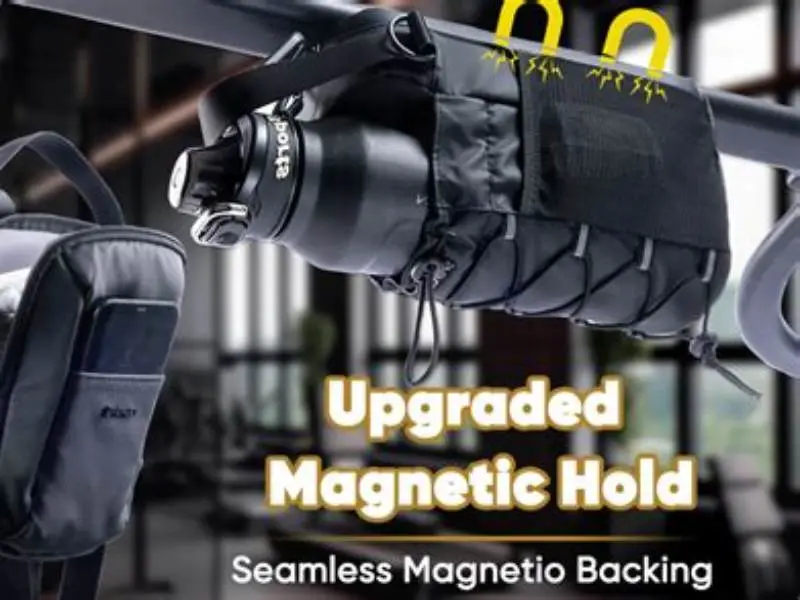
Mounts and bags matter as much as volume. A magnetic bottle holder on a gym rack, a fork mount on a bike bar and a magnetic gym bag pocket all keep the bottle and your phone in the same place, so the bottle ends up on the machine with you rather than in a locker across the room. If your phone case carries a MagSafe ring, it will sit on a Qi2 mount without an extra plate, which is what keeps the phone in view while you work on the number of refills.
- 1L bottle: fewest refills, rides and shifts, 1kg carried
- 750ml bottle: hits 2.5L in three and a bit, fits a bag pocket
- 500ml bottle: light, mounts easily, needs more refills
- 1L bottle is heavy in a small gym bag
- 500ml bottle multiplies refills six times at a 3L target
- Partial fills make the count harder to trust
The 750ml bottle is the best compromise for training and travel: it reaches a 2.5L target in three and a bit refills and still fits a gym bag pocket or a bottle mount.
FAQ
Does coffee and tea count towards my daily water?
Count them, but not as one for one. Caffeinated drinks carry water in them, and mild caffeine does not cancel the hydration effect. A large coffee with breakfast still adds fluid, while a double espresso adds very little. If you drink coffee all day and feel fine, your urine colour will tell you more about your balance than any formula.
How much should I drink during a 45 minute session?
For a typical indoor session, around 300 to 500ml during the work is enough for most people, and a lot of that comes with your rest. Add500ml to 1L to your daily total on top of the session, rather than trying to drink it all during. In a hot room or a long outdoor ride, the higher end applies.
Is drinking more than I feel thirsty always better?
No. Drinking well past thirst repeatedly dilutes your sodium and is not harmless, even for a healthy adult. Stay near the thirst signal plus your training line item, and stop forcing litres because a chart told you to. If you are thirsty constantly and urine stays pale, that is worth raising with a doctor rather than a bottle.
Can I use a 500ml bottle if I refill it often?
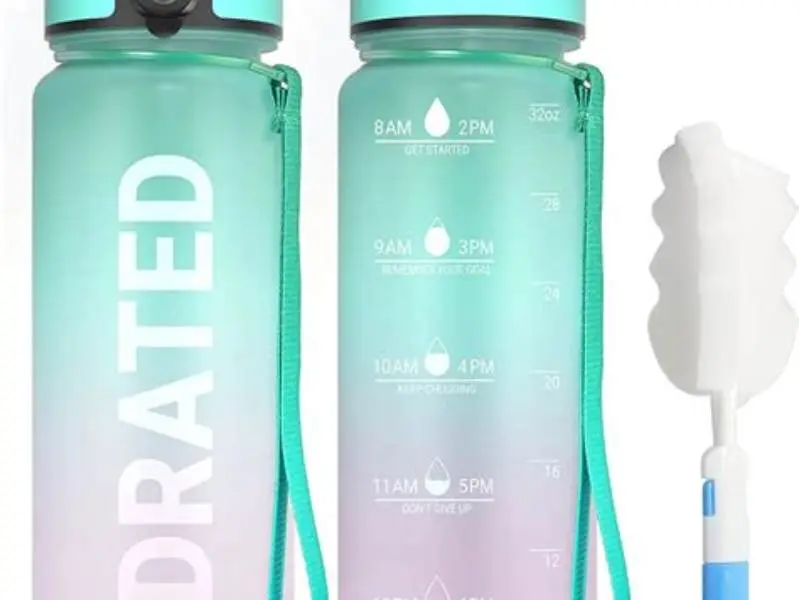
Yes, and it is a good habit if refills happen automatically. Six refills to hit 3L is real work, so pair the bottle with something that makes refilling visible: a marked fill line, a bottle holder on the rack, or a bag that keeps it in reach rather than in a locker.
Does water temperature matter during training?
Not much. Cold water is comfortable for most people and goes down faster, which helps when you are hot. Room temperature water suits people whose stomachs object to cold liquid during hard efforts. The volume matters more than the temperature, and chilled water can look worse in a bottle because condensation gathers.