How to use a MagSafe charger with iPhone 11, 13, 14 and cases

The MagSafe charger can charge iPhone 12, 13, and 14 models directly with magnetic alignment but only charges iPhone 11 when paired with MagSafe-compatible cases. Case thickness under 5 mm and non-metal materials ensure secure attachment and efficient charging.
On this page (8 sections)
- Remember this
- Can you use a MagSafe charger on iPhone 11
- How to use a MagSafe charger with iPhone 13 and 14
- Can MagSafe charger be used on non-Apple phones
- What case thickness or material works with MagSafe charging
- How MagSafe charger actually attaches and charges
- Common misconceptions about MagSafe charger usage
- FAQ
Part of our guide on qi2 ring sticker holding pixel 10 pro
Fast facts
- iPhone 11 MagSafe use
- Requires case
- Case max thickness
- 5 mm
- iPhone 13/14 MagSafe
- Direct charging
- Max charging power
- 15 W
- Non-Apple compatibility
- Qi only usually
Remember this
- iPhone 11 needs a MagSafe-compatible case for magnetic charging.
- iPhone 13 and 14 charge directly with MagSafe chargers.
- MagSafe charging works best with cases thinner than 5 mm, non-metallic.
- Non-Apple phones usually lack MagSafe but may charge via Qi if aligned.
- Proper alignment is critical for stable charging and mount hold.
Can you use a MagSafe charger on iPhone 11
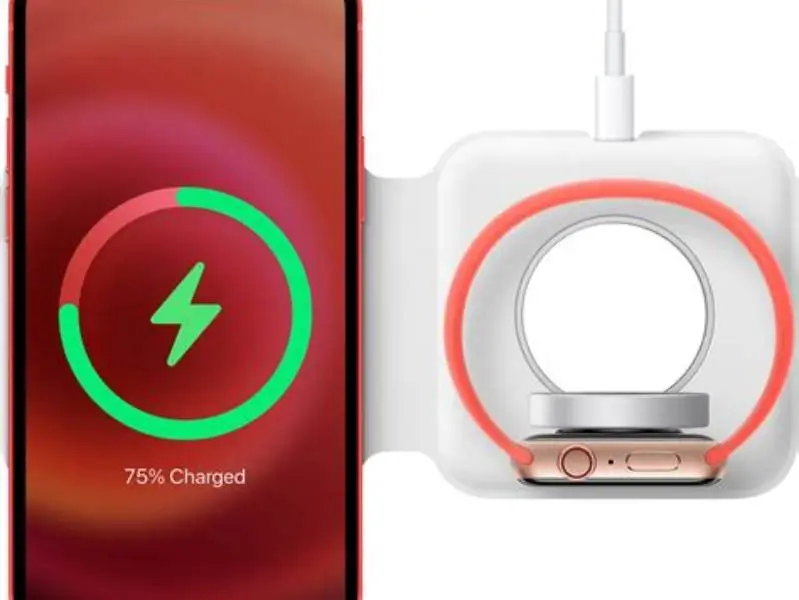
The iPhone 11 does not have the internal ring magnet required for MagSafe charging. It will not attach magnetically to the MagSafe charger by itself. Instead, a MagSafe-compatible case with built-in magnets is necessary to hold the charger in place and enable wireless charging.
These cases contain a magnetic ring aligned with the iPhone’s wireless charging coil to mimic MagSafe functionality. If your iPhone 11 lacks such a case, you must rely on standard Qi wireless charging without guaranteed alignment or magnetic hold.
Without a compatible case, the MagSafe charger may charge the iPhone 11 by placing it carefully on the pad, but the charger will not snap into place magnetically and may disconnect easily during movement.
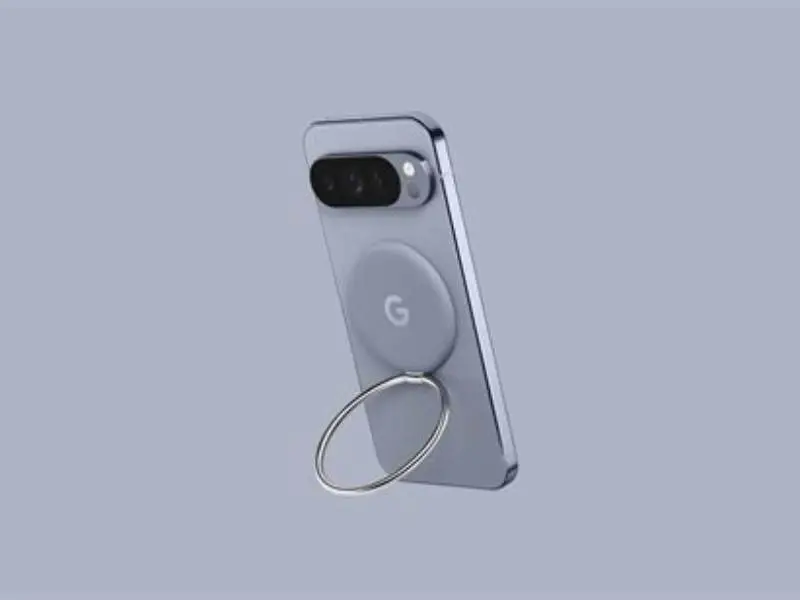
If you want to improve charging reliability on the iPhone 11 without switching to a MagSafe-compatible case, consider using a MagSafe-compatible magnetic ring accessory that sticks onto the back of the phone or inside a case. These rings imitate the internal magnet array and help the charger snap in place, although fit and magnet strength vary by product. For example, a ring with a diameter of about 30 mm and thickness under 1 mm is typical, balancing magnetic hold and minimal bulk. We go through will magsafe charger work with a case step by step elsewhere on the site.
Charging speed on iPhone 11 with a MagSafe charger and compatible case or ring accessory is limited to the Qi standard power outputs supported by the phone, usually around 7.5 watts. Unlike iPhone 12 and later, it does not negotiate the higher 15-watt MagSafe charging rate. You can confirm charging speed by observing the charging icon or using battery health apps that report wireless input wattage.
How to use a MagSafe charger with iPhone 13 and 14
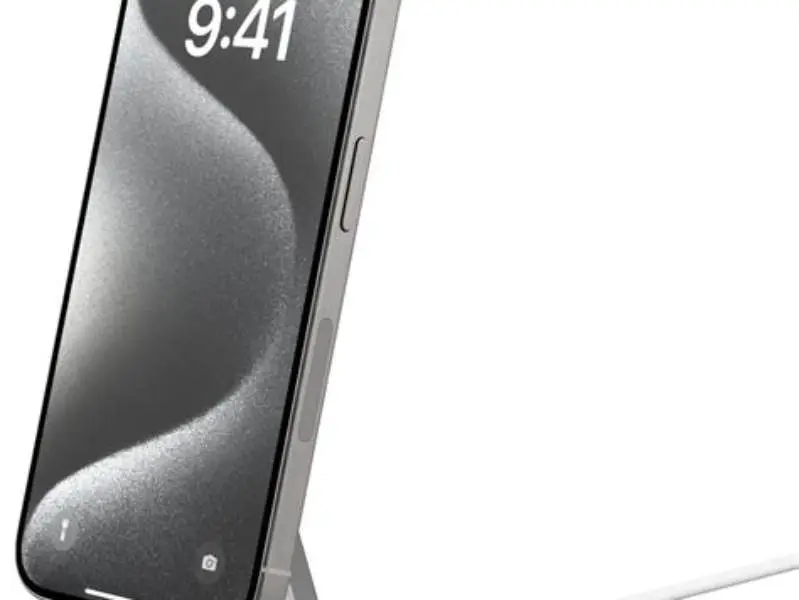
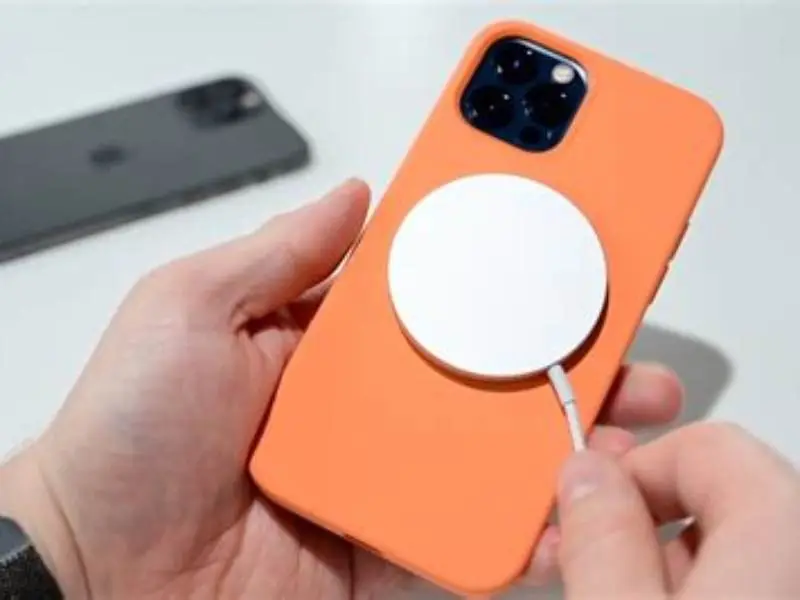
iPhone 13 and 14 models have a built-in circular magnet array that aligns perfectly with the MagSafe charger. You simply place the charger on the back of the phone, and it snaps into place with a magnetic hold of about 700-900 grams force, enough to keep it stable on flat surfaces and most mounts.
Charging power peaks at 15 watts under ideal conditions, depending on the charger’s power source and cable quality. The phone and charger maintain alignment automatically, reducing drops in power or disconnection during use. We go through iphones and belkin charger compatibility step by step elsewhere on the site.
With cases, the key is to avoid thicknesses greater than 5 mm and metallic materials that interfere with magnets or wireless charging coils. Apple’s own MagSafe cases and many third-party cases use thin, non-metallic materials with embedded magnets for a secure hold and efficient charging.

CMS Magnetics - Neodymium Cup Magnet with Keyring | Gold Tester, Multi-Purpose
Detects magnetic hold force with pull force exceeding 35 lbs, which is well above the 700-900 grams needed to test MagSafe charging compatibility.
Can MagSafe charger be used on non-Apple phones
Most non-Apple phones do not have the MagSafe magnet ring and thus cannot attach magnetically to a MagSafe charger. You can still use the MagSafe charger as a Qi wireless charger with these phones if they support Qi charging, but magnetic alignment will be absent.
Without the magnets, the charger relies on precise placement on its charging coil to work efficiently. This makes it less stable on mounts or surfaces designed for magnetic hold. If that sounds like your situation, read up on magsafe charging through silicone will it overheat my iphone 15 next.
Some third-party magnetic adapters for non-Apple phones add a magnet ring or MagSafe-compatible case, but these must be tested carefully for charging efficiency and safe attachment, as magnet strength and coil alignment vary.
An exception among non-Apple phones is the Samsung Galaxy S21 Ultra and S22 Ultra, which have implemented a magnetic ring compatible with some MagSafe chargers. These phones can magnetically attach to certain MagSafe-compatible chargers, but the magnetic force is weaker, generally around 300-500 grams, making the attachment less secure than on iPhones.
When using a MagSafe charger with non-Apple phones, the absence of perfect coil alignment often leads to slower charging speeds and more heat generation. For example, a Galaxy S21 Ultra may see wireless charging rates around 10 watts instead of the maximum 15 watts possible with Apple phones. Monitoring device temperature during charging helps prevent overheating issues.
Learn exactly how to position a MagSafe charger on your iPhone and case for a stable magnetic hold and effective charging during workouts or driving.
What case thickness or material works with MagSafe charging
Cases up to 5 mm thick typically allow full magnetic coupling and wireless charging without issues. Thicker cases reduce magnetic force and may block or weaken Qi charging coils beneath.
Material matters greatly: silicone, TPU, and thin plastic cases with embedded magnets work best. Metal cases disrupt the magnetic field and wireless charging. Cases with metal rings or attachments often block charging completely.
Clear cases sometimes use a thin embedded magnetic layer but thicker clear plastics (above 3-4 mm) can interfere. Leather cases designed for MagSafe include magnet rings but again must be below the thickness threshold.
Test the hold force by feeling how firmly the charger snaps to your case-covered phone. If it slips easily, your case is too thick or metal-containing for reliable hold.
If your case has a built-in metal plate for magnetic mounts or mounts, it can severely disrupt MagSafe charging even if it is under the 5 mm thickness threshold. These plates can create hotspots that reduce the wireless charging coil’s efficiency or cause the phone to overheat. This problem often manifests as intermittent charging or the charger stopping unexpectedly.
A quick way to check if your case material or thickness is suitable is to test charging with and without the case under identical conditions. If charging speed drops by more than 20% or the magnetic hold weakens noticeably when the case is on, consider switching to a thinner or non-metallic alternative.
How MagSafe charger actually attaches and charges
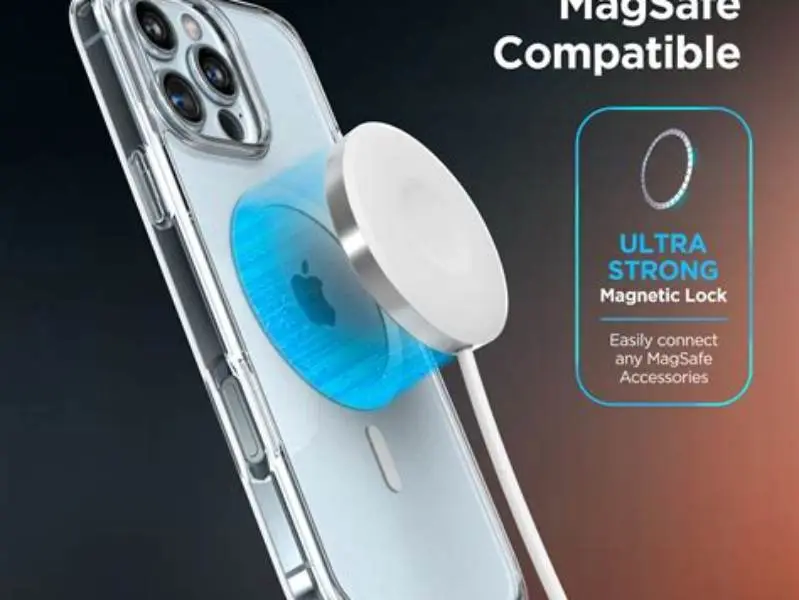
The MagSafe charger uses a ring of magnets arranged around the wireless charging coil. This magnet ring aligns perfectly with the magnets inside compatible iPhone models or cases, snapping and holding the charger in place with about 700-900 grams of force.
Wireless charging happens via Qi technology at 7.5 to 15 watts, depending on the phone and charger. The magnetic alignment ensures that the coils inside the charger and phone align perfectly, reducing energy loss and maintaining a stable connection even if the phone moves slightly.
If the phone or case lacks the internal magnet ring, charging still works if coils align but the charger won’t hold magnetically, and charging efficiency might drop due to misalignment.
The charger’s small size (about 6 cm diameter) and weight are optimized for portability but mean that magnetic hold is essential to keep the phone stable during use, especially on gym equipment or bike mounts.
Common misconceptions about MagSafe charger usage
One myth is that the MagSafe charger works with any phone magnetically. It only attaches magnetically to iPhone 12 and later or to iPhone 11 with a MagSafe-compatible case.
Some believe any case works with MagSafe charging. In reality, case thickness over 5 mm or metal components negate magnetic hold and reduce charging speed massively.
Another confusion is that the charger can snap on securely anywhere on the phone. MagSafe works only when aligned precisely over the built-in magnet ring in supported devices or cases.
People sometimes expect MagSafe to charge phones faster than wired charging universally. While it can reach 15W, wired charging is usually faster and more consistent, especially if the phone is used heavily during charging.
Understanding these limits helps avoid frustration and ensures you buy the right accessories for your setup.
| Myth | Fact |
|---|---|
| Works magnetically on any phone | Only iPhone 12+ or iPhone 11 with MagSafe case |
| All cases work with MagSafe | Cases must be under 5 mm and non-metallic |
| Snaps on anywhere on phone | Only aligns over magnet ring precisely |
| Always faster than wired charging | Wired charging is generally faster |
FAQ
Can I use a MagSafe charger with my iPhone 11 without a case?
No. iPhone 11 lacks the internal magnet ring needed for magnetic hold. You can charge wirelessly but must place the phone carefully without magnetic snap, which is unreliable.
What case thickness is ideal for MagSafe charging?
Cases thinner than 5 mm made from silicone or thin plastic work best. Metal or thicker cases disrupt the magnetic field and reduce charging efficiency.
Will a MagSafe charger hold my Android phone magnetically?
Usually not. Most Android phones lack the MagSafe magnet ring. They can charge via Qi but won’t attach magnetically, so the hold is weak or absent.
Does the MagSafe charger charge faster than traditional wireless chargers?
It can deliver up to 15 W, faster than many Qi chargers restricted to 7.5 W. However, wired charging is still usually faster.
Can metal rings or grips on cases affect MagSafe charging?
Yes. Metal accessories block or weaken the magnetic field and wireless charging coil, causing charging failure or loss of magnetic hold.