Which wall mount phone charger sticks well to textured home gym walls

A wall mount phone charger for a home gym with textured wall only holds if its base plate has at least 25 cm2 of flat contact and the wall's peaks are under 1 mm. Rougher walls need a bridged plate or a screwed batten instead of a bare adhesive pad.
On this page (8 sections)
- Remember this
- How wall texture affects adhesive strength
- Finding a wall mount phone charger for home gym with textured wall
- Adhesives and mechanical fixes for textured walls
- Testing mount stability under workout vibrations
- When a rack or machine mount beats the wall
- Cable routing, sweat and charging heat
- FAQ
Part of our guide on qi2 charging pad phone mount for spin bike handlebars
Fast facts
- Minimum contact area
- 25 cm2 base
- Safe wall peak height
- under 1 mm
- Bridged plate contact area
- 60 cm2
- Acrylic foam cure time
- 24 to 72 h
- Anchor load target
- 1.5 kg or more
- Weekly stability check
- 5 min
Remember this
- Measure wall peaks with a coin: over 2 mm and a pad bonds on peaks only
- 25 cm2 of base contact area is the floor for a phone that gets grabbed
- Acrylic foam needs 24 to 72 hours to cure before any load
- Adhesive fails sideways first, when someone pulls the phone off with the cable in
- Sideways load beats vertical weight every time, so unplug before lifting
How wall texture affects adhesive strength
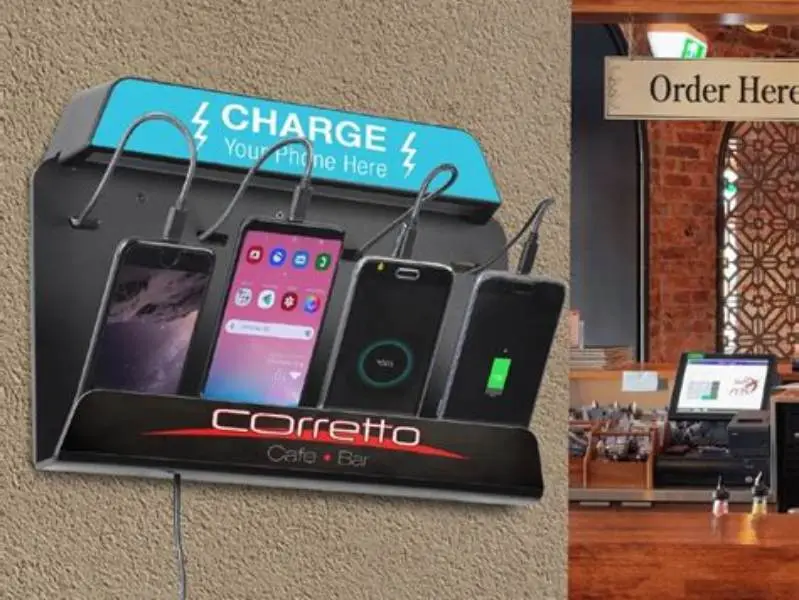
Wall texture is not a style choice to the glue. It sets the gap the adhesive has to bridge. On orange-peel paint the ridges run about half a millimetre high, so a soft pad still finds full contact. On popcorn or knockdown texture the peaks stand 3 to 6 mm apart and that same pad touches a fraction of the wall.
Measure the peak height with a ruler, or use a coin as a gauge. A US quarter is 1.75 mm tall. Under about 1 mm, a self-adhesive cradle will seal properly. Past 2 mm the pad bridges a gap, the bond forms on the peaks alone, and that is where adhesive mounts start walking down the wall in week three.
Porosity matters as much as height. Drywall compound, unpainted masonry and fresh primer drink the adhesive before it sets. Concrete, glass and gloss paint are the easy ones. Test with a drop of water: if it soaks in rather than sitting on the surface, seal that patch first with a bonding primer.
Measure the peaks before you buy anything. It decides whether you need an adhesive mount, a bridged plate or a screwed bracket, and the check costs nothing. We go through how much does smith machine bar weigh step by step elsewhere on the site.
Finding a wall mount phone charger for home gym with textured wall
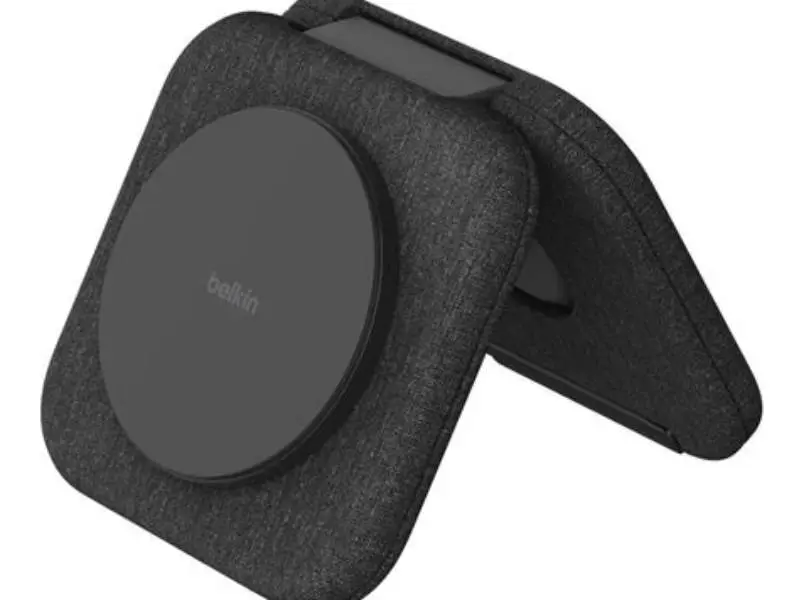
The fix is a wall cradle with a flat base plate, a magnetic or clamp face for the phone, and Qi2 or MagSafe alignment so it charges while it hangs. The base plate is the whole game. The phone interface is the easy part. Look for a cradle whose base is a solid rectangle or disc, not a thin arm with a small pad.
Set a floor on that base. 25 cm2 of contact area, roughly a 7 cm by 7 cm square, gives the adhesive enough shear strength to survive the phone being lifted off and put back dozens of times a week. Below that, the bond looks perfect until someone grabs the phone mid-set.
Two walls, two answers. On smooth painted drywall in a finished basement, a 25 cm2 magnetic cradle with a foam pad bonds and stays for years. On raw concrete or knockdown texture, the same cradle creeps inside a month unless it is bridged, and a mechanical anchor is the honest answer. For the detail, see our notes on selecting mounts for angled grips.
Decide magnetic or clamp before you buy. Magnetic needs a MagSafe ring on the phone or a case with one. Clamp takes any phone, including one in a bulky case, but you need two hands to set it down. A gym is one-handed country.
| Fix | Contact area (cm2) | Wall peaks it takes (mm) | Load before creep (kg) | Charges in the mount |
|---|---|---|---|---|
| Foam pad, smooth wall | 25 | 1 | 1.5 | Yes |
| Foam pad, popcorn wall | 25 | 2 | 0.3 | Yes, keep the pad clean |
| Steel plate with acrylic foam | 60 | 4 | 2 | Yes |
| Drywall anchor and plate | n/a | 6 | 3 | Yes |
| Plywood batten, screwed | n/a | any | 5 | Yes |
Adhesives and mechanical fixes for textured walls
Acrylic foam tape is the best adhesive for this job. It flows into small irregularities, grips paint, and peels off cleanly later. Use a heavy-duty VHB style tape in the 1 mm grade or thicker for textured drywall. Cure time is the catch: 24 to 72 hours before you hang anything, longer in a cold garage.
Mechanical fixes beat adhesive on rough surfaces. A drywall anchor plus a wide flat plate spreads load across the peaks. On popcorn texture the anchor head will not seat flat, so patch the holes with setting compound, sand flush, then anchor. Or skip the guessing and screw straight into a stud. If that sounds like your situation, read up on mounting tips for bike phone cases next.
The most reliable option on a genuinely rough wall is a small plywood or furring strip screwed into studs, then the cradle bonded or screwed to that flat strip. It is more work and it puts a 10 cm board on your wall. Nobody notices a board in a garage. Everybody notices a phone on the floor.
Choosing by wall type: smooth drywall and glass take adhesive, rough masonry takes a plate or anchor, and anything above 4 mm peaks takes a batten. Match the method to the peak height, not to the look of the room.
- Acrylic foam pad: works on smooth or orange-peel drywall, needs a 48 to 72 h cure
- Acrylic foam on steel plate: bridges peaks to about 4 mm, no drilling
- Drywall anchor with plate: good on hollow walls, patch the seat first
- Plywood batten: flat and strong, needs a stud or heavy-duty anchors
A pad that bonds on texture peaks only is why most gym wall mounts fail in month three, not month one.
Testing mount stability under workout vibrations
A wall mount that survives a static hang can still fail on a rowing machine. Test it before you trust it, and test it in the conditions you actually train in, not on a quiet Tuesday.
Creep shows up before failure and it shows up visually. A grey or black residue ring around the pad edge means the foam is shearing slowly. A clean wall with a wobbly cradle means the plate is too small or the anchor is loose. A rattle under load with a still wall usually means the cradle's ball joint is loose, not the bond.
The gym-specific failure is sideways load, not vertical weight. Pulling the phone off while the cable is plugged in applies more force than the phone's weight and it rips a small pad straight off the wall. Unplug first, then lift. That habit alone decides whether a 25 cm2 base stays put.
Do the test again a week later, then monthly. Temperature swings in a garage move the wall enough to loosen a bad bond slowly, and a two-minute check catches it in time.
- Cure first: wait the full cure time printed on the tape or mount, and add time if the room is cold
- Push test: shove the cradle sideways at the base, then hang a 1 kg weight from the phone and look for movement
- Dumbbell hang: hang a 5 kg dumbbell from the cradle for 60 seconds and watch the base seam
- Vibration run: row or cycle at pace for 60 seconds and check the base edge for a gap
- Monthly check: look for a residue ring, a hairline gap at the seam or a rattle in the joint
When a rack or machine mount beats the wall
A wall cradle wins when the phone stays still for the whole set. Watch a set of kettlebell swings and it does not. Any mount attached to a moving barbell, a bike stem, a treadmill console or a rack upright travels with the movement, and the phone goes with it without any extra force on the wall.
This is the trade-off we accept. A wall mount gives a fixed, always-there charging spot with no hardware on the equipment, and it costs the wall a small hole or an adhesive patch. Equipment-mounted holders stay with the machine even when the wall is not there at all.
If you want the phone to move with the work, put the mount on the equipment. A magnetic grip on the bar, a phone cage clipped to a dumbbell handle, or an arm clamped to the console all carry the phone through the movement without needing a wall to be drilled at all.
Choose the wall only when your session is static. Rows, lifts with long rests and stationary bikes suit a wall. Conditioning, swings and rides suit the equipment.
- Wall cradle: always in the same place, charges while parked
- Wall cradle: nothing mounted on the bars or console
- Equipment mount: travels with the bar through swings and rows
- Equipment mount: keeps the phone visible from any angle
- Wall cradle: drifts or peels if the wall peaks exceed 2 mm
- Wall cradle: useless on a machine that moves away from the wall
- Equipment mount: needs the phone near the hand, sometimes in the swing path
- Equipment mount: a bar mount has to be re-fitted between sets
Cable routing, sweat and charging heat
The mount holds the phone. The cable decides whether the setup lasts. A charging cable hanging free becomes a pendulum the moment somebody steps on it, and that load is far bigger than the phone's weight. A right-angle plug at the cradle with the cable run up to a socket above floor level solves most of it.
Sweat and humidity are the other enemy. A wall near a rubber floor holds humidity, and a phone charging in a warm damp corner will throttle itself back. Keep it in the cradle rather than flat on the floor, and wipe the phone and the pad dry before you set it down.
Watch the heat where the cable meets the phone. A magnetic cable left seated in a warm socket under continuous load runs hotter than the phone does. Unplug between sets if the connector is warm to the touch, and replace a connector that is discoloured or bent. That is a cable problem, not a mount problem.
One more thing to keep in mind: adhesive and humidity are not friends. In a damp basement the pad edge lifts slowly. Check the seam after heavy sweat sessions, and keep the cradle high enough that condensation runs down the wall rather than under the base.
Measure the wall peaks first. Under 1 mm, a 25 cm2 adhesive cradle is enough. Above that, bridge the wall or screw a batten.
FAQ
Will a suction cup hold a phone on a textured gym wall?
No. Suction cups need a smooth, non-porous, flat surface such as glass, tile or metal. Drywall texture and paint give the cup nothing to grip, and it drops within minutes. Use an adhesive pad or an anchor instead.
Should I sand the wall or scrape the paint before mounting?
Do not sand. It exposes compound, shows marks and gives the adhesive a powdery surface to bond to. Clean the area with isopropyl alcohol or a degreasing wipe, dry it fully, and let new paint cure for at least a couple of weeks before you mount anything.
Can a wall mount work on popcorn or knockdown texture?
Yes, but not with a bare foam pad. Bridge the peaks with a rigid plate bonded to the wall, or screw a plywood batten across studs and mount to that. A pad applied straight onto 4 mm peaks bonds on the tips and creeps under any side load.
Will MagSafe charging still work inside a wall cradle?
It works if the cradle is built for it. Look for listed MagSafe or Qi2 alignment and a stated charging output, because a single-coil pad often charges slower and can make a phone run warm in a cradle. A clamp cradle with a side USB-C port usually charges faster but only if you can reach the port.
How long should I wait before hanging a phone on a new adhesive mount?
Follow the cure time printed on the tape or mount, which is commonly 24 to 72 hours. Cold rooms and high humidity both extend it. Load it lightly first and check for creep the next day before you trust it with a workout.