Magnetic tripod mount shock load rating: what the number means

Treat a printed pull rating as a laboratory comparison, not a shock guarantee. Calculate the example load with F = m × a, then test your exact phone, case, mount, and surface. Add a tether or clamp when a failure could injure someone or damage the phone.
On this page (8 sections)
- Remember this
- Static ratings: what the number on the box measures
- Shock load: calculate an example, then measure
- Leverage and position: why a small gap matters
- Magnetic rings: alignment helps, but testing still matters
- Practical test: measure the setup before trusting it
- Mechanical backup: when the magnet is not enough
- FAQ
Part of our guide on magnetic bike bottle holder
Fast facts
- Force equation
- F = m × a
- Force units
- 1 kgf ≈ 9.81 N
- Example load
- 220 g at 10 g ≈ 2.2 kgf
- Best test instrument
- Triaxial accelerometer or calibrated data logger
- High-risk backup
- Tether, strap, or mechanical clamp
- Key specification
- Pull-off and shear ratings listed separately
Remember this
- Pull-off and shear ratings describe different forces. Don't compare them as though they use the same test.
- A g value means acceleration relative to standard gravity. Peak g and RMS g describe different events.
- A 220 g phone at 10 g gives an example inertial force of 2.2 kgf, or about 21.6 N. Actual acceleration depends on the setup.
- Air gaps, leverage, surface finish, and alignment can reduce holding force. Use the maker's pull-force curve when available.
- Use an accelerometer for professional testing. Add mechanical retention for moving equipment, elevated phones, and high-risk uses.
Static ratings: what the number on the box measures
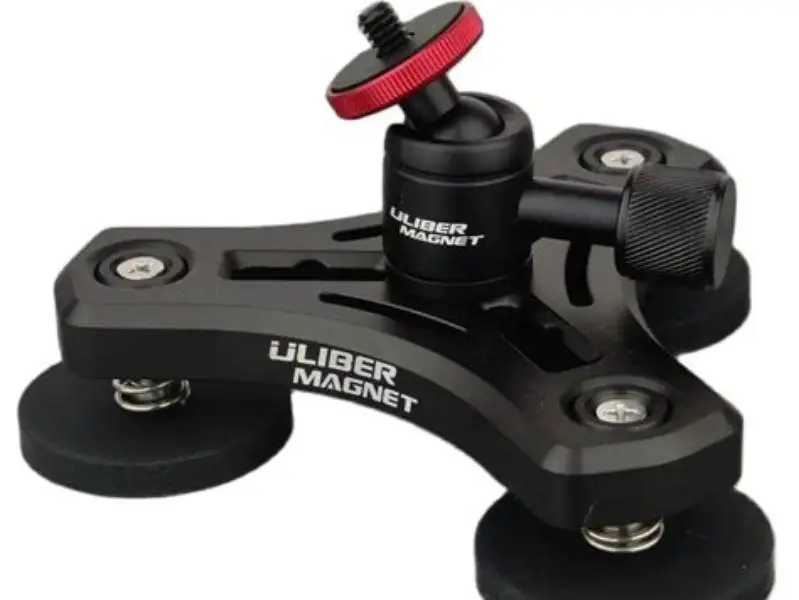
A pull rating usually comes from a slow, straight pull. The magnet faces sit against a specified steel plate, and a force gauge records separation. The result may appear as newtons, kilogram-force, or an unclear kilogram figure.
Ask what the maker tested. Pull-off, or axial force, acts straight away from the mounting face. Shear, or lateral force, acts across the face. A pull-off rating does not establish the shear rating.
Manufacturers may quote peak separation force, working load, or a marketing value. Those terms are not interchangeable. Look for plate thickness, surface finish, magnet orientation, air gap, loading speed, and safety factor.
A tripod mount sees more than one force. The phone's weight pulls downward, while a knock or vibration creates shear and torque. Treat the printed rating as a reference point. We go through how to fix a magnet step by step elsewhere on the site.
| Term | Meaning | How to use it |
|---|---|---|
| Axial pull-off | Force straight away from the face | Compare only with separation loads |
| Shear | Force across the face | Use for sideways vibration and sliding |
| kgf | Force equal to one kilogram under standard gravity | Convert to newtons with kgf × 9.80665 |
| Peak g | Highest measured acceleration | Use for brief shocks |
| RMS g | Root-mean-square acceleration over a time window | Use for vibration severity, not a single impact |
| Working load | Maker's stated usable load, if defined | Check the stated test and safety factor |

Tsedoo for MagSafe Sticker
Keeps the phone contact faces very close with a 1.4 mm thin magnetic sticker, reducing air gap between phone and mount.
Shock load: calculate an example, then measure
Newton's second law gives the starting calculation: F = m × a. The acceleration term includes gravity when you express the event in g. A 220 g phone at 10 g is an example only. It produces 2.2 kgf, or about 21.6 N, before leverage and direction change.
Actual g depends on the machine, mounting geometry, frame stiffness, contact surface, and measurement point. A sensor on the treadmill console can record something different from a sensor beside the magnetic joint.
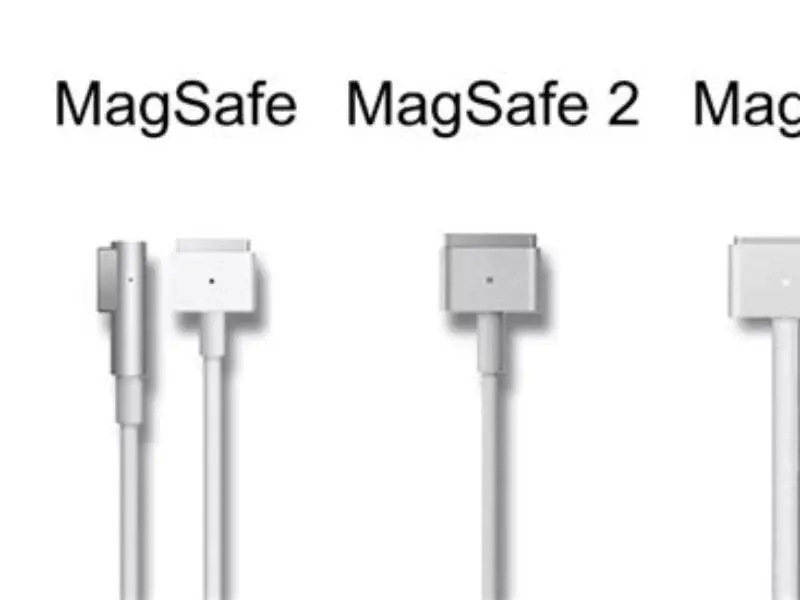
Peak g is not RMS g. Peak g captures a short maximum. RMS g describes averaged vibration over a chosen period. A mount can tolerate a brief peak yet fail after many lower-amplitude cycles. It helps to understand MagSafe 3 and 2 compatibility before going further.
Don't use a fixed multiplier such as 15 times mass without supporting measurements. For a high-risk setup, measure the event and add mechanical retention rather than guessing.
| Acceleration | Calculation | Approximate force |
|---|---|---|
| 1 g | 0.220 × 1 | 0.220 kgf, 2.16 N |
| 5 g | 0.220 × 5 | 1.10 kgf, 10.8 N |
| 10 g | 0.220 × 10 | 2.20 kgf, 21.6 N |
| 15 g | 0.220 × 15 | 3.30 kgf, 32.4 N |
Leverage and position: why a small gap matters
A phone held away from the mount creates a moment. The moment equals force multiplied by the distance from the magnetic face to the phone's centre of mass. A longer arm increases rotation even when the phone mass stays unchanged.
Measure the arm with a ruler. Include the case, adapter, tripod head, and any extension. Record the distance from the mount face to the phone's centre, not just case thickness. We cover magnet mount phone damage in its own article.
A camera bump can prevent full contact. A curved case can leave contact only around its edge. Even a few millimetres of separation can materially reduce pull force. The amount depends on magnet shape, backing steel, pole layout, and surface finish.
Use the maker's air-gap curve if available. Otherwise test the complete assembly with a force gauge. Don't apply a generic percentage loss to every magnet.
A magnetic mount can hold a heavy weight slowly, then release your phone during one sharp sideways jolt.
Magnetic rings: alignment helps, but testing still matters
Designed MagSafe cases position the ring magnet to align with the phone's magnetic array. Qi2-compatible cases follow the relevant Qi2 alignment approach. This often improves contact compared with an aftermarket plate, but compatibility still needs checking.
Ring and disc behavior depends on engagement geometry, pole arrangement, backing material, and contact area. A ring may resist some rotation well and another design may not. Without comparable torque or shear tests, claims about one shape always being stronger are only informed hypotheses.
Test the actual pairing. Apply a measured sideways force with a spring scale, then record the force needed to slide or rotate the phone. Repeat with the phone rotated and with the case fitted. Stop if the phone could fall.
A ring diameter is not a strength rating. Magnet grade numbers such as N52 describe material properties, not the finished mount's pull or shear performance.
- Correct alignment can improve repeatable contact
- Compatible cases avoid some aftermarket plate gaps
- A mechanical backup can work with either ring or disc designs
- Ring geometry does not guarantee lateral retention
- Aftermarket plates can change the air gap
- Magnet grade alone cannot predict finished mount force
Practical test: measure the setup before trusting it
A hand check can find obvious movement. It cannot certify a mount for injury-sensitive use. Test with the phone in its real case, on the real tripod or machine, and with the same mounting angle.
For a simple lateral check, attach a luggage scale or spring scale to a soft strap around the phone. Pull slowly and horizontally. Keep the pull line level with the phone centre. Record the force when sliding begins, then repeat three times. Do not pull toward an edge where the phone can fall.
For a rotation check, mark the case and mount with removable tape. Apply a known sideways force at a measured distance. Torque equals force in newtons multiplied by distance in metres. Record the angle or movement after each cycle.
For vibration testing, use a triaxial accelerometer or a small instrumented data logger. Fix it beside the magnetic joint with a rigid adhesive mount. A phone sensor app can show trends, but its sampling rate and filtering may miss short peaks.
Run the machine at the intended speed. Record peak and RMS acceleration, axis direction, duration, and sensor location. Repeat with the phone attached. Compare the measured event with the maker's test data, not just the headline rating.
Use a tether during testing. Keep people clear of the drop path. Stop if the phone shifts, rotates, lifts, or the adhesive plate starts to peel.
- Measure the phone and case mass with a kitchen or laboratory scale.
- Measure the phone centre distance from the magnetic face.
- Check contact with a straightedge and feeler gauge or thin paper.
- Measure lateral sliding force with a spring scale or force gauge.
- Record acceleration beside the joint with a triaxial accelerometer for professional testing.
- Repeat the test after repeated vibration cycles and inspect the contact surfaces.
Mechanical backup: when the magnet is not enough
Use a tether when the phone is above people, above hard flooring, or attached to moving equipment. A tether does not make the magnet stronger. It limits the fall after release.
A clamp is the better choice when the phone sees sustained vibration, rapid movement, or uncertain impacts. The clamp should carry the phone by itself if the magnet lets go.
Check the tether anchor, stitching, adhesive, and connector. Leave little slack, but don't preload the phone during normal use. Keep the backup away from moving belts, pedals, and rotating parts.
These guidelines are general information, not a safety certification. Equipment failure can cause injury, property damage, or distraction. Follow the equipment maker's instructions and local workplace rules. Test your own setup before use.
FAQ
Does a MagSafe or Qi2 case help compared with an adhesive plate?
A designed MagSafe case aligns its ring with the phone's magnetic array. A compatible Qi2 case follows the relevant Qi2 alignment design. This often gives better contact than an aftermarket plate, but case shape and mount compatibility still matter. Test the complete combination.
My mount is rated 3 kg and my phone weighs 180 g. Is it safe on a treadmill?
The rating alone cannot answer that. As an example, 180 g at 10 g equals 1.8 kgf, or about 17.7 N. Actual treadmill acceleration, lateral force, air gap, leverage, and fatigue may differ. Measure the setup and use a tether.
Can I compare N52 and N45 magnet grades?
Not as finished-mount ratings. Those labels describe magnet material properties. Size, shape, pole layout, backing steel, air gap, and assembly determine the finished pull and shear force. Use the maker's measured force data instead.
Can charging heat demagnetise the ring?
Neodymium magnets commonly have Curie temperatures around 310 to 400 °C, depending on alloy and grade. Qi charging surfaces are normally far cooler than that. Adhesives and plastics can soften at much lower temperatures, so monitor the case, plate, and bond during charging.
How much does a case air gap reduce pull?
There is no reliable universal percentage. Even a few millimetres can materially reduce pull, depending on the magnet and backing design. Use the manufacturer's pull-versus-gap curve or test your exact case and plate with a force gauge.
What does g mean in a shock rating?
One g is standard gravitational acceleration, about 9.80665 m/s². Peak g is the highest short event. RMS g is an averaged vibration measure. Always ask for the time window, frequency range, sensor location, and axis.