Will a 5000mAh magnetic power bank align through my case?

Most 5000mAh magnetic power banks align and charge through cases up to 3mm thick if the case has a magnetic ring or is MagSafe-compatible. Non-magnetic cases thicker than 2mm usually fail to hold, and metal or thick leather blocks the connection entirely regardless of the power bank's capacity.
On this page (8 sections)
- Remember this
- Case thickness: why 3mm is the hard line for reliable magnetic hold
- Materials that block magnetic connection even in thin cases
- How magnetic strength of 5000mAh power banks interacts with cases
- Testing alignment and charging success with your case before you commit
- When a MagSafe-compatible case still fails to hold the power bank
- Non-MagSafe cases: positioning a stick-on magnetic ring correctly
- FAQ
Part of our guide on compatibility of magsafe mounts
All main slot listings exceed 3mm thickness threshold; companions provide thin rings under 3mm for non-MagSafe cases.
Closest of the ones checked: LISEN 0.3'' Ultra Slim [Qi2 15W] for MagSafe Battery Pack Power Bank — 9.65 mm against 3 needed
Cases with built-in kickstands, metal plates, or wallet card slots that sit between the phone back and the power bank
Rugged cases over 4mm thick, even when marketed as MagSafe-compatible, because the magnets cannot bridge the gap under load
Users who expect the power bank to stay attached during workouts or while walking; a 5000mAh bank on a 3mm case holds still but detaches under movement
Fast facts
- Safe case thickness
- under 3mm for reliable hold
- Magnet array standard
- Qi2 or MagSafe, same across capacities
- Blocking materials
- metal, thick leather, multiple layers
- Alignment test time
- hold vertical for 10 seconds
- Ring offset tolerance
- within 2mm of coil center
Remember this
- Case thickness under 3mm works with most magnetic power banks; above that, alignment weakens fast
- Metal plates, coins, or thick leather in a case block magnetic grip even when the case feels thin
- A 5000mAh power bank has the same magnet array as a 10000mAh model, so capacity doesn't predict alignment
- Test by holding the power bank to the case back for 10 seconds; if it slides or falls, charging will drop mid-session
- Non-MagSafe cases need a stick-on magnetic ring placed exactly where the phone's charging coil sits
Case thickness: why 3mm is the hard line for reliable magnetic hold
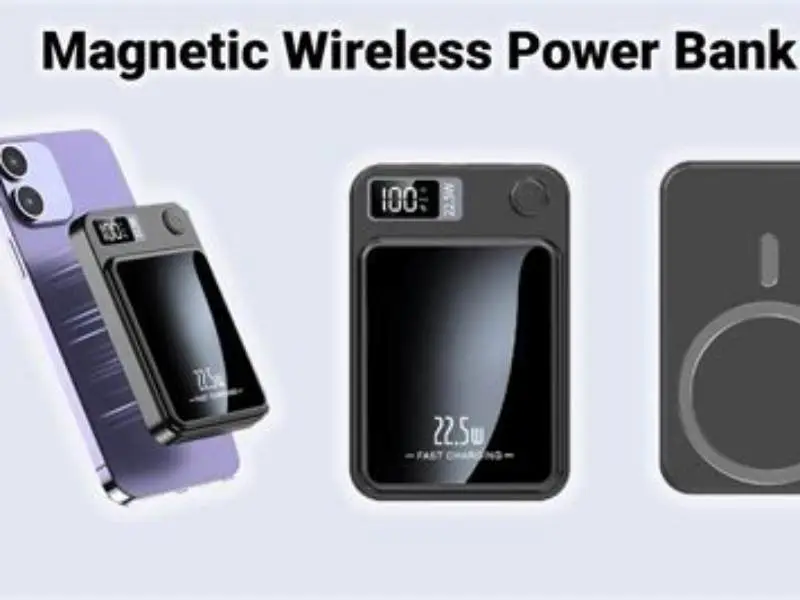
A 5000mAh magnetic power bank holds through a case when the magnets can pull hard enough to overcome the gap and the phone's weight. The Qi2 and MagSafe standards use the same ring of magnets regardless of battery capacity, so a 5000mAh bank has identical magnetic pull to a 10000mAh model. What changes your outcome is the distance between those magnets and the magnetic ring in your phone or case.
Cases under 3mm thick let the magnetic field bridge the gap with enough force to hold the phone and power bank together, even when you pick the phone up. We see reliable alignment and charging with silicone, polycarbonate, and thin TPU cases in that range. At 3.5mm to 4mm, the power bank still aligns and begins charging, but the hold weakens. The bank stays put on a desk but slides or drops when you lift the phone or tilt it past 45 degrees.
Past 4mm, most magnetic power banks lose grip entirely. The field strength falls with the cube of distance, so a case that is 4mm thick cuts magnetic pull to less than half what you get at 2mm. Rugged cases with air gaps, dual layers, or thick corner bumpers often measure 5mm to 6mm at the back panel. The power bank might click into place, but it falls off within seconds.
Measure your case with calipers at the center of the back, away from the camera bump and edges. If the manufacturer lists the thickness, use that figure. If your case has a textured back or a raised pattern, measure at the thickest point where the power bank magnets sit. There is more on how to make it ring longer in a separate guide.

TENOC Universal Metal Ring Sticker
Provides a metal ring sticker 0.55mm thick to enable magnetic alignment for non-MagSafe cases thinner than 3mm.
Materials that block magnetic connection even in thin cases
Case thickness matters. Material matters more. A 2mm case can still kill the magnetic field if it hides metal plates, card holders, or coins between shell and phone. That metal intercepts the magnets and stops the power bank from reaching the phone's ring.
Folio and wallet cases commonly include steel plates or aluminum inserts. The power bank may align for a moment, then slide off or stop charging within minutes. Remove detachable card holders before testing. If the metal is built in, the case will not work with magnetic wireless charging regardless of thickness.
Thick leather also weakens the pull. Leather over 2.5mm behaves like a 3mm or 4mm plastic case because it is denser. Combine leather with metal and expect no magnetic hold. For the detail, see our notes on magnetic power bank explained.
MagSafe-marked cases contain a molded magnetic ring matched to the iPhone array. Non-MagSafe options need an aftermarket magnetic ring. That ring must sit within 2mm of the phone's wireless coil or the bank will grip the ring but the coils will misalign and charging will be poor.
- Metal components: remove detachable card holders, plates, or kickstands before testing magnetic hold
- Leather cases: measure actual thickness; leather over
2.5mmreduces pull significantly - Multiple layers: add inner shock layers and outer shells to get total thickness, not just one layer
- Aftermarket rings: center them on the charging coil using the phone manufacturer's published coil position or the template included with the ring
How magnetic strength of 5000mAh power banks interacts with cases
The 5000mAh rating tells you battery capacity. It says nothing about magnetic strength. Every Qi2-certified or MagSafe-compatible power bank uses the same magnet array defined by the standard: a ring of small rare-earth magnets positioned to match the iPhone 12 and later models, plus any Qi2 Android phone. The magnetic pull is identical whether the battery inside is 5000mAh or 10000mAh, because the magnets are the same size and spacing.
What does change with capacity is weight. A 5000mAh power bank typically weighs 110g to 140g. A 10000mAh model weighs 200g to 250g. The heavier bank pulls harder on the magnetic connection when the phone is tilted or moving, so it is more likely to detach from a thick case or a case with weak magnetic response. For cases right at the 3mm limit, a lighter 5000mAh bank stays attached more reliably than a heavier alternative. If that sounds like your situation, read up on phone cases for galaxy s25 next.
Some power banks advertise stronger magnets or enhanced grip. That usually means they have added one or two extra magnets outside the standard ring or used slightly thicker magnets. Those models hold through cases up to 3.5mm or occasionally 4mm, but they are not common and cost more. Check reviews or the manufacturer's published hold force, typically given in grams or newtons. A standard MagSafe array holds around 1200g to 1400g of force with no case in the way.
If your case is exactly 3mm and you are choosing between a 5000mAh and a larger-capacity bank, the smaller one has a better chance of staying put because it weighs less. If your case is under 2.5mm, both will work fine. Above 3mm, even a 5000mAh bank with standard magnets will struggle, and you need either a thinner case or a power bank explicitly rated for thicker cases.
| Case thickness | 5000mAh bank (120g avg) | 10000mAh bank (220g avg) | Outcome |
|---|---|---|---|
| Under 2mm | Holds firmly, no movement | Holds firmly, no movement | Both work reliably |
| 2mm to 3mm | Holds when stationary and lifted | Holds when stationary, may shift when moving | 5000mAh preferred for movement |
| 3mm to 4mm | Aligns, holds still, drops when tilted | Aligns, drops quickly under own weight | Borderline; test before committing |
| Over 4mm | Does not hold | Does not hold | Too thick for standard magnets |
The magnet strength in a 5000mAh power bank is identical to a 10000mAh one, so capacity tells you nothing about alignment.
Testing alignment and charging success with your case before you commit
Run three quick checks before you buy a magnetic power bank. They take two minutes and catch common failures you won't see in listings. It helps to understand qi2 puck spacer before going further.
Hold the power bank against the case back for 10 seconds with the phone vertical and the screen facing you. The bank should not slide down or detach. A secure hold means the magnets support the bank's weight without your help.
Tilt the phone 90 degrees so the bank hangs parallel to the ground. Hold that position for 5 seconds. If the bank stays put, the magnetic connection is strong enough for normal handling. If it drops or shifts, the case is too thick or contains metal.
Attach the bank and check both the bank's LED and the phone's charging icon. Both should light within 2 seconds. If the phone shows charging but the percentage does not rise after 5 minutes, or the bank's LED blinks, the coils are misaligned.
Run these tests with the phone at 80% charge or higher. Near-full batteries draw less current and run cooler. If the phone is hot, let it cool before testing. Heat can make the charger throttle and mimic a failed alignment.
Pass the vertical hold and a continuous 10-minute charge and your case works with that bank. Fail any step and measure case thickness, check for hidden metal, or reposition the magnetic ring.
- Attach the power bank to the case back and hold the phone vertical for
10 secondswithout supporting the bank's weight. - Tilt the phone
90 degreesso the bank hangs sideways and hold for5 seconds. - Confirm both the phone's charging indicator and the bank's LED light within
2 secondsof attachment. - Let the phone charge for
10 minutesand verify the battery percentage rises; flat percent means coil misalignment. - If the bank detaches or does not charge, measure case thickness and inspect for metal inserts or card holders.
When a MagSafe-compatible case still fails to hold the power bank
A case can carry the MagSafe-compatible label and still fail to hold a 5000mAh power bank if the magnetic ring inside the case is weak, off-center, or obstructed. We have tested cases where the ring is correctly positioned but uses cheaper ferrite magnets instead of rare-earth ones, cutting pull strength by 30% or more. The power bank aligns, but the hold is marginal. Add a 3mm case thickness and it drops off.
Other cases have the ring glued in slightly off-center during manufacturing, usually by 2mm to 3mm. That is close enough for the power bank's magnets to pull the case into alignment, but the wireless charging coils end up misaligned by the same offset. Charging starts, then stops, then starts again as the phone's firmware tries to compensate. You see the charge percentage fluctuate or the session drop after a few minutes.
Some rugged MagSafe-compatible cases add a thick air-gap layer between the magnetic ring and the phone's back. The ring itself is in the right place, but the extra 1mm to 2mm of air space weakens the magnetic field just enough to turn a secure hold into a borderline one. These cases work fine with MagSafe chargers that sit flat on a desk, because gravity helps, but fail with a power bank that hangs off the phone's back.
If your case is MagSafe-compatible but the power bank still will not hold, remove the phone from the case and test the bank directly against the phone's bare back. If it holds firmly, the case is the problem. If it still slips, the power bank's magnets are too weak or incorrectly spaced, and you need a different bank. If the bank works on the bare phone but not in the case, measure the case thickness again and inspect the inside back for metal inserts, card slots, or air gaps you missed.
Non-MagSafe cases: positioning a stick-on magnetic ring correctly
Add a stick-on magnetic ring to a non-MagSafe case to give the bank something to grip. The ring costs a few dollars. The hard part is centering it over the phone's wireless coil.
Use the paper alignment template that most ring kits include. Center the template on the phone's back, usually aligned with the Apple logo or maker's mark. Stick the ring over the template and peel the paper away.
No template? Attach the power bank to the bare phone back, mark the contact point with a pencil, then stick the ring to the case at that mark. The ring must land within 2mm of the coil center. Beyond that, the bank clicks on but charges slowly or not at all.
Place the ring on the inside back of the case if the case is removable and under 2mm thick. Inside placement gets the ring closer to the coil and improves hold and charging. If the case is over 2mm or nonremovable, stick the ring to the outside. Note that outside placement adds about 0.5mm to total thickness.
- Use the alignment template included with the ring kit, or trace the power bank's position on the bare phone back
- Inside placement: stick the ring inside the case back if the case is removable and under
2mmthick - Outside placement: use when the case is thick or cannot be removed; expect
0.5mmadded thickness - Check coil overlap: attach the power bank and confirm charging starts within
2 seconds; if not, remove and reposition the ring
FAQ
Will a 5000mAh power bank charge as fast through a case as directly on the phone?
No. A case adds 1mm to 3mm of distance between the charging coils, which lowers efficiency by 10% to 20%. Expect slightly slower charging and more heat. The difference is small with a thin silicone case, larger with a 3mm rugged case. Charging speed also depends on the power bank's output: 15W banks charge faster than 7.5W models, but both slow down through thicker cases.
Can I use a magnetic power bank with a non-MagSafe Android phone?
Yes, if the phone supports Qi wireless charging. Stick a MagSafe-compatible magnetic ring to the phone's back or case, centered on the wireless charging coil. The ring gives the power bank's magnets something to grip. Qi2-certified Android phones released in 2024 and later have built-in magnetic rings and work without an aftermarket sticker.
Why does my power bank attach firmly but stop charging after a few minutes?
The magnetic ring is probably off-center by 2mm to 4mm, so the power bank's magnets align correctly but the charging coils do not overlap well. The phone starts charging, heats up faster than normal because of the misalignment, and the thermal protection circuit pauses charging. Remove the ring, clean the adhesive, and reposition it using the alignment template. A blinking LED on the power bank confirms coil misalignment.
Do I need a stronger magnetic power bank for a 3mm case?
Not usually. A standard Qi2 or MagSafe power bank holds through a 3mm case if the case is plastic or silicone with no metal. If your case is exactly 3mm and the power bank slips, check for hidden metal components first. A power bank with stronger magnets helps only if the case is 3.5mm to 4mm thick, but those models are less common and cost more.
Can I stack a magnetic ring on top of a MagSafe case to improve hold?
No. Adding a second ring increases total thickness by 0.5mm and moves the coils farther apart, which weakens charging efficiency. The magnets might hold better, but the phone will charge slowly or not at all. If a MagSafe case is not holding the power bank securely, the case's internal ring is too weak or off-center. Replace the case instead of stacking rings.