Which overhead rig phone clamp fits treadmill bars for stable workout filming

Get an overhead rig phone clamp with a jaw opening of at least 50 mm, a spring-loaded C-clamp base, and a pivot ball head. Measure your treadmill rail first. Most rails fall roughly in the 25-45 mm range, but some commercial machines run thicker. Film plugged in or above 80% battery.
On this page (8 sections)
Part of our guide on satechi power bank for iphone 15 pro max
Fast facts
- Jaw opening to seek
- 50 mm or more
- Common treadmill rail range
- Roughly 25-45 mm
- Phone clamp rating
- At least 0.5 kg with case
- Best clamp base
- Spring C-clamp with rubber pads
- Best head type
- Locking ball pivot
- Common filming orientation
- Vertical portrait
Remember this
- Measure your treadmill rail before choosing a clamp
- Most rails fall roughly in the 25-45 mm range
- Rubber-padded jaws reduce slipping and rotation
- Choose an arm rated above your phone and case weight
- Confirm the holder rotates to portrait orientation
- Run a charging cable during every long recording session
Fit: measure the treadmill rail before buying
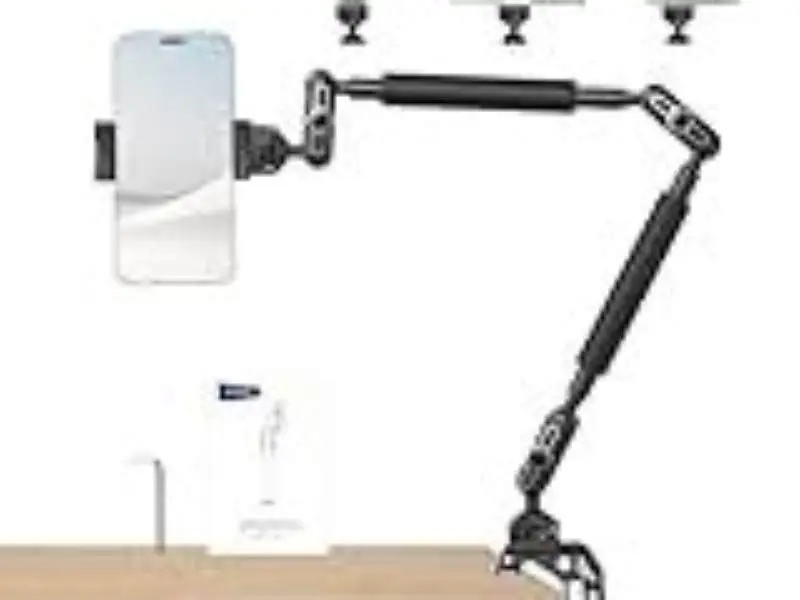
You picked the phone, set the angle, and hit record. Then the clamp slipped down the rail. The usual problem is a poor jaw match or a flexible arm.
Most rails fall roughly in the 25-45 mm range, but measure yours before buying - some commercial machines run thicker. Wrap a flexible tape around the rail. Divide the circumference by 3.14 for its approximate diameter.
Choose a clamp with extra room beyond your measurement. Check the phone holder too. It must close securely around your phone and case without pressing the screen or buttons.
Watch for flat or square rails too. A C-clamp needs a round tube to close properly. On a flat rail the jaws touch only at the corners, and the clamp rocks under load. If your rail is flat, skip the clamp and pick a tripod option instead. We go through tripod mount remote step by step elsewhere on the site.
Test the fit before you commit. Clamp the rig on the rail and pull it firmly sideways. A good grip holds without sliding. If it turns in your hand with light pressure, it will creep once the treadmill runs.
Check the rail position as well. Some rails sit close to the console, leaving no room for the arm to swing. Measure the clear space above the rail, not just its diameter. The arm needs at least 15-20 cm of headroom to set the angle you want.
| Measured rail | Practical buying check | Typical use |
|---|---|---|
| 25-30 mm | Look for a listed range covering the measurement | Compact home treadmill |
| 30-38 mm | Leave room for rubber pads and adjustment | Most home treadmills |
| 38-45 mm | Check the maximum opening carefully | Heavy-duty or commercial treadmill |
| Above 45 mm | Use your measurement, not a standard size | Some commercial machines |
Arms: choose stability over reach
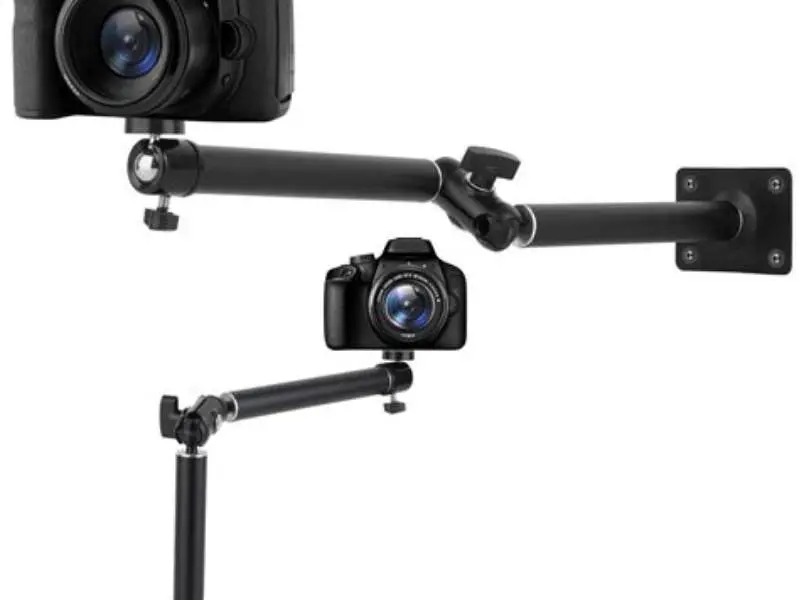
A gooseneck arm sets up quickly. Its flexible neck can wobble once you start jogging. A sectional boom arm uses locking joints and usually holds the frame better. People in this spot often ask about overhead cam arm for 32 mm upright as well.
A tripod with an articulating arm offers the best stability. It also takes more floor space. A C-clamp is easier when the treadmill has a usable round rail.
Look for rubber pads on both clamp jaws. Bare metal can rotate against powder-coated steel. Check the arm's load rating in kilograms, not just its maximum reach.
Here is a quick way to judge an arm. Hold the phone at full reach and tap the console. If the screen image jumps more than a few pixels, the arm will shake at walking pace too. Lockable joints cut that movement sharply. For the detail, see our notes on testing a 100w power bank.
Count the joints between the clamp and the phone. Each joint is a possible loose point under vibration. Two well-locked joints beat four loose ones. Tighten each locking collar fully and recheck after your first session, because vibration works collars loose over time.
Reach matters less than you think. The phone only needs to sit 60-90 cm above the belt and over the front of the deck. A short arm placed well beats a long arm that flexes.
| Design | Typical price | Load guidance | Best for |
|---|---|---|---|
| Gooseneck arm | $15-$35 | At least 0.5 kg, though less flex is better | Walking and short clips |
| Sectional boom arm | $60-$150 | At least 0.5 kg with case | Running and regular filming |
| Tripod plus arm | $80-$200 | 1 kg or more gives useful margin | Long sessions and controlled framing |
Stability: stop shake and clamp creep
Every footfall sends vibration through the deck and frame. A rigid arm can pass much of it to the phone. Rubber pads, a foam insert, or a rubber washer at the ball head gives the vibration somewhere to dissipate. There is more on gym water bottle options in a separate guide.
Slip has a simpler cause. The jaw may not match the tube, or its contact surface may be slick. A correctly sized clamp with rubber padding grips more reliably.
Keep the phone close to the arm joint. A heavy case or long overhang acts like a lever. It makes small movements look larger in the footage.
One worked example shows the leverage problem. A 250 g phone with a 60 g case sits 20 cm out from the joint. That is about 6.2 kg-cm of torque at the joint. Pull the phone 10 cm closer and the torque drops by a third. Same rig, far less strain on the lock. Before you commit to anything, it is worth looking at how to open oneplus power bank.
Creep follows a pattern. The clamp holds fine at walking pace, then slips a centimetre or two during the first run. If you see that, clean both the rail and the jaw pads. Dust and belt lubricant on the tube make even a snug clamp slide.
Film a 20-second test at each speed you use. Watch the frame edges closely. If the background shifts against the phone, the clamp is turning. Re-torque the joints and repeat until the edges stay put.
- Rigid arms pass footfall vibration to the camera
- Undersized jaws can creep loose during a session
- Heavy cases increase leverage at the joint
- Bare metal jaws can rotate on painted rails
Measure the rail, then match the clamp. A soft joint and a locking holder keep the frame steady.
Features: check the holder, rating, and cable path
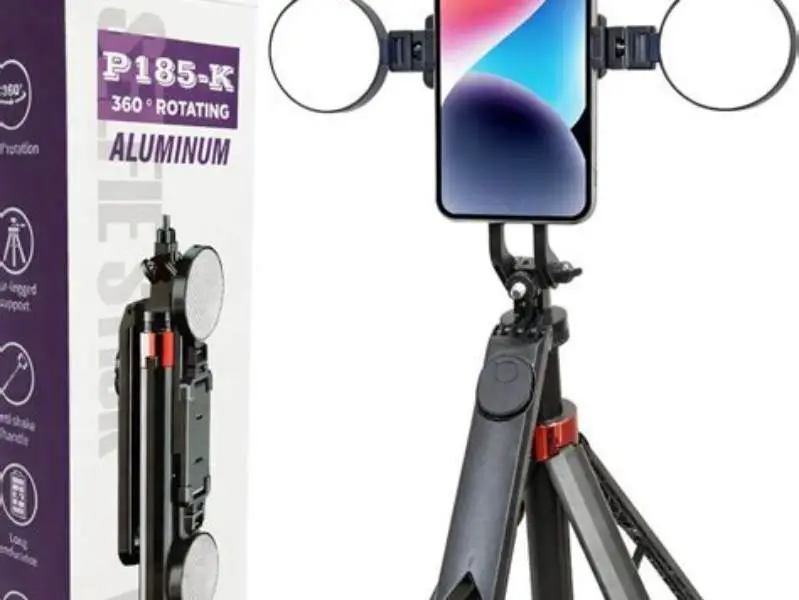
Look for a screw-adjusted or spring-loaded phone holder. The holder should include a quarter-inch thread or a compatible ball joint. It should rotate to portrait orientation and lock there.
Creators on treadmills usually shoot vertical video. Confirm the holder turns through portrait and landscape positions. Check the phone remains centred after rotation.
Choose a clamp and arm rated for at least 0.5 kg with your case installed. A phone may weigh less, but the rating leaves room for movement and accessories.
Run a charging cable regardless. Use a right-angle connector and route it along the arm. Keep it away from the belt and moving handrails.
Check the jaw opening range before ordering a holder. Many holders close to about 65-85 mm and open to 90-100 mm. A large phone in a thick case can exceed that. Measure your phone with the case on and compare it with the holder's stated range.
Think about the cable path early. A straight connector sticks out 25-30 mm from the phone and can hit the arm when you rotate to portrait. A right-angle connector keeps the cable flat against the holder edge. Route the cable up the arm with two small zip ties or spiral wrap, leaving slack at the phone end so rotation stays free.
One more check on the rating. Some arms quote a load rating measured with the arm folded, not extended. Read the fine print or assume half the quoted figure at full reach.
- Clamp the base onto the rail with rubber pads against the tube
- Lock the arm with the phone close to its joint
- Rotate the holder to portrait and frame the full belt
- Route the charging cable away from moving parts
- Test the setup at walking pace before running
Prices: compare the main rig choices
A budget gooseneck mount costs about $15-$35. It suits walking footage, but its flexible neck can shake during a run.
A C-clamp mount with a ball head usually costs about $25-$60. Examples include compact SmallRig or Ulanzi clamp systems paired with a phone holder.
A metal boom arm with a SmallRig Super Clamp or Neewer magic arm often costs about $60-$150. It gives better control and less flex.
A tripod-based setup starts near $80 and can pass $200. It is the better choice when the treadmill has no round rail or you need side-on form footage.
Cost splits along the weak point. Under about $40, most of the money goes into the holder, and the arm is the weak link. Above about $60, the arm usually holds, and the clamp pad or ball head becomes the part that fails first.
A cheap upgrade path works well. Start with a $25-$60 C-clamp and ball head. If footage shakes, swap only the arm for a $60-$90 metal boom. That keeps the total near $100 instead of buying a full kit twice.
Set a realistic budget by use. Filming a few walking clips a week justifies the $15-$35 gooseneck. Daily running content with charging on board justifies the $60-$150 boom arm. Anything above that only pays off if you need side-on angles.
| Rig type | Jaw opening to seek | Typical price | Steady at running pace | Orientation check |
|---|---|---|---|---|
| C-clamp with ball head | 50 mm+ | $25-$60 | Usually yes | Must rotate to portrait |
| Metal boom arm and C-clamp | 50 mm+ | $60-$150 | Best control | Lock portrait position |
| Gooseneck clamp arm | 50 mm+ | $15-$35 | Walking pace mainly | Check rotation and flex |
| Desk-style mini clamp | Often 25-30 mm | $10-$25 | Usually no | Not recommended |
- Spring C-clamps grip round rails well
- Ball heads reframe without unclamping
- Portrait rotation suits most treadmill videos
- Load ratings help prevent underspecified purchases
- Boom arms cost more and take longer to set up
- Goosenecks flex above walking pace
- Cheap mini clamps often have narrow jaws
Alternatives: know when an overhead rig fails
An overhead rig works well for front-on treadmill footage. A floor tripod is steadier for side-on running-form checks. It also avoids placing hardware over the belt.
Skip a clamp if the treadmill has curved wooden slats or no round tube. A weighted stand beside the machine is safer there.
Short clips need less hardware. A small tripod can handle a quick take. Long sessions benefit more from a fixed mount and cable routing.
Weight matters as much as position. A boom arm clamped to the rail adds a kilogram or more over one spot. On light home machines, that extra load at the console can rock the frame at speed. Check the machine's stated user weight range before hanging hardware on it.
Think about failure direction. If a clamp lets go over the belt, the phone lands on a moving surface. If it lets go beside the belt, it lands on the floor. Choose placements where a drop misses the deck, and never film above the console electronics.
When a session runs long, weigh the trade-off again. A two-hour filming block with a charging cable pulls hard on every joint. A floor tripod with a long cable handles it with fewer failure points.
- Side-on form checks suit a floor tripod better
- Slat treadmills may offer no usable round tube
- Short clips may not justify a full boom setup
A rubber-padded C-clamp overhead rig with a 50 mm-plus jaw, locking ball head, portrait rotation, and a 0.5 kg load rating suits most treadmill filming.
FAQ
How do I measure my treadmill bar for a clamp?
Wrap a flexible tape around the rail and read the circumference. Divide by 3.14 for an approximate diameter. Measure the exact rail before ordering.
Why does my treadmill footage shake with a heavy clamp?
Weight does not absorb vibration. Footfalls travel through rigid arms into the phone. Rubber pads or a soft joint reduce that path.
Can I charge my phone while it sits in an overhead rig?
Yes. Use a right-angle cable, route it along the arm, and keep it away from moving parts. Film plugged in or start above 80% battery.
Will a magnetic MagSafe mount work on a treadmill instead?
A spring claw or screw-adjusted holder is safer for continuous filming. Treadmill vibration can shift a magnetic setup over time.
How high above the belt should the phone sit?
Start around 60-90 cm above the belt, then test the frame while walking. Adjust for your lens, treadmill size, and intended shot.