Which car phone holder fits MagSafe charger

A MagSafe car charger needs an open-back holder or a charging-compatible cradle that leaves the phone's magnetic ring and coil exposed. Vent clips and adhesive mounts with solid backing plates block the charging coil and cause overheating or slow charging.
On this page (8 sections)
Part of our guide on mounts that secure phones on rough roads
Fast facts
- Max case thickness
- 3mm for reliable hold
- Magnet alignment tolerance
- ±3mm for 15W charging
- Vent clip hold force
- Fails over 80°F in sun
- VHB adhesive cure time
- 24 hours full strength
- Charging through holder
- Only if back is open
Remember this
- Open-back holders or wireless-charging cradles keep the MagSafe coil unobstructed
- Vent clips with solid metal plates block charging and overheat the phone
- Cases thicker than 3mm or without MagSafe rings lose grip on corners and bumps
- Dashboard mounts with 3M VHB tape hold better than vent clips in hot weather
- Magnet ring alignment matters: off by 5mm and charging drops to 5W or stops
Open-back designs versus enclosed cradles
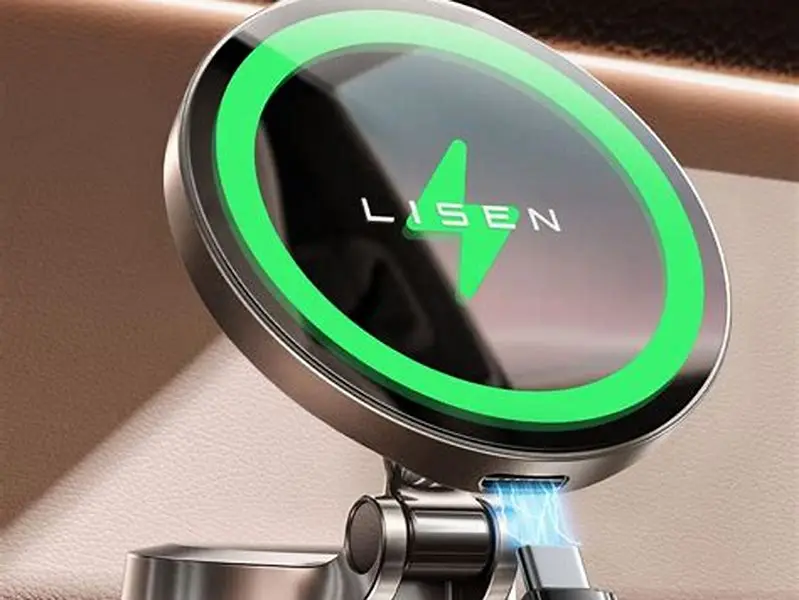
An open-back holder leaves a 40mm or larger circular opening behind the phone, exposing the entire MagSafe charging coil and magnet ring. The charger's puck sits flush against the phone's back through this opening. Charging runs at the full 15W when the coil alignment is correct. The mount grips the phone's magnet ring rather than clamping the sides.
Enclosed cradles use side arms or a full backing plate to hold the phone. That plate sits between the charger and the phone's coil, blocking magnetic contact. Some cradles claim Qi compatibility but place a thin charging coil inside the cradle itself. This setup works for Qi charging at 5W to 7.5W, but it is not MagSafe and does not use the phone's magnet ring for alignment. The coils often drift out of alignment when you hit a bump, and charging stops.
Open-back holders rely entirely on magnetic grip. A phone in a thick case or without a MagSafe ring will slide off under braking or on rough roads. Enclosed cradles provide mechanical retention but sacrifice fast charging. Most people who want a phone holder for car MagSafe charger need the open-back design to maintain both charging speed and magnetic alignment.
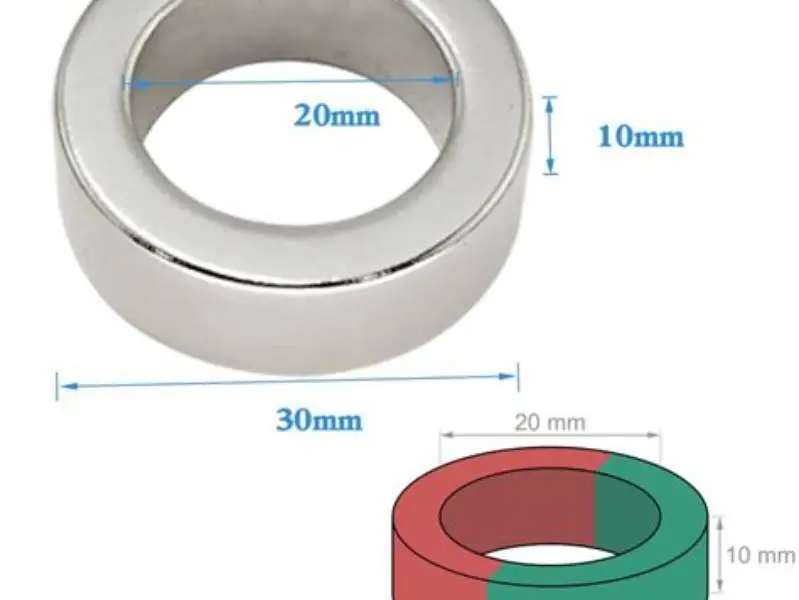
Dashboard and windshield mounts typically use 3M VHB adhesive tape rated for automotive temperatures. Vent clip mounts hook onto the slats. Both can carry open-back chargers, but vent clips lose tension when the plastic softens above 80°F, and the phone tilts or drops. Adhesive mounts stay fixed but need 24 hours to cure before they reach full hold strength. It helps to understand ring magnet for 2 mm case before going further.
| Design | Charging speed | Hold reliability | Case limit |
|---|---|---|---|
| Open-back MagSafe | 15W full speed | Good if case ≤3mm | 3mm max |
| Enclosed cradle (Qi) | 5W to 7.5W | Mechanical grip always works | Any thickness |
| Solid backing plate | None, blocks coil | Strong mechanical hold | Any thickness |
| Vent clip (any design) | Varies | Fails in heat over 80°F | Depends on arms |
- Full 15W charging with correct alignment
- No side arms blocking screen edges
- Works with all MagSafe cases under 3mm
- Relies entirely on magnetic grip
- Non-MagSafe cases slide off on bumps
- Needs 24-hour cure for adhesive mounts

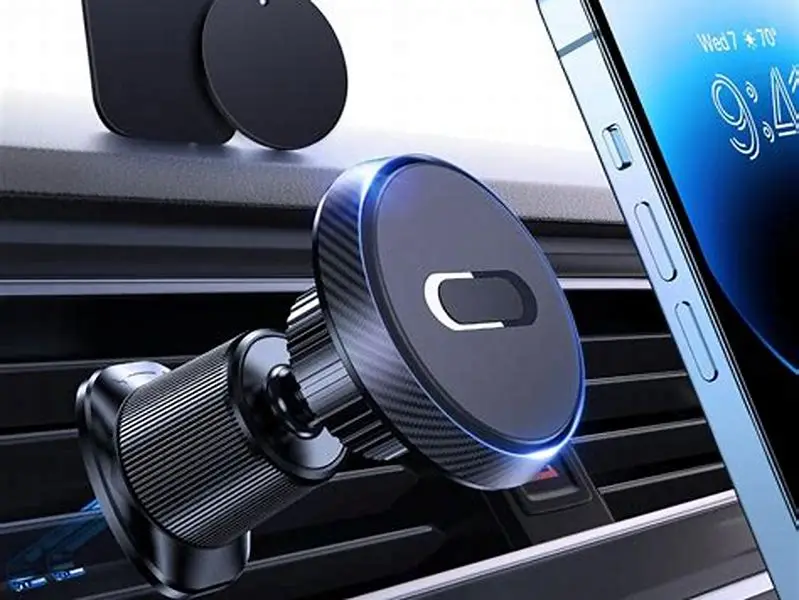
for MagSafe Car Mount Charger
Holds your phone securely with 25 N55 magnets and supports 15W fast wireless charging for your MagSafe car charger.
How magnet placement affects charging and grip
The MagSafe charging coil sits in a 39mm ring centered on the Apple logo on the phone's back. The magnet ring surrounds this coil. A car charger's puck must align its own coil within ±3mm of the phone's coil center to deliver 15W. Alignment errors beyond 5mm drop charging to 5W or less, and beyond 8mm charging stops entirely.
Holders with off-center magnet rings or misaligned pucks cause the phone to sit crooked. The magnetic pull is strong enough to hold the phone, but the coils do not overlap. You will see the charging icon flash on and off, or the phone will charge at 5W even though the charger is rated for 15W. Heat builds up in the misaligned area, and iOS throttles charging further to protect the battery.
Some aftermarket holders use stronger magnets to improve grip but place them outside the MagSafe ring diameter. The phone snaps into place with a satisfying click, but the charger's coil ends up 6mm or more off-center. Charging is unreliable. Thicker cases compound this by adding distance between the phone's magnet ring and the holder's magnets, reducing pull force. A case over 3mm thick cuts magnetic hold by roughly 40 percent, and the phone shifts during hard braking or sharp turns. People in this spot often ask about magsafe with a case as well.
Check the holder's product photos for a visible circular opening or a thin puck that matches the MagSafe ring diameter. If the listing does not specify coil alignment tolerance or show the back of the mount, assume the magnets are generic and not MagSafe-certified. You will get grip or charging, rarely both.
What holder designs cause charging or hold failures
Vent clip mounts fail in two predictable ways. The clip's plastic arms soften when dashboard temperatures exceed 80°F, losing tension on the vent slats. The mount tilts forward, and the phone's weight pulls it off the magnet ring. Second, most vent slats are angled downward, so the phone sits tilted. This tilt shifts the center of mass forward, increasing the moment force on the magnetic connection. A 200-gram phone in a case generates roughly 0.3 Nm of rotational force on a 15-degree tilt, enough to break a weak magnetic bond on a pothole.
Adhesive mounts avoid the heat problem but fail when the adhesive is not fully cured or the surface is not clean. 3M VHB tape needs 24 hours at room temperature to reach 90 percent bond strength. Mounting a holder and immediately loading it with a phone can peel the adhesive before the bond sets. Dashboards with textured vinyl or a silicone treatment reject adhesive entirely. The mount holds for a day or two, then falls off. The other half of this decision is how to remove adhesive dash mount.
Solid backing plates block the entire charging coil. Some holders sandwich a thin Qi coil inside the backing plate and advertise wireless charging, but the coil-to-coil distance grows to 6mm or more once you account for the holder's plastic shell, the phone's back glass, and any case. Qi charging efficiency drops below 60 percent at this distance, and most of the wasted energy becomes heat. The phone overheats, iOS stops charging, and you arrive with a dead battery despite the charger running the whole trip.
Cradles with adjustable side arms sometimes press against the phone's volume or power buttons. The phone locks, unlocks, or triggers Emergency SOS while driving. Arms that clamp too tightly can also crack a phone's back glass if the mount hits a hard bump. I have seen two cracked iPhone backs from over-tightened cradle arms on washboard dirt roads.
- Vent clips: plastic softens above 80°F, losing grip on slats and magnet hold
- Uncured adhesive: pulling the mount within 24 hours peels the bond before it sets
- Solid backing plates: block MagSafe coil, cause overheating, stop charging mid-trip
- Side-arm cradles: press buttons, trigger SOS, or crack back glass on rough roads
Half the car mounts sold as MagSafe-compatible either block the charging coil or drop the phone when you brake hard.
Case thickness and magnet ring requirements
A MagSafe-compatible case carries a built-in magnet ring that aligns with the phone's internal ring. The two rings together generate roughly 1200 to 1400 grams of pull force when a MagSafe charger or holder is attached. This force holds the phone against 0.6 to 0.8 g of lateral acceleration, typical of lane changes or gentle curves. Hard braking at 1 g or a pothole can exceed this if the case is thick or the magnet ring is weak.
Cases thicker than 3mm space the holder's magnets farther from the phone's internal ring, cutting pull force by 30 to 50 percent. A 4mm leather case drops hold force to around 700 grams, which is marginal. The phone stays attached on smooth roads but slides off when you brake hard or hit a bump. Some thick cases add metal plates to boost magnetic pull, but the plates are often centered incorrectly and block part of the charging coil.
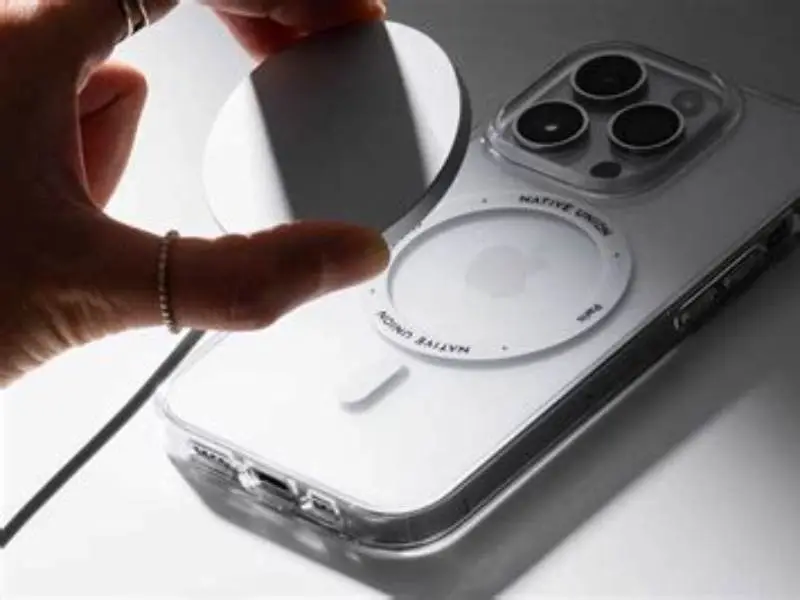
Non-MagSafe cases without magnet rings do not attach reliably to MagSafe holders. Aftermarket metal rings that stick to the case back help, but they rarely align perfectly with the charging coil. Peel-and-stick rings also trap air bubbles, creating a gap that further reduces magnetic contact. If you are using a phone holder for car MagSafe charger and your case lacks the built-in ring, buy a MagSafe case rather than relying on adhesive rings.
Thin cases under 2mm, including Apple's silicone and clear cases, maintain full magnetic pull and charging speed. The phone snaps into place with no perceptible play, and charging starts at 15W within two seconds. Thick cases often have other downsides: they trap heat during charging, raising the phone's temperature by 8 to 12°C and triggering iOS thermal throttling that drops charging to 5W or pauses it entirely.
Will a MagSafe charger charge through the holder
A MagSafe charger charges through the holder only if the holder's back is open or carries a cutout large enough to expose the entire charging coil. The cutout must be at least 40mm in diameter to clear the coil and magnet ring. Anything smaller obstructs part of the coil, reducing charging efficiency and causing the blocked area to overheat. The phone's temperature climbs, and iOS cuts charging speed to protect the battery.
Holders with solid backs do not allow MagSafe charging at all. The holder's plastic or metal shell blocks the magnetic field between the charger's coil and the phone's coil. Some holders include a passthrough Qi coil embedded in the back, but this is Qi wireless charging, not MagSafe. Qi delivers 5W to 7.5W and does not use the magnetic ring for alignment, so the coils drift out of position on bumps and charging stops.
Open-back holders let the charger's puck sit directly against the phone's back glass or case, just as it would on a desk. Charging runs at 15W as long as the phone is not overheating and the case is under 3mm thick. The holder provides magnetic retention, and the charger provides power. This is the only design that maintains both fast charging and reliable hold under real driving conditions.
Some windshield and dashboard mounts integrate the charger into the holder itself, with the charging puck built into the mount's arm. These work well if the puck is adjustable or spring-loaded to maintain contact when the car hits a bump. Fixed-position integrated chargers suffer from the same alignment problems as misaligned aftermarket holders: if the puck does not sit perfectly centered, charging is slow or intermittent.
Choosing between adhesive dash mounts and vent clips
Adhesive dashboard mounts stay fixed once the bond cures. They do not soften in heat, tilt under load, or shift when the air conditioning runs. The 3M VHB tape used on quality mounts holds up to 4 kg of pull force on a clean, smooth surface. Textured dashboards reduce this by 30 to 40 percent, but it is still enough for a phone and mount weighing under 300 grams combined. The downside is permanence: removing the mount leaves adhesive residue that needs heat and solvent to clean.
Vent clips install in seconds and leave no residue, but they are unreliable in hot weather. When cabin temperature exceeds 85°F, the clip's plastic arms soften and lose tension. The mount tilts, and magnetic hold weakens as the phone's weight shifts. Vent slats are also angled downward in most cars, so the phone sits tilted by 10 to 20 degrees. This tilt increases the rotational moment on the magnetic joint, making the phone more likely to drop on a hard bump.
Windshield mounts use a suction cup or adhesive pad. Suction cups fail on textured glass or when temperature swings cause the rubber to contract. Adhesive windshield mounts hold better but obstruct the driver's view if placed too high. Most states restrict windshield-mounted devices to the lower corners or below the rearview mirror. Check local laws before placing an adhesive mount in the center of the windshield.
If you drive in hot climates or on rough roads, use an adhesive dashboard mount. Clean the surface with isopropyl alcohol, press the mount firmly for 30 seconds, and leave it untouched for 24 hours. If you change cars frequently or want a temporary setup, accept that vent clips work only in moderate temperatures and on smooth pavement. There is no compromise option that is both removable and reliable in all conditions.
| Mount type | Hold strength | Heat limit | Removal |
|---|---|---|---|
| Adhesive dash (VHB) | 4 kg on smooth surface | No limit | Leaves residue, needs solvent |
| Vent clip | Marginal, softens in heat | 80°F before failure | Clean removal, no residue |
| Suction cup windshield | 1-2 kg, fails on texture | Heat causes contraction | Clean removal if it holds |
| Adhesive windshield | 3-4 kg on glass | No limit | Leaves residue, obstructs view |
- Adhesive mounts stay fixed in heat and cold
- No tilt or movement on rough roads
- VHB tape holds up to 4 kg pull force
- Permanent, leaves residue when removed
- Needs 24-hour cure before loading
- Vent clips fail predictably above 80°F
FAQ
Can I use a regular magnetic car mount with a MagSafe charger?
Only if the mount has an open back that exposes the entire charging coil. Most generic magnetic mounts use a solid metal plate that blocks the MagSafe coil and prevents charging. You will get mechanical hold but no power, or the phone will overheat from blocked induction.
Why does my MagSafe car charger keep disconnecting on bumps?
The magnet ring in your case is likely misaligned or your case is over 3mm thick, weakening magnetic pull. Bumps shift the phone enough to break the magnetic contact. Switch to a thinner MagSafe case or check that the holder's magnet ring aligns within 3mm of the phone's coil center.
Do I need a MagSafe-certified car mount or will any magnetic holder work?
MagSafe-certified mounts align the magnet ring and charging coil to Apple's specs, ensuring 15W charging and reliable hold. Generic magnetic mounts often use off-center magnets that cause coil misalignment, dropping charging to 5W or causing the phone to overheat. Certification matters for both speed and safety.
How long does VHB adhesive take to reach full strength on a dashboard?
VHB tape reaches 90 percent bond strength after 24 hours at room temperature. Loading the mount immediately can peel the adhesive before it cures. Clean the dashboard with isopropyl alcohol, press the mount for 30 seconds, and leave it untouched for a full day.
Will a thick leather case work with a MagSafe car holder?
Leather cases over 3mm thick cut magnetic pull by 30 to 50 percent, making the phone prone to sliding off on hard braking or bumps. If you want to keep the leather case, use an enclosed cradle with side arms for mechanical retention, but accept that charging will drop to 5-7.5W at best.