How to tell if your phone is Qi-enabled before you buy a mount

A Qi-enabled phone has a receiving coil built in that charges on any Qi wireless pad. Check your model's spec sheet for 'Qi' or 'Qi2' under wireless charging, or set it on any known Qi pad and watch for the charging icon.
On this page (8 sections)
- Remember this
- What is a Qi enabled phone, exactly?
- How to check your phone in under a minute
- A Qi-enabled phone and a magnetic mount are two separate things
- Why a Qi-enabled phone still won't charge on a gym or car mount
- Does Qi2 or MagSafe alignment change which mount to buy?
- Where your phone's spec ends and the mount's coil takes over
- FAQ
Part of our guide on magnetic bottle holder requirements
Fast facts
- Qi definition
- Built-in receiving coil, inductive standard
- Qi baseline power
- 5W BPP spec, 15W EPP spec; actual wattage varies by device
- Qi2 adds
- Magnetic alignment, 15W Magnetic Power Profile
- Fastest check
- Any known Qi pad, one minute
- Case thickness limit
- Check your mount's accessory specs; thin cases usually work
- Metal plate over coil
- Blocks charging completely
Remember this
- Qi-enabled means a built-in receiving coil for inductive charging, not a magnetic back.
- Spec sheet, battery settings screen, or a pad test - any one confirms it in under a minute.
- A magnet-only mount holds your phone but needs no Qi coil to do it.
- Qi2 and MagSafe add magnets around the coil, so alignment is handled for you.
What is a Qi enabled phone, exactly?
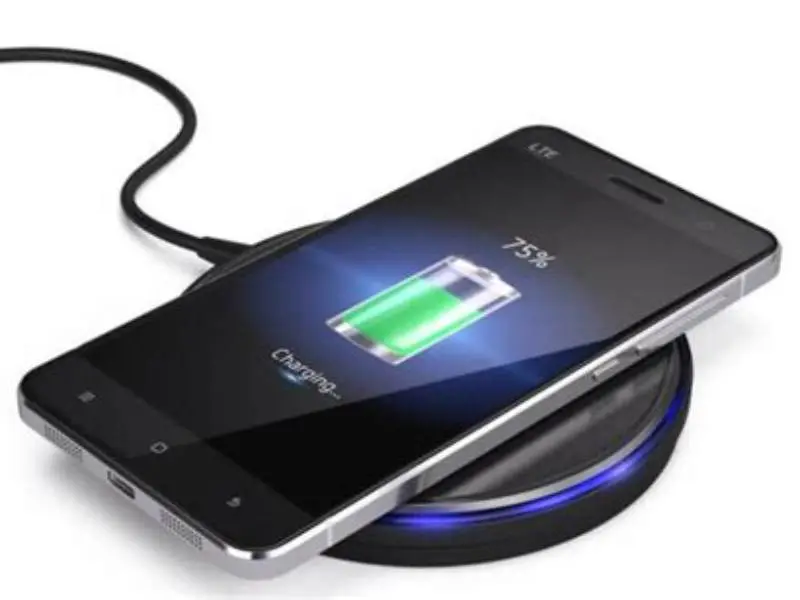
A Qi-enabled phone has a receiving coil built into its back, designed to the Qi standard for inductive charging. Set it on a compatible pad or mount and that coil converts a magnetic field from the charger's transmit coil into battery power. No cable touches the phone. Qi is the standard maintained by the Wireless Power Consortium, and it is the same system every coffee-shop pad and most charging mounts use.
The word 'enabled' trips people because it sounds like a feature you switch on. Either the coil is built into the phone's hardware or it is not. No app or setting can add it. Apple added Qi with the iPhone 8 in 2017. Flagship Android lines have included it for years. If your phone is a recent mid-range or premium model, the odds are strongly in your favour.
The Qi spec defines two power tiers. The Baseline Power Profile (BPP) guarantees 5W. The Extended Power Profile (EPP) allows up to 15W on paper. Actual negotiated wattage is usually lower and varies by device. Qi2, announced by the WPC in 2023, defines a Magnetic Power Profile rated up to 15W with a ring of magnets around the coil. A phone that is merely Qi will still charge on a Qi2 mount, just without the magnetic snap alignment.
How to check your phone in under a minute
Three checks exist, and any single one settles it. Start with the manufacturer's specification page for your exact model number. Search the model plus the word 'specs', find the battery or charging section, and look for the words 'Qi', 'Qi2', 'MagSafe' or 'wireless charging'. MagSafe is Apple's branding over a Qi2-compatible system, so an iPhone listing MagSafe is Qi-enabled by definition. For the detail, see our notes on magnetic cable for worn phone ports.
Second, open your phone's settings and look at the battery or charging screen. Many Android phones list wireless charging under battery settings or in an accessories menu. iPhones do not show a toggle because the feature is always on, which is why the spec sheet is the better first stop for Apple owners.
Third, the pad test. Place your phone on any known working Qi pad. A colleague's desk charger, a hotel nightstand, a car's built-in charging tray all work. If a charging icon appears within a few seconds, your phone is Qi-enabled. This is the most direct check there is.
- Search your exact model number plus 'specs' and look for Qi, Qi2, MagSafe or wireless charging.
- Check the battery or accessories screen in settings for a wireless charging entry.
- Set the phone on a pad known to charge other phones and watch for the charging icon.

Anker 313 Qi-Certified 10W Fast Wireless Charger Pad
Confirms whether your phone actually has a working wireless receiver - it drops to a plain 5W mode for any Qi phone, so even a slow charge on this pad proves the phone, not your gym or car mount, is the problem.
A Qi-enabled phone and a magnetic mount are two separate things
This is where most buyers go wrong. Qi describes charging. Magnets describe holding. A mount can be magnetic, Qi-enabled, both, or neither, and the four combinations behave completely differently.
A magnet-only mount needs no Qi at all. The kind with a metal plate you stick to your phone or case, or the mag-grip style that clamps the phone's edges, holds your phone on a treadmill console or a bike stem and does its job whether or not the phone can wirelessly charge. That is fine if you only want the phone visible for filming lifts or following a training video.
A Qi-charging mount has a transmit coil inside the pad surface. It will charge any Qi-enabled phone set against it. On its own it often relies on a cradle or gravity to hold the phone, because plain Qi has no magnets. The two features only come together in MagSafe and Qi2 designs, where a magnet ring and the coil share the same footprint. So 'is my phone Qi-enabled' is the wrong first question if all you want is a holder.
| Mount type | Holds phone | Charges it | Needs Qi phone? |
|---|---|---|---|
| Magnet-only plate mount | Yes | No | No |
| Cradle or clamp mount | Yes | Only if it has a Qi coil | For charging, yes |
| Plain Qi pad mount | Sometimes, by cradle | Yes | Yes |
| MagSafe / Qi2 mount | Yes, magnetically | Yes, aligned | Helps most, Qi phones still charge |
- Magnet-only mounts work with any phone
- Cheaper and lighter for filming or viewing
- No charging means a dead phone mid-workout
- Magnet-only mount adds nothing to a Qi phone's charging
Your phone being Qi-enabled tells you almost nothing about whether that mount will actually charge it.
Why a Qi-enabled phone still won't charge on a gym or car mount
Confirmation your phone is Qi-enabled is where the phone's own spec stops mattering and the mount's physics takes over. Charging happens only where the two coils overlap. In a moving car or a vibrating treadmill, alignment is the first thing to fail. A plain Qi mount leaves you guessing where its coil sits. If your phone's coil lands even a few millimetres off, you get slow charging or nothing at all. On a bumpy road the gap opens and closes.
Cases are the second culprit. Thin cases usually pass wireless charging. Thick or metal-lined cases often block it. Manufacturers typically list a maximum case thickness in their accessory specs. A rugged gym case with a plate, a card holder or a metal kickback behind the phone will block the field entirely. Plenty of people glue a metal plate to the back of a perfectly good Qi phone to make it work with a magnet-only mount. That plate sits directly over the coil and kills charging on any pad afterwards.
Heat is the quiet third factor. A phone baking on a sunlit dashboard or pressed against a warm pad under a thick case throttles its own charging to protect the battery. A setup that worked in the morning can look broken by afternoon. If a Qi-enabled phone refuses to charge on a mount, check alignment, then case contents, then heat. In that order.
Any Qi pad, even a 5W one, is enough to confirm the phone's receiver works. Wattage only matters for charging speed. A pad test separates 'phone problem' from 'mount problem' in one test.
Does Qi2 or MagSafe alignment change which mount to buy?
If your phone supports Qi2 or MagSafe, alignment stops being your problem and becomes the mount's selling point. The magnet ring sits around the coil, so the phone snaps onto exactly the right spot every time. On a treadmill, a spin bike or a dashboard, that snap is the difference between consistent charging and intermittent contact you have to fiddle with at every red light.
If you have an older Qi-only phone and you are buying a new mount, Qi2 changes nothing for you. A Qi2 mount is backward compatible and will charge your phone. You just lose the magnetic snap alignment, so your phone may still need a cradle to stay on the coil. A Qi2 mount gives you no advantage over a standard Qi mount unless you plan to upgrade your phone soon.
For everyone else, ignore phone-model lists and look at three mount specifications instead. Output: a mount rated 15W will negotiate down to whatever your phone accepts, so a higher rating never hurts. Coil position: some mounts state the coil's location on the pad surface, which tells you whether your phone needs to sit centred, high or low. Foreign object detection: makes the mount refuse to charge over a metal plate rather than heating it, a genuine safety feature for a car environment.
The practical decision is simple. Qi2 or MagSafe phone: buy a magnetic Qi2 mount and the alignment issue disappears. Qi-only phone: choose a mount with a stated coil position and a cradle or clamp that holds the phone against that position, because the phone alone will not stay aligned.
- Qi2 mount self-aligns the coils every time
- 15W rating works for all Qi phones
- Qi2 mounts cost more than basic pads
- A Qi-only phone gains no magnetic hold from them
Where your phone's spec ends and the mount's coil takes over
It helps to picture the whole chain. Your phone's spec guarantees a receiving coil exists. The mount's coil must sit within a few millimetres of it, with nothing metal in between and the phone held there. Every failure you will ever have with a wireless charging mount lives in that second link, not the first. A phone that charges fine on a desk pad can be flaky on a gym rack or a handlebar.
So treat the two halves as separate checks. Confirm Qi capability once, with the spec sheet or a pad test, and never think about it again. Then judge any mount you consider by alignment: does it use magnets around the coil, does it state where the coil sits, and does its holding method press your phone's coil onto that spot? A buyer who does both ends up with a setup that charges on every ride and every session, instead of one that works only when the phone is parked perfectly level.
Confirm Qi capability once, then buy the mount for its alignment, not its brand - alignment is where these setups actually fail.
FAQ
Can I add Qi charging to a phone that doesn't have it?
Only with an external receiver - a thin coil card that plugs into the charging port and sits inside the case. It works, but it adds bulk and puts a connector under strain, so for most people a cable or a magnet-only mount is the better answer.
Does a magnet-only mount damage my phone?
No. The magnets in consumer mounts are far too weak to affect the phone's storage, battery or electronics. The only lasting harm comes from a metal plate glued over the coil, which blocks wireless charging from then on.
Will a Qi2 mount charge an older Qi phone?
Yes. Qi2 is backward compatible, so any Qi-enabled phone charges on a Qi2 mount. The only thing an older phone misses is the magnetic snap alignment, so it may still need a cradle to stay on the coil.
Why does my phone say it's charging on the mount but the battery drains?
The coils are barely overlapping, so the phone draws trickle power while the screen, GPS and mobile data use more than the pad delivers. Re-centre the phone over the mount's coil or switch to an aligned magnetic mount.
Do I need to remove my case to charge on a mount?
Usually not, if the case contains no metal plate, magnet ring of its own, or card holder over the back. Rugged gym cases with metal fittings are the common exception. Check your mount's accessory specs for a stated maximum case thickness.
How do I verify a phone model when the spec sheet is silent?
Search the model number plus 'Qi' or 'wireless charging' on the manufacturer's support site or community forums. If regional variants exist and official specs are ambiguous, the pad test is the fastest answer: set the phone on any known Qi pad and watch for the charging icon.
Does 'Qi-compatible' on a case or accessory listing mean the same thing?
Not always. Some sellers misuse 'Qi' to mean 'thin enough to let charging through' or 'has a magnetic ring'. A phone or mount is Qi-enabled only if it has the actual coil. A case is Qi-compatible if it does not block the phone's coil from working.