Which bottle cages keep water bottles secure on rough gravel bike rides

The best bottle cages for gravel bikes are those with enhanced retention features such as adjustable tension, rubber or silicone contact points, and deeper or wrap-style profiles that hold bottles firmly on rough terrain while still allowing usable access during a ride.
On this page (9 sections)
- Remember this
- How gravel riding affects bottle cage performance
- Compatibility of cages with typical gravel bike frames
- Why some cages fail to hold bottles securely on gravel
- What features improve bottle retention on gravel bikes
- Which bottle cages keep water bottles secure on rough gravel bike rides
- Quick comparison of recommended cages
- Why standard cages without retention features are inadequate for gravel
- FAQ
Part of our guide on scratch-free magnetic gym pouch
Fast facts
- Mount spacing
- 2.5 inches (64mm) standard
- Retention force
- varies with cage design and bottle diameter; test on your bike
- Typical bottle size
- 500-750 ml
- Common cage materials
- carbon, aluminum, reinforced nylon/plastic
- Bottle ejection risk
- increases without rubberized contact or adjustable tension
Remember this
- Gravel terrain demands bottle cages with strong retention to prevent bottle loss.
- Compatibility with gravel bike frames depends on mount spacing and shape.
- Rubberized or adjustable cages reduce bottle rattle and ejection on rough trails.
- Simple wire cages often fail to secure bottles under gravel riding shocks.
- A proper cage must balance secure grip with easy bottle access during rides.
How gravel riding affects bottle cage performance
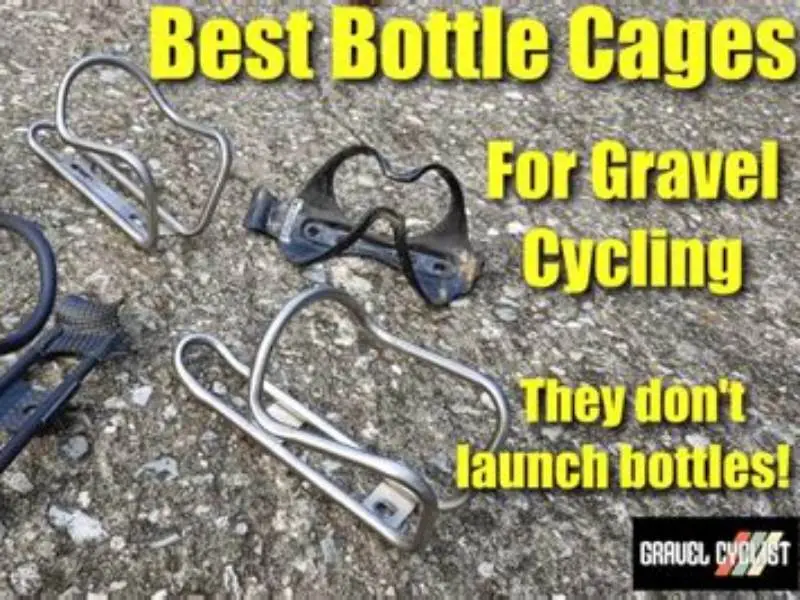
Gravel rides expose bottles and cages to frequent shocks and vibrations from uneven surfaces that are harsher and more irregular than paved roads. Those repeated impacts can cause bottles to bounce, shift, or slip unless the cage grips them securely.
Typical gravel trail features (loose rock, washboard sections, roots, and short sharp hits) produce accelerations and directional forces that a cage must resist in multiple axes. Retention that works on smooth surfaces can fail when forces come from the side, front, and rear in quick succession.
Because riders cannot safely reach down continuously, cages must hold bottles reliably while still allowing quick, one-handed access. Poorly designed cages allow bottles to shift, rattle, or eject, interrupting hydration or causing loss and potential damage.
The dynamic forces from repeated bumps also stress cage mounting bolts and the cage material itself, so durability and secure attachment are essential to maintain performance over time. If that sounds like your situation, read up on gravel bike frame pocket compatible with 32 mm down tube next.
Riders often underestimate how frame geometry and riding position influence bottle behavior on gravel. A more upright posture or frame shapes with sloping tubes can change how bottles move under braking or climbing loads, so cages that resist multi-directional movement are preferable.
Temperature changes during rides can affect material properties. For example, stiff carbon cages that perform well at moderate temperatures may feel more brittle in very cold conditions; similarly, some plastics can become more flexible when warm. Consider typical ride climates when choosing materials and designs.
Compatibility of cages with typical gravel bike frames
Most modern gravel frames use the standard two-bolt bottle mount spacing of 2.5 inches (64 mm), so most cages will physically bolt on without adapters. That standard compatibility makes choosing a cage straightforward in many cases. We cover choosing bicycle water bottle mounts in its own article.
However, gravel frames have a wide range of tube shapes and clearances (oversized or sloping down tubes, unconventional tube profiles, and low top tube or seat tube locations) that affect bottle fit and accessibility. A cage that works on one frame can contact the frame or crank on another.
Some frames provide dedicated alternative mounts or bosses at non-standard angles. In those cases, side-entry cages or low-profile designs often provide better access and clearance than conventional top-entry cages.
Cage depth and opening size also matter. A cage designed for narrow road bottles may not fit wider insulated bottles commonly used for longer gravel rides, so check bottle diameter together with cage internal dimensions. We go through what is a hydration bottle step by step elsewhere on the site.
Mounting position matters: cages mounted low on the seat tube or near the down tube may need shorter-depth cages or offset mounting options to avoid contact with the crank or chainstays. Adjustable cages or those with off-center mounting slots can help.
A practical check is to mount the cage and bottle and swing the bike or perform a manual shake to confirm there is no contact or binding through the full range of motion expected on the bike.
Why some cages fail to hold bottles securely on gravel
Standard lightweight wire cages often rely on minimal tension and friction. Under repeated, multi-directional impacts common on gravel, that minimal retention can allow bottles to vibrate free. It helps to understand fitting different bottle sizes before going further.
Very stiff or extremely lightweight designs can paradoxically have poor dynamic grip: if a cage is too rigid it may not conform to small size differences across bottles, and if it is too flexible in the wrong places it can lose clamping consistency during hits.
Cages without rubber or silicone inserts lack the small-scale friction and cushioning that prevent bottles from sliding under vibration.
Mounting issues also cause failures: loose bolts, incorrect torque, or bosses on sections that flex under load amplify bottle movement and make even a good cage perform poorly.
Identify bottle cages with retention features that actually keep water bottles secure during rough gravel rides and fit common gravel bike frames.
What features improve bottle retention on gravel bikes
Retention features to look for include adjustable clamping or tension control, rubber or silicone contact surfaces, deeper or wrap-around profiles, and side-entry designs where frame clearance is limited.
Some cages have flexible arms or adjustable screws that let riders tailor grip tightness to bottle shape and size, improving security on rough trails.
Rubber inserts or textured surfaces increase friction and reduce micro-movement that turns into audible rattle or progressive loosening.
Deeper profile or full-wrap designs that cover more of the bottle’s circumference help prevent vertical and lateral movement without needing excessive clamping force that would impede removal.
Materials matter too: reinforced nylon or composite cages with integrated rubber parts often provide the best mix of controlled flex, impact absorption, and lightweight construction for gravel use.
| Feature | Effect on retention | Ease of bottle removal |
|---|---|---|
| Adjustable tension | Higher, tunable retention | Medium |
| Rubber/silicone grips | Improved friction; reduces micro-slip | High |
| Deep wrap design | Prevents vertical movement | Medium |
| Side-entry design | Good in limited clearance; holds well | High |
| Simple wire cage | Minimal retention | High |
Which bottle cages keep water bottles secure on rough gravel bike rides
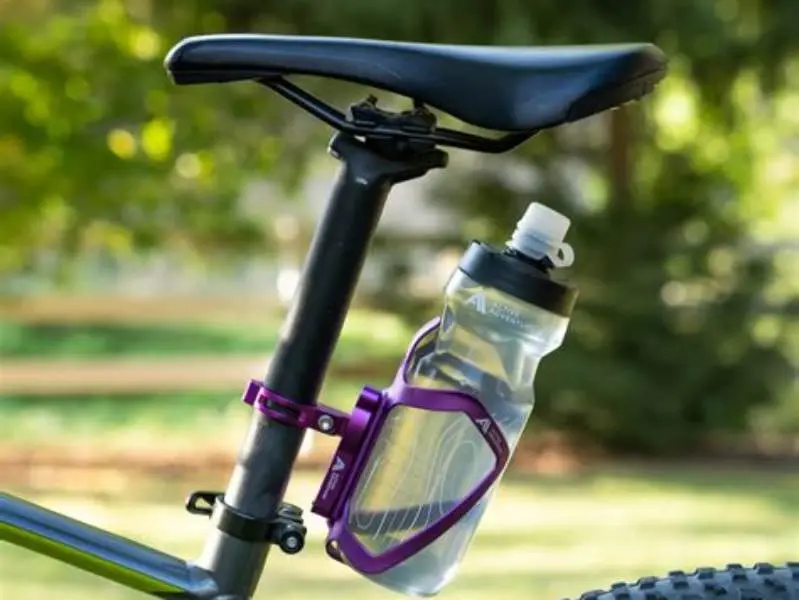
To be useful on gravel, choose cages with retention-oriented designs: rubber or silicone contact points, adjustable tension, deeper wrap profiles, or side-entry options for tight frames. Below are specific models and why riders choose them for gravel.
Recommended models with proven reputations among gravel riders:
- Arundel Mandible: A deep, wrap-style aluminum cage with generous coverage and a shape that cradles bottles. Pros: strong hold for a variety of bottle sizes, durable construction, simple design. Cons: heavier than minimalist wire cages and may be tight on very wide insulated bottles.
- Elite Cannibal (or equivalent long-side-entry models): A side-entry cage that lets you remove and replace bottles from the side. Pros: excellent for tight frame clearances and for mounting on smaller frames; good retention with easier access when top clearance is limited. Cons: may feel less secure on very large-diameter insulated bottles unless adjusted properly.
- Specialized Zee Cage II: A sturdy polymer/nylon cage with a secure pocket and a slightly flexible retention that adapts to bottle shapes. Pros: good shock damping and reliable grip for mixed terrain; lightweight. Cons: limited wrap compared with full-wrap metal cages for extreme impacts.
- Lezyne Flow Cage (or similar higher-profile aluminum/steel designs): Often deeper than economy wire cages and with a firm hold for standard bottles. Pros: good durability and consistent retention; many riders use it for gravel when paired with a rubber insert. Cons: may require a rubber insert or tape to improve grip on very smooth insulated bottles.
- Polymer composite cages with integrated rubber (several brands): These combine molded shapes that conform to bottle profiles plus rubberized contact patches. Pros: strong dynamic grip and impact absorption, lightweight. Cons: model-specific fit - some are optimized for narrower bottles.
- Measure the frame’s bottle mount spacing to confirm the standard 2.5-inch (64 mm) fit.
- Select a cage with rubber or silicone grips that conform to your bottle’s diameter.
- Consider side-entry cages if top-tube clearance or frame shape limits access.
- Check if the cage offers adjustable tension or flexible arms for custom fit.
- Install cage bolts with correct torque (usually 3-5 Nm) to ensure no movement.
- Test bottle retention by simulating bumps or rough handling before riding.
Quick comparison of recommended cages
Below is a concise comparison to help match cage features to gravel riding needs.
| Model (example) | Key features | Best for | Trade-offs |
|---|---|---|---|
| Arundel Mandible | Deep wrap aluminum; wide compatibility | Riders wanting strong hold with traditional bottle shapes | Heavier; tight on very wide insulated bottles |
| Elite Cannibal (side-entry) | Side-entry profile; easy access in tight frames | Small frames, side-mount locations, riders needing easy access | May require adjustment for very large bottles |
| Specialized Zee Cage II | Nylon/polymer with flexible retention | Mixed-terrain riders wanting lightweight shock damping | Less full-wrap protection on extreme hits |
| Lezyne Flow Cage (higher-profile) | Deeper metal cage; durable | Riders who prefer metal cages with added grip | May need rubber insert for very smooth bottles |
| Composite cages with integrated rubber | Molded shape + rubber contact zones | Best dynamic grip and vibration absorption | Fit varies by bottle; check compatibility |
Why standard cages without retention features are inadequate for gravel
Basic wire cages without rubber inserts rely on friction and tension alone, often insufficient for the shocks and vibrations from rough gravel terrain; riders frequently report rattling and occasional bottle loss with these cages.
The lack of cushioning allows bottles to micro-slip under vibration, which can lead to progressive loosening and eventual ejection after repeated impacts.
Also, wire cages sized very tightly may make bottle removal difficult, tempting riders to bend or loosen the cage: actions that further compromise retention.
For gravel riding, choose a secure cage that allows controlled bottle removal but prevents outright ejection to avoid stopping to re-secure or losing bottles mid-ride.
FAQ
Can I use a road bike bottle cage on my gravel bike?
Yes, if it fits the 2.5-inch mount spacing and your bottle size, but many road cages lack the retention and cushioning needed for rough gravel terrain; consider upgrading to a cage with rubberized contact or deeper wrap for gravel rides.
Do insulated bottles require special cages on gravel bikes?
Wider insulated bottles usually need cages with a deeper profile or adjustable tension to hold them securely and prevent rattle or ejection. Try your bottle in any prospective cage before committing to a long ride.
How tight should cage bolts be on a gravel bike?
Typically between 3 and 5 Nm torque ensures secure attachment without damaging the frame; check your frame manufacturer's recommendations. Proper torque prevents movement that can amplify bottle motion.
What materials make the best cage for gravel riding?
Reinforced nylon or composite cages with rubber inserts often provide better shock absorption and grip than plain metal wire cages. Metal cages can be durable, but adding rubberized contact points improves dynamic retention.
Is bottle security more important than easy access for gravel rides?
Both matter, but on rough terrain secure retention should slightly outweigh ease of removal to prevent losing bottles. Aim for a cage that offers firm hold but still allows a smooth one-handed extraction.